THE ADVENTURE COLLECTIVE® · Independent discovery and booking for outdoor travel

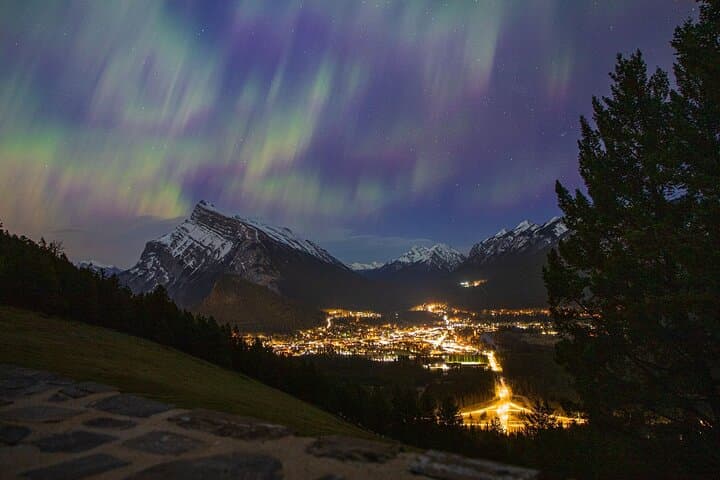
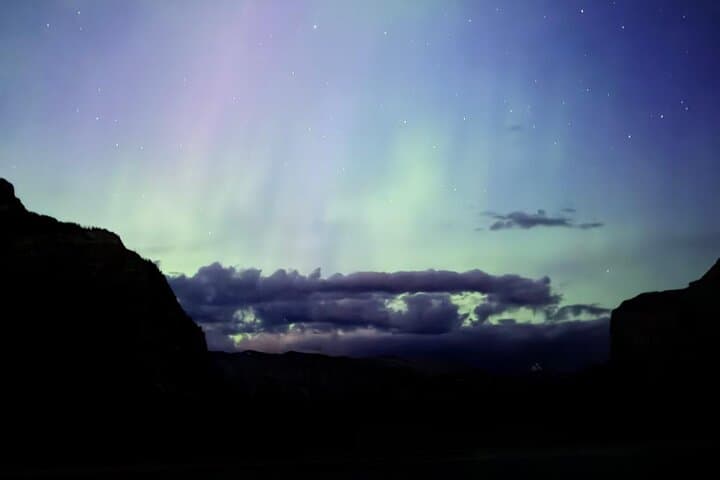
Step away from the town lights and into Banff’s clear night air for a two‑hour guided stargazing experience. Learn constellations, view the Milky Way, and — on rare nights — glimpse the aurora from a secluded spot in Banff National Park.
Step away from the town lights and into Banff’s clear night air for a two‑hour guided stargazing experience. Learn constellations, view the Milky Way, and — on rare nights — glimpse the aurora from a secluded spot in Banff National Park.
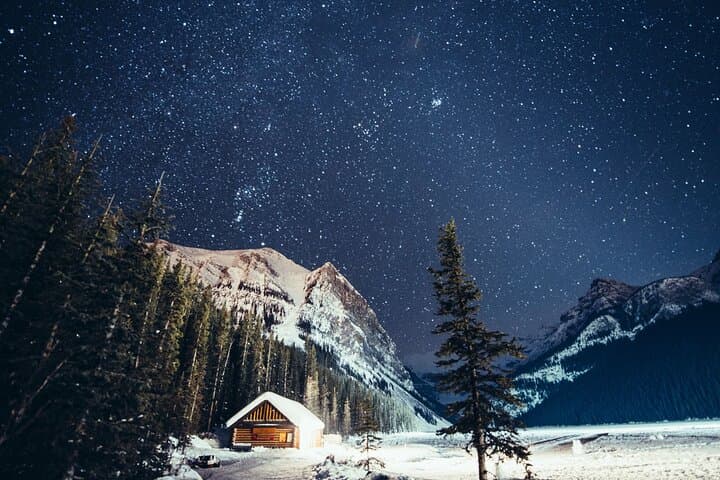
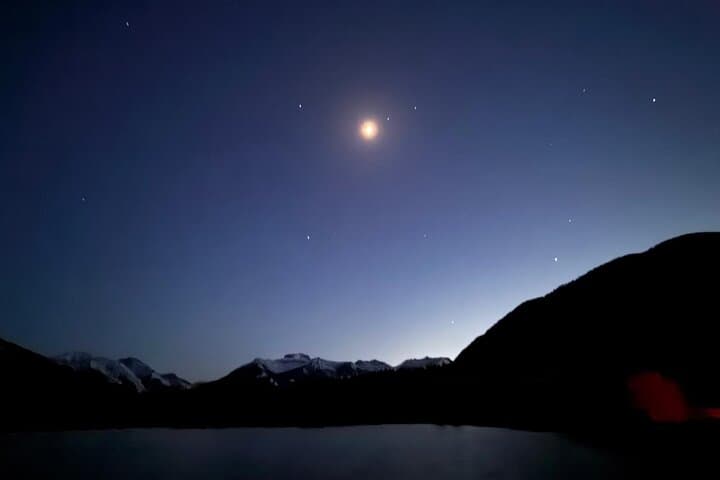
The bus slips away from the glow of town and the Rockies fold shut around you — a black, serrated wall studded with far-off lights. In the silence of Banff National Park after dark, the Milky Way cuts a pale swath above jagged peaks and a frozen lake that seems to hold the sky. Guides angle small scopes, and constellations become stories you can trace with an outstretched finger.
Verified experiences and guided adventures in the surrounding area.
Operated by Banff Journey · Banff, Alberta
The bus slips away from the glow of town and the Rockies fold shut around you — a black, serrated wall studded with far-off lights. In the silence of Banff National Park after dark, the Milky Way cuts a pale swath above jagged peaks and a frozen lake that seems to hold the sky. Guides angle small scopes, and constellations become stories you can trace with an outstretched finger.
This short evening tour places visitors where light pollution is low and the Southern Rockies reveal clear celestial detail. The region’s geology — ancient sedimentary layers uplifted by the collision that formed the Canadian Rockies — creates the steep ridgelines that frame the horizon, concentrating views to the south and west. Banff has long been a place of Indigenous significance and early mountaineering history; on clear nights the sky connects those human stories to older, quieter rhythms.
Practical read: the experience is primarily stationary and suitable for all fitness levels, lasting roughly two hours including transport. Dress in layers: nights in the high Rockies drop quickly, even in summer. Cameras with manual exposure settings and tripods capture stars; phone cameras may struggle without long-exposure modes. Tours run seasonally and shift start times with sunset — operators will confirm details the day before.
Plan for short walks on uneven ground to reach viewing clearings, expect intermittent wind, and prepare for delayed or altered schedules if heavy snow or cloud cover arrives. With modest preparation, the night sky here is rewarding — a sharp, tactile contrast to daytime mountain drama.
easy.
2 hours.
Minimal physical exertion; able to walk short uneven distances and stand for periods.
The tour runs approximately two hours total, including transport time to the viewing site.
Yes — the experience involves minimal walking and is described as suitable for all fitness levels; infant seats may be available on request.
Stars are visible on most clear nights, but cloud cover, weather, and solar activity affect aurora visibility; sightings are not guaranteed.
Bring a camera with manual exposure, a sturdy tripod, and a remote shutter or timer; wide-aperture lenses and spare batteries help.
Banff National Park, established in 1885, is Canada’s oldest national park; the night sky has guided Indigenous peoples and early park explorers for millennia.
Tours keep groups small and use existing pullouts to limit vegetation trampling; visitors are encouraged to pack out waste and minimize light pollution.
Banff Journey operates guided outdoor trips and adventures with an emphasis on safety, stewardship, and memorable experiences.
The bus slips away from the glow of town and the Rockies fold shut around you — a black, serrated wall studded with far-off lights. In the silence of Banff National Park after dark, the Milky Way cuts a pale swath above jagged peaks and a frozen lake that seems to hold the sky. Guides angle small scopes, and constellations become stories you can trace with an outstretched finger.
The bus slips away from the glow of town and the Rockies fold shut around you — a black, serrated wall studded with far-off lights. In the silence of Banff National Park after dark, the Milky Way cuts a pale swath above jagged peaks and a frozen lake that seems to hold the sky. Guides angle small scopes, and constellations become stories you can trace with an outstretched finger.
This short evening tour places visitors where light pollution is low and the Southern Rockies reveal clear celestial detail. The region’s geology — ancient sedimentary layers uplifted by the collision that formed the Canadian Rockies — creates the steep ridgelines that frame the horizon, concentrating views to the south and west. Banff has long been a place of Indigenous significance and early mountaineering history; on clear nights the sky connects those human stories to older, quieter rhythms.
Practical read: the experience is primarily stationary and suitable for all fitness levels, lasting roughly two hours including transport. Dress in layers: nights in the high Rockies drop quickly, even in summer. Cameras with manual exposure settings and tripods capture stars; phone cameras may struggle without long-exposure modes. Tours run seasonally and shift start times with sunset — operators will confirm details the day before.
Plan for short walks on uneven ground to reach viewing clearings, expect intermittent wind, and prepare for delayed or altered schedules if heavy snow or cloud cover arrives. With modest preparation, the night sky here is rewarding — a sharp, tactile contrast to daytime mountain drama.