THE ADVENTURE COLLECTIVE® · Independent discovery and booking for outdoor travel

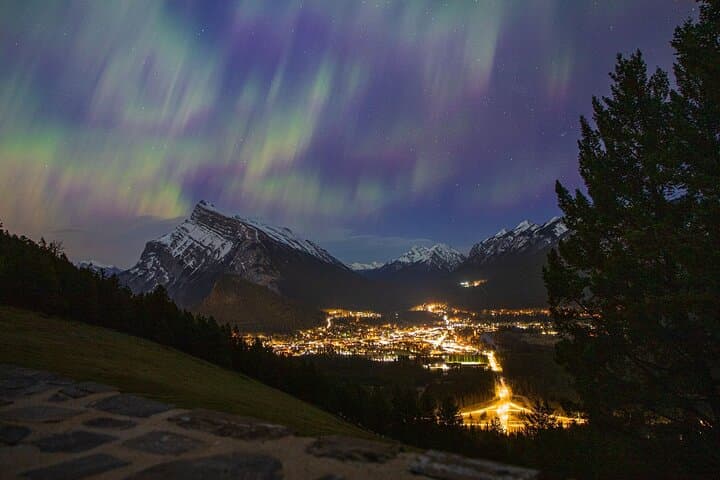
Leave the bustle of town for a two-hour guided night tour into Banff National Park where dark skies reveal the Milky Way and, with luck, faint auroras. Practical, small-group stargazing with hot drinks and astronomy-savvy guides.
Leave the bustle of town for a two-hour guided night tour into Banff National Park where dark skies reveal the Milky Way and, with luck, faint auroras. Practical, small-group stargazing with hot drinks and astronomy-savvy guides.
You step off the vehicle into an alpine hush and the mountains close around you, black ridges cutting the sky into a frame. The air is thin, cold, and sharp; overhead the Milky Way arcs like a pale river and individual stars suddenly feel close enough to name.
Verified experiences and guided adventures in the surrounding area.
Operated by Banff Journey · Banff, Alberta
You step off the vehicle into an alpine hush and the mountains close around you, black ridges cutting the sky into a frame. The air is thin, cold, and sharp; overhead the Milky Way arcs like a pale river and individual stars suddenly feel close enough to name.
This two-hour guided stargazing tour ferries small groups from Canmore or Banff to a low-light site inside Banff National Park. Banff — established in 1885 as Canada’s first national park — sits where sedimentary rock was uplifted into the Canadian Rockies, creating clear, high-altitude skies that make nighttime viewing exceptional. Guides blend science and story, pointing out constellations, seasonal planets, and on active nights, a chance at faint aurora activity. Indigenous presence in these valleys reaches far back; many guides also acknowledge the cultural landscape alongside astronomical lore.
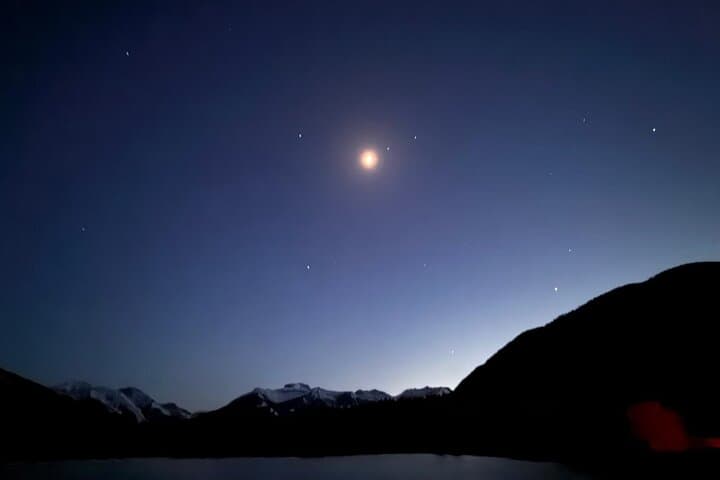
Logistics are straightforward: a short drive from town, light walking on packed ground, and standing-room viewing with occasional sheltered areas. The company supplies hot drinks and bottled water; expect small groups and a learning-focused guide. Visibility depends on moon phase, cloud cover, and solar activity — the darker the night, the more you’ll see.
Prepare practically: dress in warm layers, use a tripod for astrophotography, keep phone screens dim or use red-filtered lights, and arrive ready (bathrooms in town before departure). Respect wildlife and avoid bright lights that reduce everyone’s view. For casual viewers this is relaxed and accessible; photographers should plan extra time to set up and test exposures.
easy.
2 hours.
Suitable for most fitness levels; requires standing and short walks on flat or gently sloped packed ground.
The site is a short drive from either town; exact pick-up points are provided at booking and the tour includes transport to and from the viewing area.
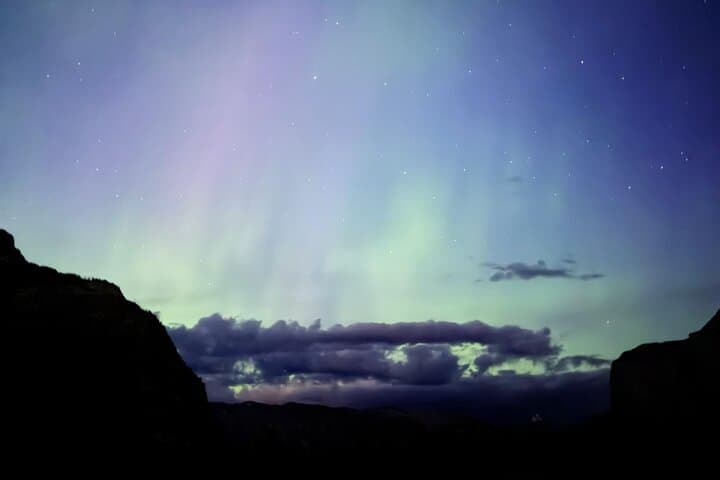
Aurora sightings are possible but not guaranteed—visibility depends on solar activity and clear skies; guides will point out conditions and best viewing opportunities.
Yes—walking is minimal and the tour accommodates varying mobility levels, but dress warmly and check pick-up logistics for accessibility concerns.
The operator may reschedule or offer alternatives if clouds or heavy precipitation block the sky; cancellation and refund policies are provided at booking.
Banff National Park was created in 1885 and is Canada’s oldest national park; its mountain valleys and thermal springs drew early tourists and railway development in the late 19th century.
Dark-sky awareness and light-discipline help protect nocturnal wildlife and improve viewing quality; pack out all waste and follow park regulations to minimize impact.
Banff Journey operates guided outdoor trips and adventures with an emphasis on safety, stewardship, and memorable experiences.
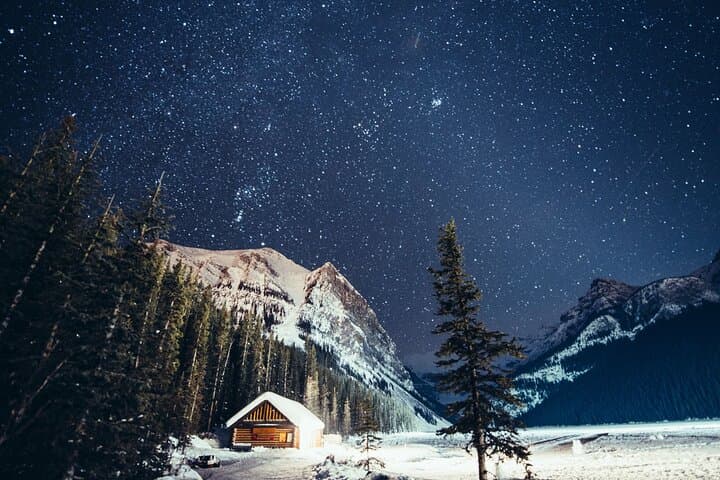
You step off the vehicle into an alpine hush and the mountains close around you, black ridges cutting the sky into a frame. The air is thin, cold, and sharp; overhead the Milky Way arcs like a pale river and individual stars suddenly feel close enough to name.
You step off the vehicle into an alpine hush and the mountains close around you, black ridges cutting the sky into a frame. The air is thin, cold, and sharp; overhead the Milky Way arcs like a pale river and individual stars suddenly feel close enough to name.
This two-hour guided stargazing tour ferries small groups from Canmore or Banff to a low-light site inside Banff National Park. Banff — established in 1885 as Canada’s first national park — sits where sedimentary rock was uplifted into the Canadian Rockies, creating clear, high-altitude skies that make nighttime viewing exceptional. Guides blend science and story, pointing out constellations, seasonal planets, and on active nights, a chance at faint aurora activity. Indigenous presence in these valleys reaches far back; many guides also acknowledge the cultural landscape alongside astronomical lore.
Logistics are straightforward: a short drive from town, light walking on packed ground, and standing-room viewing with occasional sheltered areas. The company supplies hot drinks and bottled water; expect small groups and a learning-focused guide. Visibility depends on moon phase, cloud cover, and solar activity — the darker the night, the more you’ll see.
Prepare practically: dress in warm layers, use a tripod for astrophotography, keep phone screens dim or use red-filtered lights, and arrive ready (bathrooms in town before departure). Respect wildlife and avoid bright lights that reduce everyone’s view. For casual viewers this is relaxed and accessible; photographers should plan extra time to set up and test exposures.