THE ADVENTURE COLLECTIVE® · Independent discovery and booking for outdoor travel

Explore Banff’s coal-era ruins on a guided two-kilometer walk that brings lost mining communities and their impact on the landscape to life. Ideal for history lovers and casual hikers, the tour pairs storytelling with easy, accessible trails.
Explore Banff’s coal-era ruins on a guided two-kilometer walk that brings lost mining communities and their impact on the landscape to life. Ideal for history lovers and casual hikers, the tour pairs storytelling with easy, accessible trails.
You step out of the shuttle onto a forested spur and the mountain air shifts—cool, dry, and carrying the metallic echo of a different era. The two-kilometer route threads through lodgepole pine and mossy outcrops, and within a few minutes you start seeing the hard edges of human industry: the hulking remains of coal loading platforms and stone foundations where whole families once lived.
Verified experiences and guided adventures in the surrounding area.
Operated by Banff & Canmore Tours · Banff, Alberta
You step out of the shuttle onto a forested spur and the mountain air shifts—cool, dry, and carrying the metallic echo of a different era. The two-kilometer route threads through lodgepole pine and mossy outcrops, and within a few minutes you start seeing the hard edges of human industry: the hulking remains of coal loading platforms and stone foundations where whole families once lived.
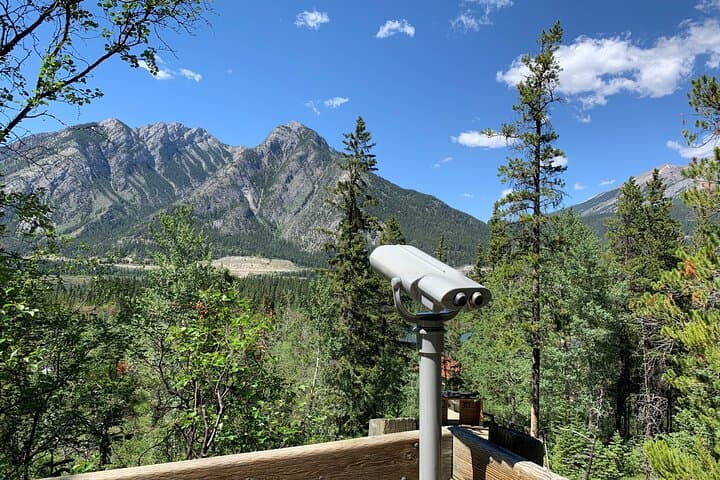
Banff’s lost towns grew around early 1900s coal operations that fed the region’s rail and steam needs. Geology here is obvious: Paleozoic limestone sculpted by glacial ice, with thin coal seams that drew miners into high-country camps. Your guide stitches together local culture, from miners’ daily routines to the later conservation decisions that reshaped the valley into protected parkland.
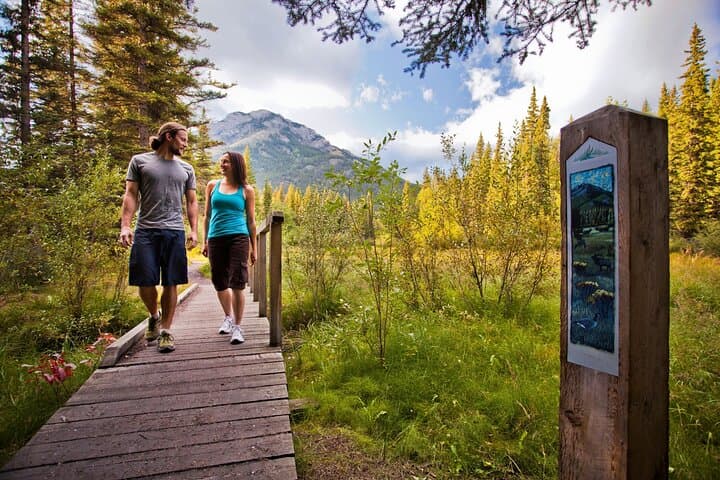
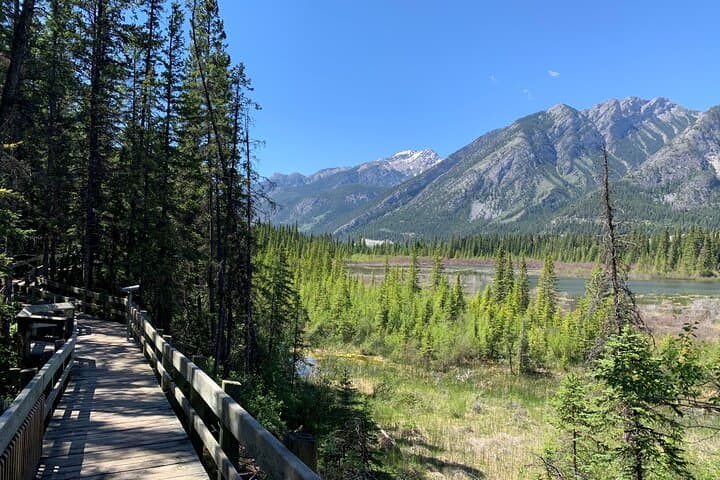
The mood shifts between storytelling stops—pause at an old bunkhouse foundation, listen for the clink of tools in the guide’s narration—and practical observations: trail surfaces are mostly compact dirt and boardwalk with short, gentle grades. Expect questions, hands-on artifacts or interpretive finds, and a compact, social group of up to a dozen.
This is history you can walk through rather than read about: facts about industrial life, the environmental cost of extraction, and how Banff’s identity changed when preservation became the priority. The tour includes transportation and basic safety gear options like ice cleats when conditions demand.
Plan for layered clothing, sturdy footwear, and a half-day schedule—this two-hour tour pairs well with further self-guided walks or a visit to the Banff Park Museum afterward.
easy.
1.5–2 hours.
Suitable for most walkers with basic mobility; some short uneven sections require balance.
The route covers about 2 kilometres and takes roughly 1.5–2 hours including interpretive stops.
Yes—transportation from the meeting/parking area to the trailhead is included in the tour price.
Yes—it's rated easy and appropriate for a wide range of ages, though participants should be steady on uneven surfaces.
The operator may cancel for poor weather; check confirmation details and dress in layers for variable mountain conditions.
Banff’s coal camps emerged in the early 1900s to support rail and local industry; many small communities faded as economic priorities and park protections changed the landscape.
Banff National Park prioritizes preservation—stay on trails, pack out waste, and avoid disturbing archaeological features to protect both ecology and cultural history.
Banff & Canmore Tours operates guided outdoor trips and adventures with an emphasis on safety, stewardship, and memorable experiences.
You step out of the shuttle onto a forested spur and the mountain air shifts—cool, dry, and carrying the metallic echo of a different era. The two-kilometer route threads through lodgepole pine and mossy outcrops, and within a few minutes you start seeing the hard edges of human industry: the hulking remains of coal loading platforms and stone foundations where whole families once lived.
You step out of the shuttle onto a forested spur and the mountain air shifts—cool, dry, and carrying the metallic echo of a different era. The two-kilometer route threads through lodgepole pine and mossy outcrops, and within a few minutes you start seeing the hard edges of human industry: the hulking remains of coal loading platforms and stone foundations where whole families once lived.
Banff’s lost towns grew around early 1900s coal operations that fed the region’s rail and steam needs. Geology here is obvious: Paleozoic limestone sculpted by glacial ice, with thin coal seams that drew miners into high-country camps. Your guide stitches together local culture, from miners’ daily routines to the later conservation decisions that reshaped the valley into protected parkland.
The mood shifts between storytelling stops—pause at an old bunkhouse foundation, listen for the clink of tools in the guide’s narration—and practical observations: trail surfaces are mostly compact dirt and boardwalk with short, gentle grades. Expect questions, hands-on artifacts or interpretive finds, and a compact, social group of up to a dozen.
This is history you can walk through rather than read about: facts about industrial life, the environmental cost of extraction, and how Banff’s identity changed when preservation became the priority. The tour includes transportation and basic safety gear options like ice cleats when conditions demand.
Plan for layered clothing, sturdy footwear, and a half-day schedule—this two-hour tour pairs well with further self-guided walks or a visit to the Banff Park Museum afterward.