THE ADVENTURE COLLECTIVE® · Independent discovery and booking for outdoor travel

Walk Banff’s main streets and riverfront with a private guide who blends town history, mountain geology and practical local tips. Ideal for first-time visitors wanting a compact orientation to the town and nearby sights.
Walk Banff’s main streets and riverfront with a private guide who blends town history, mountain geology and practical local tips. Ideal for first-time visitors wanting a compact orientation to the town and nearby sights.
A cold wind pushes across the Bow River as you step off Banff Avenue and into the town’s compact grid, flanked by craggy limestone peaks that loom like unfinished monuments. The guide falls into step, pointing out a century-old façade, the curve of a historic bridge, and a string of floral displays that catch the late-afternoon light — Banff’s character revealed in short scenes.
Verified experiences and guided adventures in the surrounding area.
Operated by Toonie Tours Calgary · Banff, Alberta
A cold wind pushes across the Bow River as you step off Banff Avenue and into the town’s compact grid, flanked by craggy limestone peaks that loom like unfinished monuments. The guide falls into step, pointing out a century-old façade, the curve of a historic bridge, and a string of floral displays that catch the late-afternoon light — Banff’s character revealed in short scenes.
The town began after railway crews and hot-spring discoveries in the 1880s led to Canada’s first national park. Its streets sit on glacially carved ground: folded and faulted sedimentary rock, smoothed valleys and river terraces left by retreating ice. Indigenous histories — particularly of the Stoney Nakoda and other Plains peoples who travelled these valleys — thread through place names and local stories your guide can unpack.
Culturally, Banff balances conservation, tourism and a lively mountain-service scene: independent cafés, outdoor outfitters, and the grand Banff Springs Hotel that anchors the town’s architectural story. On this private walking tour expect a mix of urban history, geology of the Rockies, and practical local tips for trails, wildlife etiquette and where to eat.
Practicalities: tours run about 2–3 hours, are entirely on paved or well-graded walking surfaces and are wheelchair-accessible. Wear layered clothing and sturdy walking shoes, bring water and a camera, and leave time after the tour to visit nearby viewpoints along the river. Guides work on a gratuity model and tailor the route to your interests — history, architecture, or quick trail recommendations — making this an efficient, informative way to orient yourself in Banff.
easy.
2–3 hours.
Minimal fitness required — suitable for most travelers who can walk for up to 3 hours with short stops.
The private tour runs about 2–3 hours and covers roughly 2–4 kilometers on paved or well-graded paths with frequent stops for interpretation.
Yes — the route uses accessible sidewalks and riverfront paths; note specific mobility needs when booking so the guide can adapt the itinerary.
Wildlife sightings in town are possible (elk, bighorn sheep); guides emphasize safe viewing distances and Parks Canada rules — sightings are never guaranteed.
Guides operate on a gratuity-based system; tipping is customary for private guided experiences and reflects service and customization.
Banff grew after CPR workers discovered local hot springs in the 1880s; it became the core of Canada’s first national park and a hub for early mountain tourism.
Parks Canada manages the townsite with strict wildlife and trail regulations — don’t feed animals, stick to paths, and follow seasonal closures to protect habitat.
Toonie Tours Calgary operates guided outdoor trips and adventures with an emphasis on safety, stewardship, and memorable experiences.
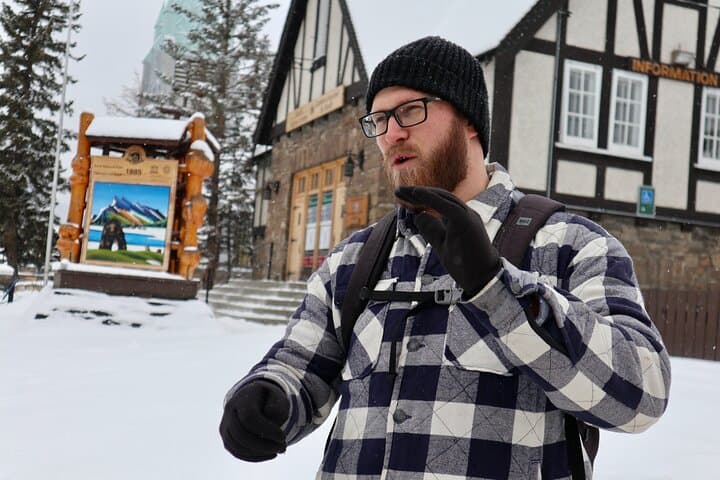
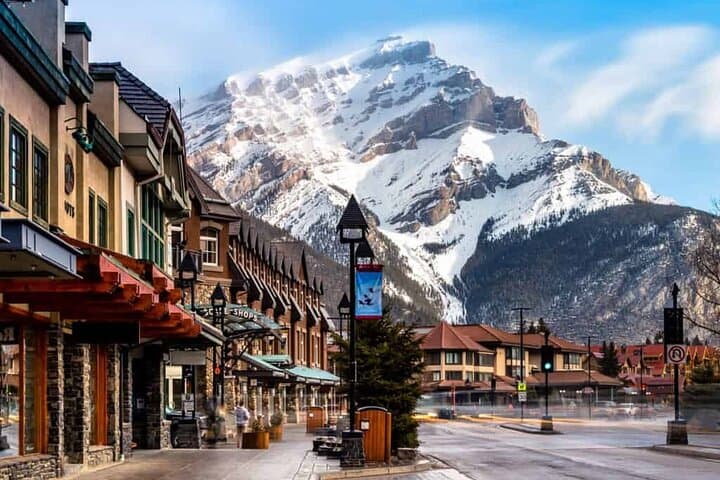
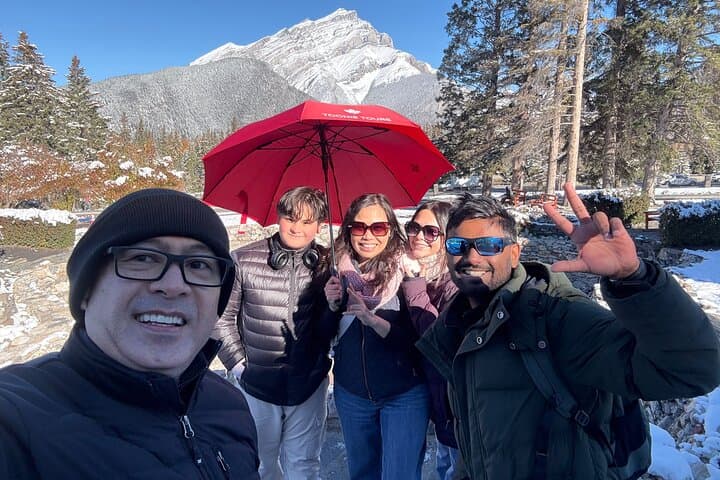
A cold wind pushes across the Bow River as you step off Banff Avenue and into the town’s compact grid, flanked by craggy limestone peaks that loom like unfinished monuments. The guide falls into step, pointing out a century-old façade, the curve of a historic bridge, and a string of floral displays that catch the late-afternoon light — Banff’s character revealed in short scenes.
A cold wind pushes across the Bow River as you step off Banff Avenue and into the town’s compact grid, flanked by craggy limestone peaks that loom like unfinished monuments. The guide falls into step, pointing out a century-old façade, the curve of a historic bridge, and a string of floral displays that catch the late-afternoon light — Banff’s character revealed in short scenes.
The town began after railway crews and hot-spring discoveries in the 1880s led to Canada’s first national park. Its streets sit on glacially carved ground: folded and faulted sedimentary rock, smoothed valleys and river terraces left by retreating ice. Indigenous histories — particularly of the Stoney Nakoda and other Plains peoples who travelled these valleys — thread through place names and local stories your guide can unpack.
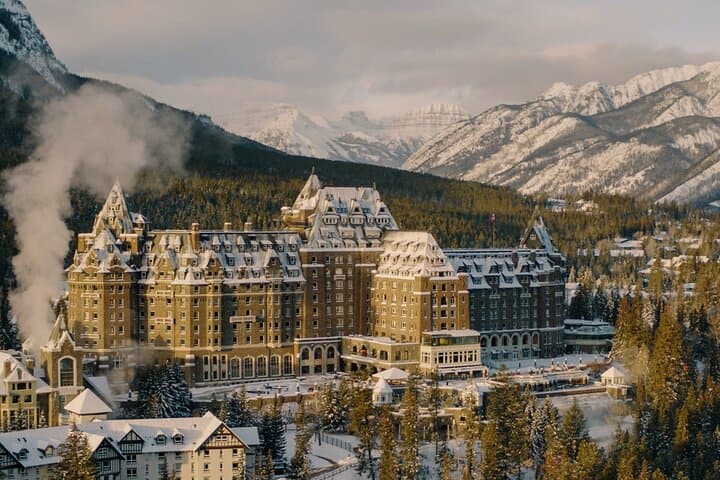
Culturally, Banff balances conservation, tourism and a lively mountain-service scene: independent cafés, outdoor outfitters, and the grand Banff Springs Hotel that anchors the town’s architectural story. On this private walking tour expect a mix of urban history, geology of the Rockies, and practical local tips for trails, wildlife etiquette and where to eat.
Practicalities: tours run about 2–3 hours, are entirely on paved or well-graded walking surfaces and are wheelchair-accessible. Wear layered clothing and sturdy walking shoes, bring water and a camera, and leave time after the tour to visit nearby viewpoints along the river. Guides work on a gratuity model and tailor the route to your interests — history, architecture, or quick trail recommendations — making this an efficient, informative way to orient yourself in Banff.