THE ADVENTURE COLLECTIVE® · Independent discovery and booking for outdoor travel

A full-day, small-group circuit from Bandung that pairs a 20-minute hike to Kawah Putih’s alien crater, a soak in Rengganis hot springs and mud baths, a gravity-fueled golesat race, and a serene stop at a colonial-era tea plantation. Practical and active, this trip balances short hikes with relaxation.
A full-day, small-group circuit from Bandung that pairs a 20-minute hike to Kawah Putih’s alien crater, a soak in Rengganis hot springs and mud baths, a gravity-fueled golesat race, and a serene stop at a colonial-era tea plantation. Practical and active, this trip balances short hikes with relaxation.
Mist lifts off a chalk-white lake as the minivan winds higher from Bandung, and the air takes on a metallic tang that tells you a volcano is near. At Kawah Putih, a shallow turquoise caldera cracks open under a pale rim of silica; sulfur vents puff like sighs and a short, steep trail climbs to the crater lip in about 20 minutes. Later the day moves from acidic steam to warm mineral pools at Rengganis Crater, where natural hotsprings and community-run mud baths offer a tactile contrast to the brittle crater landscape.
Verified experiences and guided adventures in the surrounding area.
Operated by Fanji · Ciwidey, West Java
Mist lifts off a chalk-white lake as the minivan winds higher from Bandung, and the air takes on a metallic tang that tells you a volcano is near. At Kawah Putih, a shallow turquoise caldera cracks open under a pale rim of silica; sulfur vents puff like sighs and a short, steep trail climbs to the crater lip in about 20 minutes. Later the day moves from acidic steam to warm mineral pools at Rengganis Crater, where natural hotsprings and community-run mud baths offer a tactile contrast to the brittle crater landscape.
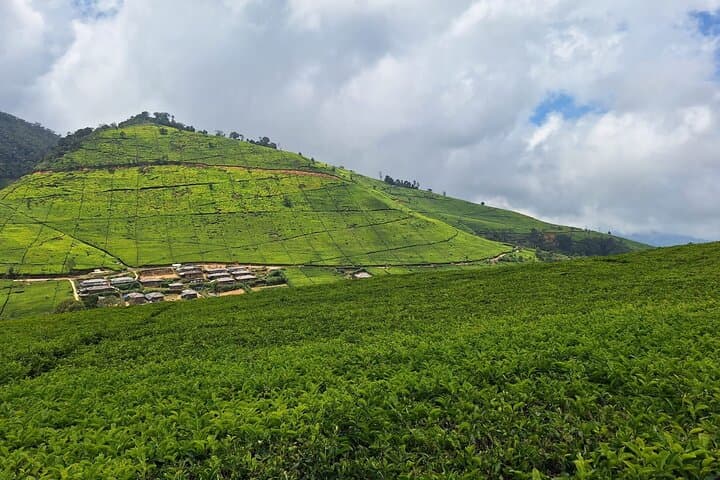
Geology here is immediate: you pass volcanic plateaus and fumaroles tied to the Mount Patuha complex. The surrounding hills were shaped by repeated eruptions and now host tea terraces laid out during the colonial era—fields that still supply local estates and frame views of patenggang lake. Sundanese culture threads through the route in small food stalls, the cadence of tea picking, and local guides sharing practical lore about the craters.
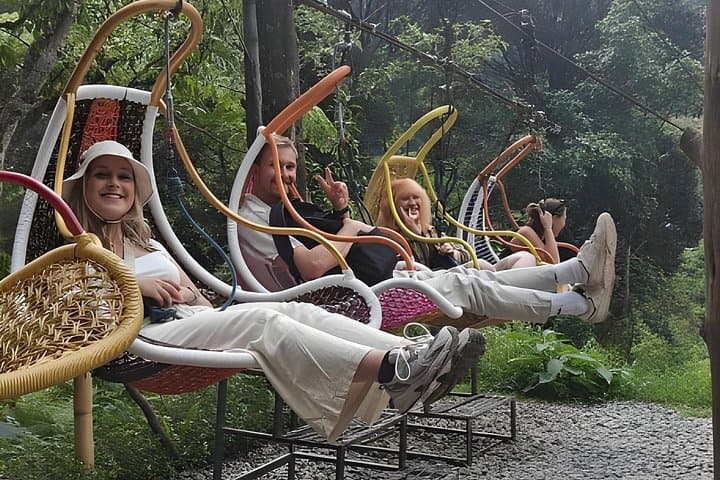
Expect mixed terrain: paved road access, short steep boardwalks and loose volcanic sand near the crater, then boardwalks and pools at the hot spring. The full outing runs 8–10 hours with light hiking, a brief downhill trike race (golesat), and time for a tea-plantation stop and lunch. Bring layered clothing for cool crater winds, carry water, and be prepared for sulfur odor near fumaroles. Respect posted safety zones around volatile vents and follow your guide’s instructions—this keeps the experience adventurous, not risky.
moderate.
8–10 hours.
Moderate fitness—able to handle short steep climbs, some standing, and a few stairs; not suitable for those with serious cardiovascular or spinal conditions.
The walk from the parking area to the crater rim is short—about 15–25 minutes over a steep, loose trail; guides often lead the way.
Yes—entry and access to Rengganis hot springs and mud-bath areas are included in the tour admissions.
Children with supervision can join, but the tour is not recommended for pregnant travelers or those with serious heart or spinal conditions.
Lunch at Patenggang Lake or a nearby restaurant is included; basic restroom facilities are available at main stops but bring tissues and hand sanitizer.
The crater and surrounding hills are part of the Mount Patuha volcanic system; tea cultivation expanded across these slopes during the Dutch colonial period and remains a local economic staple.
High visitor volumes and fragile volcanic soils require sticking to paths, avoiding collecting geological samples, and minimizing plastic waste to protect the area’s ecosystems.
Fanji operates guided outdoor trips and adventures with an emphasis on safety, stewardship, and memorable experiences.
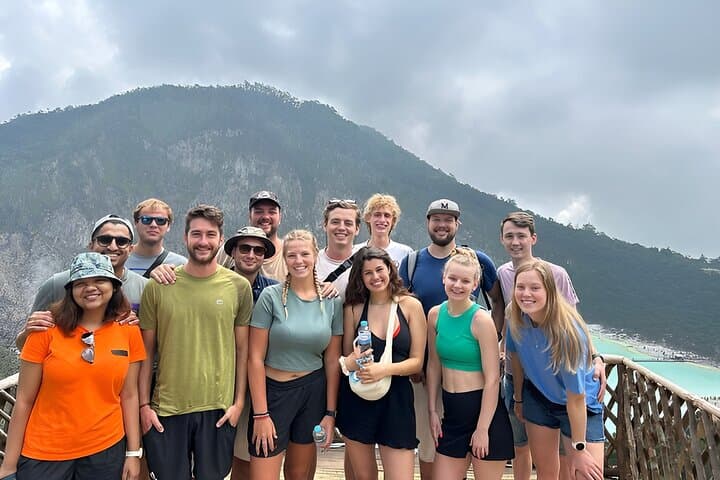
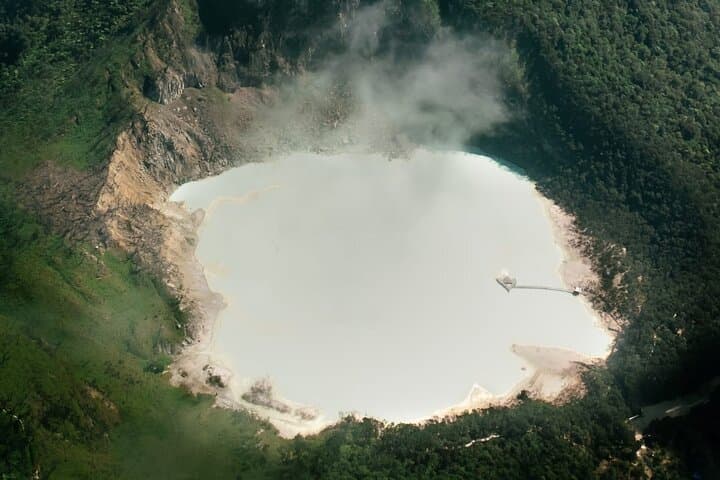
Mist lifts off a chalk-white lake as the minivan winds higher from Bandung, and the air takes on a metallic tang that tells you a volcano is near. At Kawah Putih, a shallow turquoise caldera cracks open under a pale rim of silica; sulfur vents puff like sighs and a short, steep trail climbs to the crater lip in about 20 minutes. Later the day moves from acidic steam to warm mineral pools at Rengganis Crater, where natural hotsprings and community-run mud baths offer a tactile contrast to the brittle crater landscape.
Mist lifts off a chalk-white lake as the minivan winds higher from Bandung, and the air takes on a metallic tang that tells you a volcano is near. At Kawah Putih, a shallow turquoise caldera cracks open under a pale rim of silica; sulfur vents puff like sighs and a short, steep trail climbs to the crater lip in about 20 minutes. Later the day moves from acidic steam to warm mineral pools at Rengganis Crater, where natural hotsprings and community-run mud baths offer a tactile contrast to the brittle crater landscape.
Geology here is immediate: you pass volcanic plateaus and fumaroles tied to the Mount Patuha complex. The surrounding hills were shaped by repeated eruptions and now host tea terraces laid out during the colonial era—fields that still supply local estates and frame views of patenggang lake. Sundanese culture threads through the route in small food stalls, the cadence of tea picking, and local guides sharing practical lore about the craters.
Expect mixed terrain: paved road access, short steep boardwalks and loose volcanic sand near the crater, then boardwalks and pools at the hot spring. The full outing runs 8–10 hours with light hiking, a brief downhill trike race (golesat), and time for a tea-plantation stop and lunch. Bring layered clothing for cool crater winds, carry water, and be prepared for sulfur odor near fumaroles. Respect posted safety zones around volatile vents and follow your guide’s instructions—this keeps the experience adventurous, not risky.