THE ADVENTURE COLLECTIVE® · Independent discovery and booking for outdoor travel

Drive into Bandia Reserve for a guided wildlife safari through baobab-strewn savanna, with a two-hour game loop and lunch included. Expect close views of giraffe, rhino, zebra, and monkeys—ideal for photographers and wildlife enthusiasts.
Drive into Bandia Reserve for a guided wildlife safari through baobab-strewn savanna, with a two-hour game loop and lunch included. Expect close views of giraffe, rhino, zebra, and monkeys—ideal for photographers and wildlife enthusiasts.
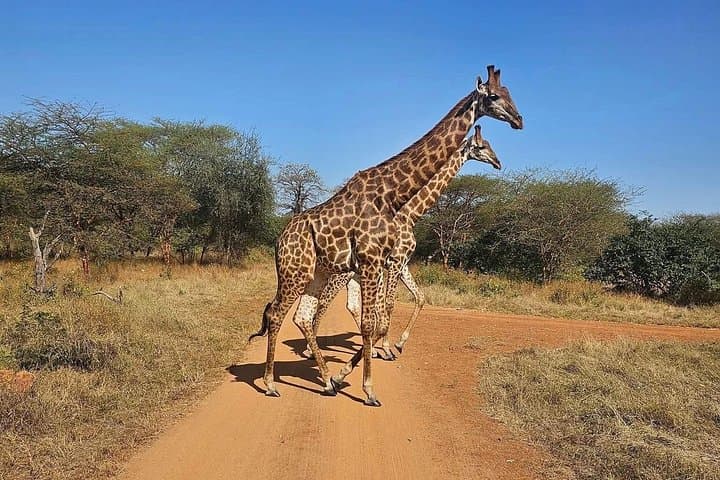
The morning sun tips the tops of baobabs as a cool breeze washes across the dusty track to Bandia Reserve. You arrive by air‑conditioned vehicle, then shift into a slower rhythm—low-slung game trails, the dry scent of grass, and the unexpected silhouette of a giraffe stepping into open scrub.
Verified experiences and guided adventures in the surrounding area.
Operated by Djibril Dieng · Saly, Thiès
The morning sun tips the tops of baobabs as a cool breeze washes across the dusty track to Bandia Reserve. You arrive by air‑conditioned vehicle, then shift into a slower rhythm—low-slung game trails, the dry scent of grass, and the unexpected silhouette of a giraffe stepping into open scrub.
Bandia Reserve covers roughly 1,500 hectares of baobab-studded savanna and was opened to protect local fauna in 1997. The soil here is classic laterite—red, compacted, and dotted with shallow rock outcrops—shaping pools where birds congregate. Local guides combine ecological knowledge with cultural notes about nearby fishing and farming communities, linking wildlife sightings to seasonal water and grazing patterns.
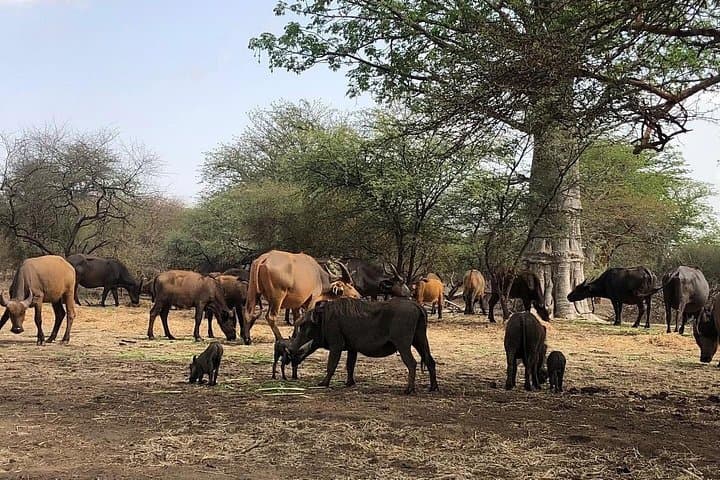
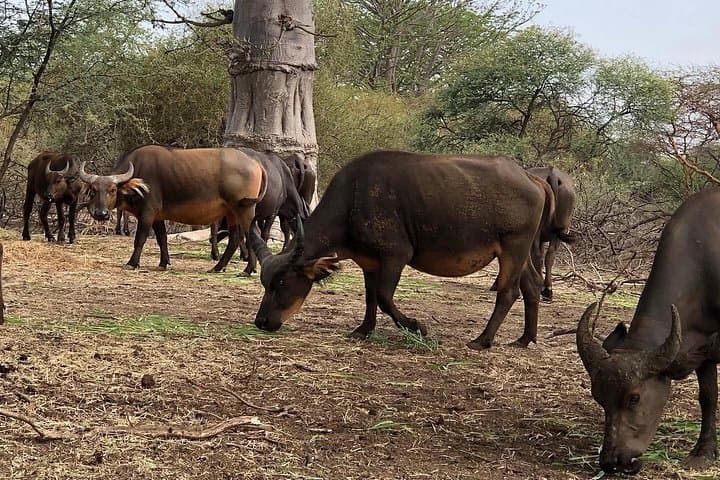
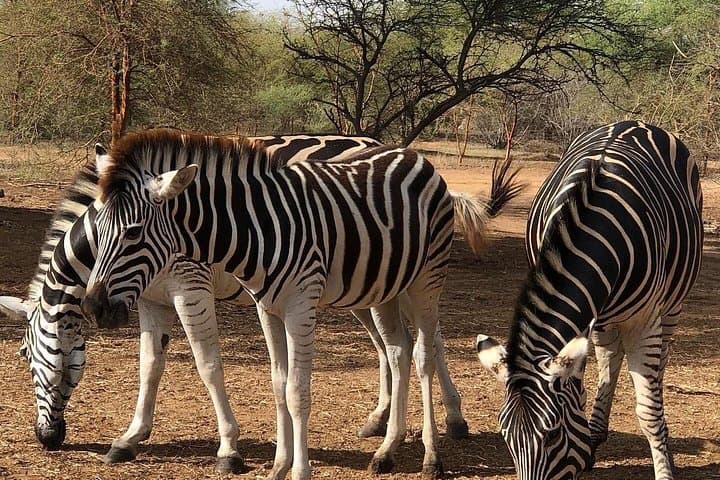
Wildlife viewing centers on relaxed, vehicle-based drives: giraffes browse acacia crowns, rhino emerge in the heat mirage, zebras graze in small herds, and troops of monkeys move through canopy edges. Expect sandy tracks and flat terrain; elevation change is negligible, so the experience is more about observation than exertion.
Practically, the standard visit includes a ~2-hour guided safari loop and a reserve lunch. Photography windows are best in early morning or late afternoon light; midday is harsher. Hydrate, wear a hat and breathable layers, and keep a pair of binoculars handy. Guides emphasize no-feeding rules and distance when approaching large mammals—safety for both visitors and wildlife.
This is an accessible wildlife outing: minimal walking, rich sightings, and a chance to learn how protected land management in Senegal supports species recovery while benefiting local communities.
easy.
6–7 hours (includes transport from Dakar and reserve visit).
Suitable for all fitness levels; mostly vehicle-based with minimal walking
The typical guided loop is about 2 hours inside the 1,500-hectare reserve, timed to maximize sightings and return for lunch.
Yes—private, air-conditioned transportation from Dakar (or nearby pick-up points) is included in the tour price.
Families are welcome; the activity is suitable for all fitness levels but keep children supervised around animals and near waterholes.
Sightings are common due to the reserve’s protected habitat, but wildlife moves with water and forage—no sightings can be guaranteed.
Bandia Reserve opened in 1997 to conserve regional species and restore degraded lands, operating within 1,500 hectares of baobab and savanna.
The reserve focuses on species protection and community benefits; visitors help by following no-feeding rules, minimizing waste, and supporting local guides.
Djibril Dieng operates guided outdoor trips and adventures with an emphasis on safety, stewardship, and memorable experiences.
The morning sun tips the tops of baobabs as a cool breeze washes across the dusty track to Bandia Reserve. You arrive by air‑conditioned vehicle, then shift into a slower rhythm—low-slung game trails, the dry scent of grass, and the unexpected silhouette of a giraffe stepping into open scrub.
The morning sun tips the tops of baobabs as a cool breeze washes across the dusty track to Bandia Reserve. You arrive by air‑conditioned vehicle, then shift into a slower rhythm—low-slung game trails, the dry scent of grass, and the unexpected silhouette of a giraffe stepping into open scrub.
Bandia Reserve covers roughly 1,500 hectares of baobab-studded savanna and was opened to protect local fauna in 1997. The soil here is classic laterite—red, compacted, and dotted with shallow rock outcrops—shaping pools where birds congregate. Local guides combine ecological knowledge with cultural notes about nearby fishing and farming communities, linking wildlife sightings to seasonal water and grazing patterns.
Wildlife viewing centers on relaxed, vehicle-based drives: giraffes browse acacia crowns, rhino emerge in the heat mirage, zebras graze in small herds, and troops of monkeys move through canopy edges. Expect sandy tracks and flat terrain; elevation change is negligible, so the experience is more about observation than exertion.
Practically, the standard visit includes a ~2-hour guided safari loop and a reserve lunch. Photography windows are best in early morning or late afternoon light; midday is harsher. Hydrate, wear a hat and breathable layers, and keep a pair of binoculars handy. Guides emphasize no-feeding rules and distance when approaching large mammals—safety for both visitors and wildlife.
This is an accessible wildlife outing: minimal walking, rich sightings, and a chance to learn how protected land management in Senegal supports species recovery while benefiting local communities.