THE ADVENTURE COLLECTIVE® · Independent discovery and booking for outdoor travel

Drive through limestone towers to one of Vietnam’s most dramatic border falls, explore a cavern of rushing underground water, and finish with a hilltop pagoda view. This 2-day trip blends big-water spectacle with cave passages and local cultural stops.
Drive through limestone towers to one of Vietnam’s most dramatic border falls, explore a cavern of rushing underground water, and finish with a hilltop pagoda view. This 2-day trip blends big-water spectacle with cave passages and local cultural stops.
Mist from the falls meets the road first thing on a Cao Bang dawn—white veils lift from tiers of limestone as the bus noses toward the border, and the valley inhales. At Ban Gioc the river insists on motion: curtains of water push outward over segmented cliffs, spraying the grasses below and daring you closer to the sound.
Verified experiences and guided adventures in the surrounding area.
Operated by Authentuc PU LUONG · Cao Bang, Cao Bang Province
Mist from the falls meets the road first thing on a Cao Bang dawn—white veils lift from tiers of limestone as the bus noses toward the border, and the valley inhales. At Ban Gioc the river insists on motion: curtains of water push outward over segmented cliffs, spraying the grasses below and daring you closer to the sound.
The landscape here is young karst—towering limestone, sinkholes and lakes formed by tectonic lift and the slow chemistry of flowing water. Ban Gioc’s falls span roughly 300 meters across several drops; downstream, Thang Hen’s shallow lakes punctuate the karst plain. Nguom Ngao (Tiger Cave), first noted by French and Vietnamese visitors in the 1920s, channels a loud underground stream that still rumbles through caverns—948 meters of the cave are open to visitors, revealing dramatic stalactites and echoing chambers.
Local culture is visible along the route: Tay and Nung villages, wooden stilt houses, and the Phat Tich Truc Lam pagoda’s hilltop viewpoint that frames the falls like a living map. Expect modest tourist services—family-run restaurants and a basic hotel stay the first night.
Practical guide: arrive hydrated and early for softer light and fewer crowds; wear sturdy shoes for wet rocks and uneven cave floors; bring cash for the optional boat ride and small local shops. The cave is cool and damp—carry a light layer and a headlamp if you prefer extra visibility. Plan for long road time from Hanoi; travel is part of the trip’s rhythm: a transition from rice plains to a border landscape that moves at the speed of water.
moderate.
2 days (approx. 48 hours).
Light to moderate fitness; able to handle short hikes, stairs and uneven, wet surfaces.
The shared minivan/bus transfer takes roughly 6–7 hours each way depending on traffic and stops—expect a long road day on arrival and return.
No, the tour views the falls from the Vietnamese side; crossing into China requires separate visas and formal border procedures.
No, the short boat trip up close to the falls is typically self-paid and available on-site when conditions permit.
Nguom Ngao Cave is family-friendly but involves uneven paths and low lighting; supervise children closely and avoid slick edges.
Ban Gioc sits on the Vietnam–China border; Nguom Ngao Cave was first recorded by French and Vietnamese visitors in the 1920s and has been a local landmark ever since.
Increased visitor numbers stress fragile karst systems—avoid touching formations, pack out trash, and use local services to support community-based tourism.
Authentuc PU LUONG operates guided outdoor trips and adventures with an emphasis on safety, stewardship, and memorable experiences.

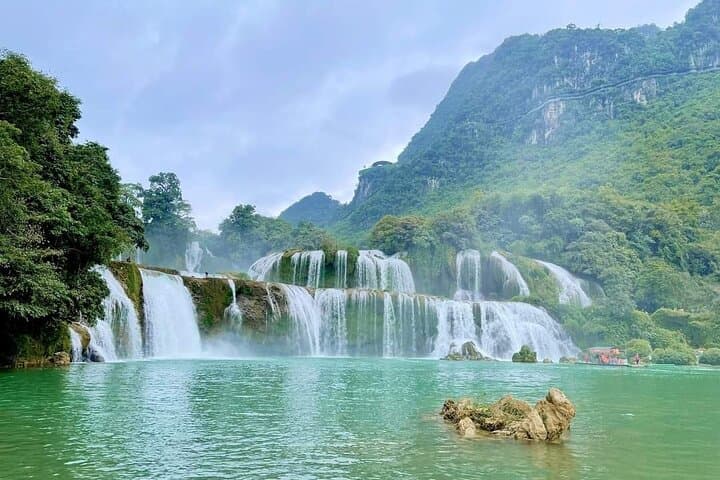

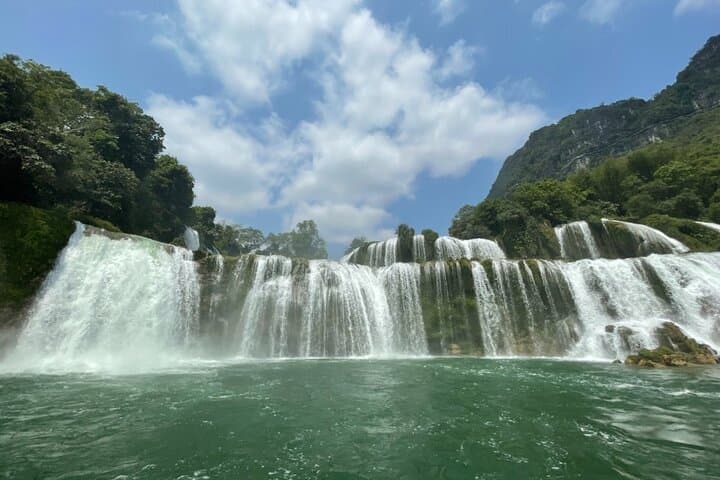
Mist from the falls meets the road first thing on a Cao Bang dawn—white veils lift from tiers of limestone as the bus noses toward the border, and the valley inhales. At Ban Gioc the river insists on motion: curtains of water push outward over segmented cliffs, spraying the grasses below and daring you closer to the sound.
Mist from the falls meets the road first thing on a Cao Bang dawn—white veils lift from tiers of limestone as the bus noses toward the border, and the valley inhales. At Ban Gioc the river insists on motion: curtains of water push outward over segmented cliffs, spraying the grasses below and daring you closer to the sound.
The landscape here is young karst—towering limestone, sinkholes and lakes formed by tectonic lift and the slow chemistry of flowing water. Ban Gioc’s falls span roughly 300 meters across several drops; downstream, Thang Hen’s shallow lakes punctuate the karst plain. Nguom Ngao (Tiger Cave), first noted by French and Vietnamese visitors in the 1920s, channels a loud underground stream that still rumbles through caverns—948 meters of the cave are open to visitors, revealing dramatic stalactites and echoing chambers.
Local culture is visible along the route: Tay and Nung villages, wooden stilt houses, and the Phat Tich Truc Lam pagoda’s hilltop viewpoint that frames the falls like a living map. Expect modest tourist services—family-run restaurants and a basic hotel stay the first night.
Practical guide: arrive hydrated and early for softer light and fewer crowds; wear sturdy shoes for wet rocks and uneven cave floors; bring cash for the optional boat ride and small local shops. The cave is cool and damp—carry a light layer and a headlamp if you prefer extra visibility. Plan for long road time from Hanoi; travel is part of the trip’s rhythm: a transition from rice plains to a border landscape that moves at the speed of water.