THE ADVENTURE COLLECTIVE® · Independent discovery and booking for outdoor travel

A two‑day escape from Hanoi to Vietnam’s largest border waterfall. Spend a night in Cao Bang, explore Ban Gioc’s tiers, Nguom Ngao Cave and Angle’s Eye Mountain with guided transfers and local meals included.
A two‑day escape from Hanoi to Vietnam’s largest border waterfall. Spend a night in Cao Bang, explore Ban Gioc’s tiers, Nguom Ngao Cave and Angle’s Eye Mountain with guided transfers and local meals included.
You leave Hanoi before dawn and the city thins into rice paddies and karst ridgelines. Hours on the road give way to sudden green: the Quây Sơn River gathers speed and, at the border, the Ban Gioc waterfall announces itself—multiple tiers of water throwing spray across a broad limestone lip.
Verified experiences and guided adventures in the surrounding area.
Operated by Vietnam Travel Top · Cao Bang, Cao Bang Province
You leave Hanoi before dawn and the city thins into rice paddies and karst ridgelines. Hours on the road give way to sudden green: the Quây Sơn River gathers speed and, at the border, the Ban Gioc waterfall announces itself—multiple tiers of water throwing spray across a broad limestone lip.
Geology here is obvious: layered carbonate rock, deep fissures and cave systems carved by millennia of running water. Ban Gioc ranks among Asia’s largest cross-border waterfalls; its cascade and braided channels speak to seasonal flows and upstream catchment across the Sino‑Vietnamese frontier. The nearby Nguom Ngao (Tiger) Cave cuts into the same karst, revealing stalactites and high chambers once significant in local folk practices.
Culturally, the region is home to Tay and Nung communities; small pagodas and riverside farms punctuate the landscape. Ban Gioc Pagoda and Angle’s Eye Mountain offer viewpoints and a through‑hole in the limestone you can walk to for a different angle on the falls.
Practically: the trip is a two‑day, one‑night coach tour from Hanoi (expect ~5–7 hours each way), one night in a local 2‑star hotel, meals included as listed, and short walks on uneven, often wet stone. Bring sturdy shoes, a rain layer, and a camera you don’t mind misting over. Boat trips near the falls are available on site for a fee; wear non‑slip footwear if you go down to the riverbank. The tour suits most fitness levels but involves some climbing over slick steps and cave passages—pace yourself, hydrate, and stay with your guide to respect local boundaries and fragile karst features.
moderate.
2 days (approx. 48 hours).
Suitable for travelers in reasonable health who can manage short walks on uneven, wet terrain and climb stairs
Expect about 5–7 hours each way depending on traffic and road conditions; the tour includes coach transfers.
No — boat trips are typically available on site for an additional, pay‑as‑you‑go fee.
Nguom Ngao Cave involves uneven paths and some steps but is accessible to most visitors with basic mobility; wear good shoes.
Accommodation is a local 2‑star hotel (basic, clean rooms) suitable for overnight stays near the waterfall.
Ban Gioc sits on the Vietnam–China border and has long been a local cultural and economic landmark for Tay and Nung communities; border dynamics shaped access and settlement patterns.
The karst and river ecosystem is sensitive — stick to trails, pack out trash, and avoid disturbing vegetation or wildlife to reduce erosion and pollution.
Vietnam Travel Top operates guided outdoor trips and adventures with an emphasis on safety, stewardship, and memorable experiences.
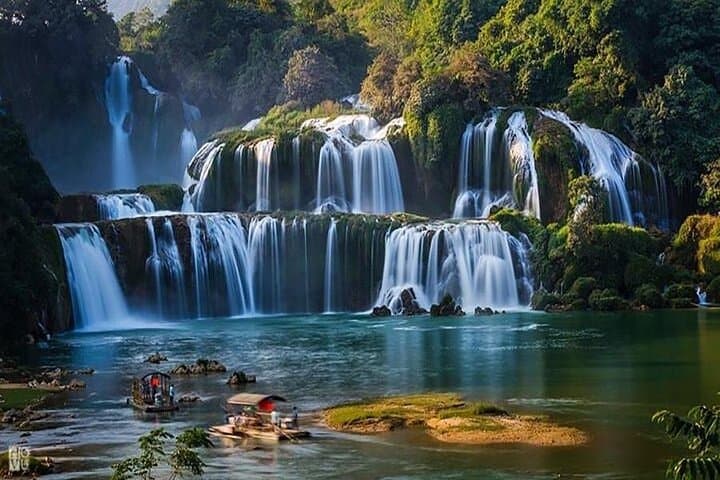
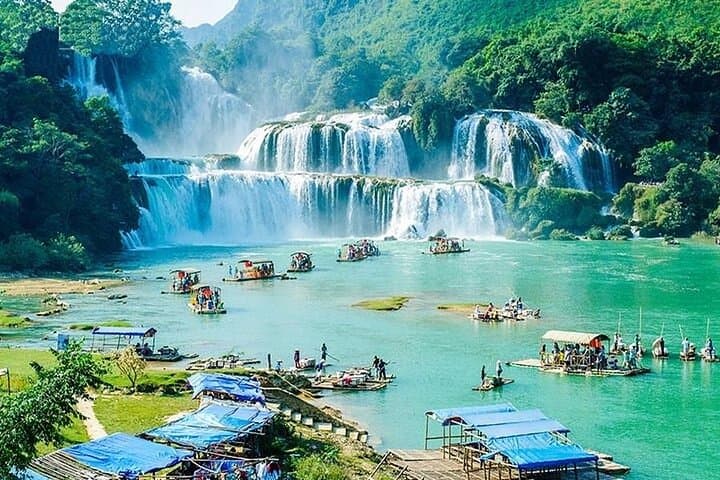
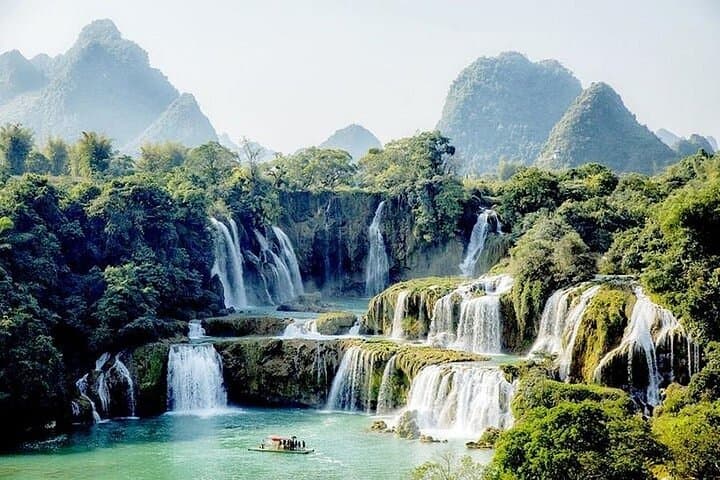
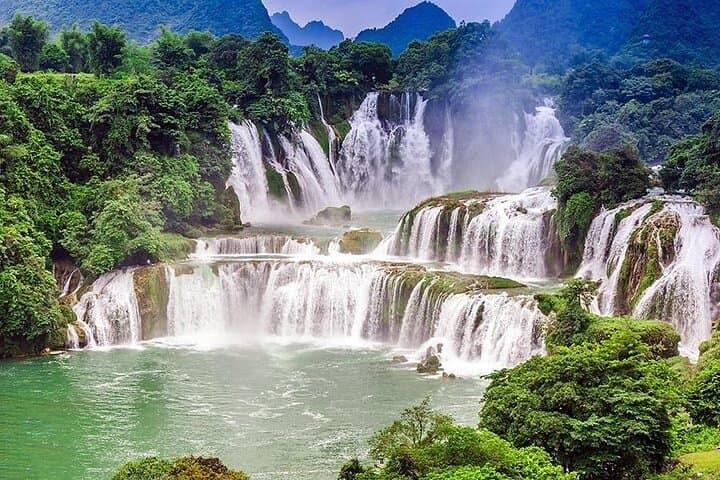
You leave Hanoi before dawn and the city thins into rice paddies and karst ridgelines. Hours on the road give way to sudden green: the Quây Sơn River gathers speed and, at the border, the Ban Gioc waterfall announces itself—multiple tiers of water throwing spray across a broad limestone lip.
You leave Hanoi before dawn and the city thins into rice paddies and karst ridgelines. Hours on the road give way to sudden green: the Quây Sơn River gathers speed and, at the border, the Ban Gioc waterfall announces itself—multiple tiers of water throwing spray across a broad limestone lip.
Geology here is obvious: layered carbonate rock, deep fissures and cave systems carved by millennia of running water. Ban Gioc ranks among Asia’s largest cross-border waterfalls; its cascade and braided channels speak to seasonal flows and upstream catchment across the Sino‑Vietnamese frontier. The nearby Nguom Ngao (Tiger) Cave cuts into the same karst, revealing stalactites and high chambers once significant in local folk practices.
Culturally, the region is home to Tay and Nung communities; small pagodas and riverside farms punctuate the landscape. Ban Gioc Pagoda and Angle’s Eye Mountain offer viewpoints and a through‑hole in the limestone you can walk to for a different angle on the falls.
Practically: the trip is a two‑day, one‑night coach tour from Hanoi (expect ~5–7 hours each way), one night in a local 2‑star hotel, meals included as listed, and short walks on uneven, often wet stone. Bring sturdy shoes, a rain layer, and a camera you don’t mind misting over. Boat trips near the falls are available on site for a fee; wear non‑slip footwear if you go down to the riverbank. The tour suits most fitness levels but involves some climbing over slick steps and cave passages—pace yourself, hydrate, and stay with your guide to respect local boundaries and fragile karst features.