THE ADVENTURE COLLECTIVE® · Independent discovery and booking for outdoor travel

Float downstream on a traditional bamboo raft, then spend time at a local elephant camp learning about mahout care and bathing rituals. This 4–5 hour half-day tour combines an easy river float with hands-on animal interaction and short riverside walks.
Float downstream on a traditional bamboo raft, then spend time at a local elephant camp learning about mahout care and bathing rituals. This 4–5 hour half-day tour combines an easy river float with hands-on animal interaction and short riverside walks.
You push off on a low, slatted bamboo raft and the river takes the lead—the current nudging you past rock gardens, low riverbanks and stands of siang (bamboo) that clap softly as you pass.
Verified experiences and guided adventures in the surrounding area.
Operated by MY MAI TRAVEL · Chiang Mai, Chiang Mai
You push off on a low, slatted bamboo raft and the river takes the lead—the current nudging you past rock gardens, low riverbanks and stands of siang (bamboo) that clap softly as you pass.
This half-day outing around Chiang Mai mixes a gentle float with close-up time at a local elephant camp. Northern Thailand's rivers carve through old volcanic and granite foothills, feeding rice terraces and teak forests that supported Lanna kingdoms and later a teak-logging economy; bamboo rafts were once a practical way to move goods and people downstream.
Culturally, the trip touches mahout traditions: handlers who work with elephants using long experience rather than showmanship. Geologically the area is worn, folded highland, giving the streams their slow gradient and broad, slow-moving channels ideal for bamboo rafts.
Expect 4–5 hours door-to-door with an air-conditioned transfer, a guided raft float of a few kilometers on calm water, a short riverside walk, and a supervised elephant encounter that typically includes feeding and watching bathing rather than forced performances.
Practical notes: bring quick-dry clothing, a secure camera, reef-style water shoes, sun protection and insect repellent. Morning departures dodge midday heat and produce crisper light for photos. Respect handlers’ instructions around elephants—approach under guidance, avoid sudden movements, and follow rules about feeding.
For travelers who want an accessible outdoor experience, the day balances easy physical activity with meaningful wildlife interaction—choose operators that emphasize welfare and low-impact practices to make the visit responsible as well as memorable.
easy.
4–5 hours.
Suitable for most fitness levels; involves low-impact rafting, brief walks and standing at the camp.
The bamboo raft float is generally a gentle few-kilometer stretch lasting around 30–60 minutes depending on water level and itinerary.
Most reputable operators focus on feeding, walking alongside, and watching elephants bathe rather than traditional saddle rides; confirm the operator’s animal welfare policy before booking.
Yes; the activity is rated easy and suitable for a wide range of ages, though mobility limitations should be communicated at booking for pickup and aid getting on/off platforms.
Wear quick-dry clothes, water shoes, sun protection, and bring a waterproof camera or case; carry small local currency for tips and souvenirs.
The area reflects Lanna-era settlement patterns and later teak logging routes; bamboo rafts were historically practical craft for moving goods along shallow tributaries.
Elephant tourism has significant welfare concerns—favor operators who practice non-riding interactions, limit group sizes, and support veterinary care or sanctuaries.
MY MAI TRAVEL operates guided outdoor trips and adventures with an emphasis on safety, stewardship, and memorable experiences.
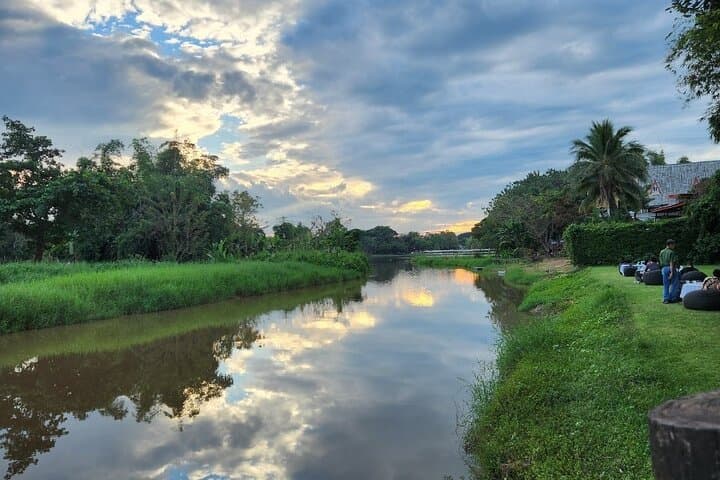
You push off on a low, slatted bamboo raft and the river takes the lead—the current nudging you past rock gardens, low riverbanks and stands of siang (bamboo) that clap softly as you pass.
You push off on a low, slatted bamboo raft and the river takes the lead—the current nudging you past rock gardens, low riverbanks and stands of siang (bamboo) that clap softly as you pass.
This half-day outing around Chiang Mai mixes a gentle float with close-up time at a local elephant camp. Northern Thailand's rivers carve through old volcanic and granite foothills, feeding rice terraces and teak forests that supported Lanna kingdoms and later a teak-logging economy; bamboo rafts were once a practical way to move goods and people downstream.
Culturally, the trip touches mahout traditions: handlers who work with elephants using long experience rather than showmanship. Geologically the area is worn, folded highland, giving the streams their slow gradient and broad, slow-moving channels ideal for bamboo rafts.
Expect 4–5 hours door-to-door with an air-conditioned transfer, a guided raft float of a few kilometers on calm water, a short riverside walk, and a supervised elephant encounter that typically includes feeding and watching bathing rather than forced performances.
Practical notes: bring quick-dry clothing, a secure camera, reef-style water shoes, sun protection and insect repellent. Morning departures dodge midday heat and produce crisper light for photos. Respect handlers’ instructions around elephants—approach under guidance, avoid sudden movements, and follow rules about feeding.
For travelers who want an accessible outdoor experience, the day balances easy physical activity with meaningful wildlife interaction—choose operators that emphasize welfare and low-impact practices to make the visit responsible as well as memorable.