THE ADVENTURE COLLECTIVE® · Independent discovery and booking for outdoor travel

Explore Vilnius, the Curonian Spit, Riga and Tallinn in a paced 10-day small-group tour. Expect coastal dunes, medieval streets and Art Nouveau cities with central hotels and coach transport included.
Explore Vilnius, the Curonian Spit, Riga and Tallinn in a paced 10-day small-group tour. Expect coastal dunes, medieval streets and Art Nouveau cities with central hotels and coach transport included.
You step off the coach into Vilnius’ Old Town, cobbles underfoot and red-tiled roofs rolling toward the horizon — the first visual note of a trip that trades capitals, coastlines and centuries.
Verified experiences and guided adventures in the surrounding area.
Operated by Travel Addicts Club · Vilnius, Vilnius County
You step off the coach into Vilnius’ Old Town, cobbles underfoot and red-tiled roofs rolling toward the horizon — the first visual note of a trip that trades capitals, coastlines and centuries.
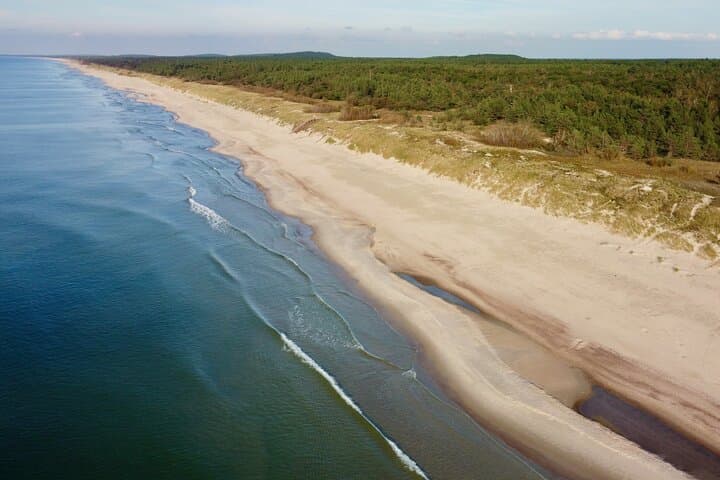
Over ten days the route unspools: Vilnius’ medieval churches and Gediminas Tower, the low-lying wetlands and wind-sculpted sand of the Curonian Spit, Riga’s Art Nouveau façades and Tallinn’s intact medieval ramparts. Geology and human history intersect here — the Curonian Spit is a long, shifting sand bar formed by Baltic currents and winds, while cities like Riga and Tallinn grew at strategic trade crossroads of the Hanseatic League and Teutonic orders.
Culturally the region still wears its layered past: Germanic merchant halls, Polish-Lithuanian influences in Vilnius and Swedish and Russian chapters in Tallinn. Expect small fishing villages, pine forests, wide sandy beaches and palace gardens at Rundāle — each stop offers a different tempo.
Practical side: this is a guided, small-group tour (max ~21), nine nights in centrally located 4-star hotels with buffet breakfasts included and coach transport between cities. Daily travel windows typically range from two to five hours; several optional shorter excursions (Curonian Spit, Trakai, Gauja National Park, Jurmala) are available at extra cost. The pace balances walking tours with travel days, so bring layered clothing for wind and rain, comfortable walking shoes for cobbles and dunes, and a daypack for optional hikes.
Best for travellers who want a curated cross-section of Baltic culture and coast without heavy trekking — it’s a road-and-ride rhythm with plenty of seaside air and historical context.
moderate.
10 days.
Suitable for travellers with general fitness who can handle multiple 2–5 hour travel days and several short walking tours per day.
Daily walking typically consists of 1–3 hour guided city tours plus shorter strolls at natural sites; nothing requires technical hiking fitness.
Buffet breakfasts and listed palace/museum entrances (e.g., Rundāle, Great Guild Hall) are included; many dinners and optional excursions are extra and listed in the itinerary.
Small-group format with a maximum of about 21 travellers using 1st-class coaches or minivans for inter-city transfers.
Visa requirements depend on your nationality; most EU/Schengen nationals do not need a visa, while others should check Schengen entry rules well before travel.
Riga was founded in 1201 and became a key Hanseatic trading port; the Baltic capitals reflect layered rule by German, Polish-Lithuanian and Russian powers over centuries.
The Curonian Spit is a UNESCO-listed landscape where dune stabilization and visitor management protect fragile habitats; stick to marked paths to reduce erosion.
Travel Addicts Club operates guided outdoor trips and adventures with an emphasis on safety, stewardship, and memorable experiences.


You step off the coach into Vilnius’ Old Town, cobbles underfoot and red-tiled roofs rolling toward the horizon — the first visual note of a trip that trades capitals, coastlines and centuries.
You step off the coach into Vilnius’ Old Town, cobbles underfoot and red-tiled roofs rolling toward the horizon — the first visual note of a trip that trades capitals, coastlines and centuries.
Over ten days the route unspools: Vilnius’ medieval churches and Gediminas Tower, the low-lying wetlands and wind-sculpted sand of the Curonian Spit, Riga’s Art Nouveau façades and Tallinn’s intact medieval ramparts. Geology and human history intersect here — the Curonian Spit is a long, shifting sand bar formed by Baltic currents and winds, while cities like Riga and Tallinn grew at strategic trade crossroads of the Hanseatic League and Teutonic orders.
Culturally the region still wears its layered past: Germanic merchant halls, Polish-Lithuanian influences in Vilnius and Swedish and Russian chapters in Tallinn. Expect small fishing villages, pine forests, wide sandy beaches and palace gardens at Rundāle — each stop offers a different tempo.
Practical side: this is a guided, small-group tour (max ~21), nine nights in centrally located 4-star hotels with buffet breakfasts included and coach transport between cities. Daily travel windows typically range from two to five hours; several optional shorter excursions (Curonian Spit, Trakai, Gauja National Park, Jurmala) are available at extra cost. The pace balances walking tours with travel days, so bring layered clothing for wind and rain, comfortable walking shoes for cobbles and dunes, and a daypack for optional hikes.
Best for travellers who want a curated cross-section of Baltic culture and coast without heavy trekking — it’s a road-and-ride rhythm with plenty of seaside air and historical context.