THE ADVENTURE COLLECTIVE® · Independent discovery and booking for outdoor travel

Run punchy, family-friendly Class II–III rapids on Costa Rica’s Balsa River, framed by rainforest, toucans, and the occasional howler. This 5‑hour trip from La Fortuna combines guided whitewater, wildlife viewing, and a traditional Costa Rican lunch.
Run punchy, family-friendly Class II–III rapids on Costa Rica’s Balsa River, framed by rainforest, toucans, and the occasional howler. This 5‑hour trip from La Fortuna combines guided whitewater, wildlife viewing, and a traditional Costa Rican lunch.
The raft heels, the river answers — a clean, narrow ribbon of water cutting through rainforest as you surge into the first string of Class II–III rapids. Morning mist lifts off the canopy and toucans flash like punctuation marks between broken sunlight; howler monkeys punctuate the rhythm with distant calls. The Balsa River moves with intent here, fast enough to excite but controlled by upstream dams to keep the run reliably raftable.
Verified experiences and guided adventures in the surrounding area.
Operated by Rafting Costa Rica · La Fortuna, Alajuela
The raft heels, the river answers — a clean, narrow ribbon of water cutting through rainforest as you surge into the first string of Class II–III rapids. Morning mist lifts off the canopy and toucans flash like punctuation marks between broken sunlight; howler monkeys punctuate the rhythm with distant calls. The Balsa River moves with intent here, fast enough to excite but controlled by upstream dams to keep the run reliably raftable.
Geologically, the river slices volcanic soils from the Arenal region, yielding steep banks and sudden drops that form fun, punchy rapids concentrated in the first hour. Culturally, this stretch has long been part of local livelihoods—rivers that once fed cattle and crops now ferry visitors past waterfalls and riverine forest, where traditional carbonera cottages still dot secondary roads into the hills.
Expect about 11 km of guided whitewater, wildlife windows on the quieter second half, a riverside fruit stop, and a finished-off Costa Rican lunch. Guides brief paddling commands, safety positions, and what to do if you go overboard; most customers need no prior experience and swimming is helpful but not required.
Practical notes: arrive with quick-dry layers, secure footwear, and sunscreen; bring a small dry bag for phones or pick a water-resistant camera. Pickup from La Fortuna is standard — vans are air-conditioned and schedules typically leave mid-morning with a 3 p.m. return. The Balsa is an ideal half-day for families and first-time rafters seeking lively rapids backed by rich wildlife viewing.
moderate.
5 hours.
Suitable for average fitness: ability to sit and paddle for short bursts, with quick recovery between rapids; children 8+ can join.
No — guides provide full instruction; the rapids are suitable for beginners and families, though basic paddling helps.
Yes — lifejackets are provided and guides are trained for rescue, but comfortable wearing a lifejacket is important.
The operator typically requires a minimum age of 8 years old for participation.
Pickup is usually within a 45–60 minute drive from La Fortuna; vans are air‑conditioned and schedules typically depart mid‑morning.
The Balsa River basin sits on volcanic soils shaped by Arenal‑era eruptions; local communities historically used the river for transport and agriculture before tourism grew.
Operators often follow leave‑no‑trace practices and limit group sizes; avoid single‑use plastics and follow guide instructions to minimize bank erosion and disturbance.
Rafting Costa Rica operates guided outdoor trips and adventures with an emphasis on safety, stewardship, and memorable experiences.
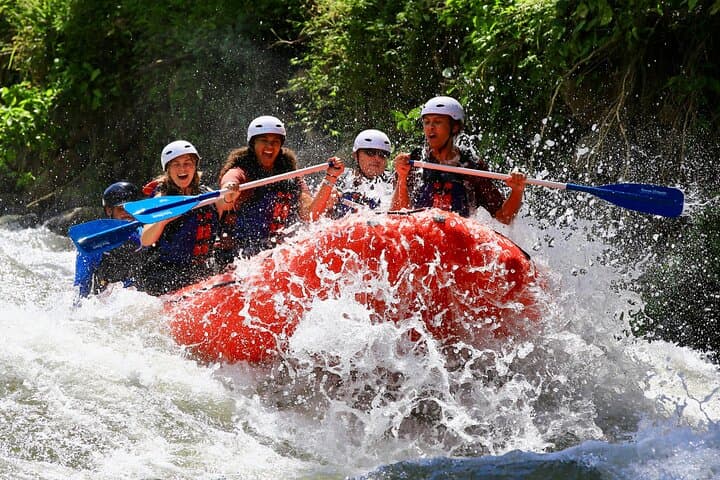
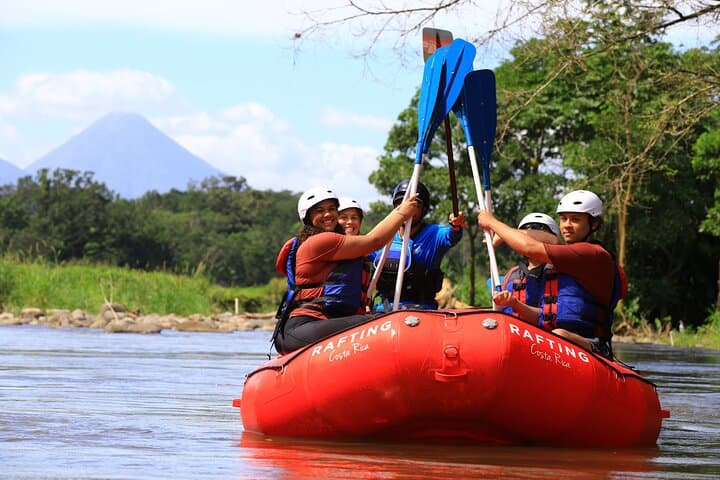
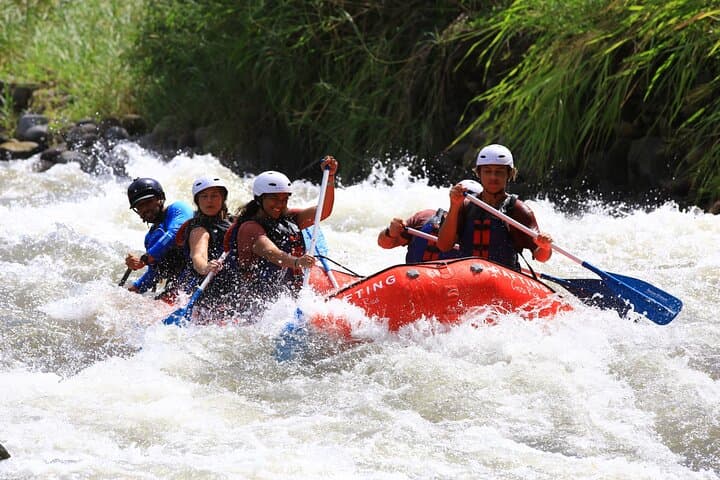
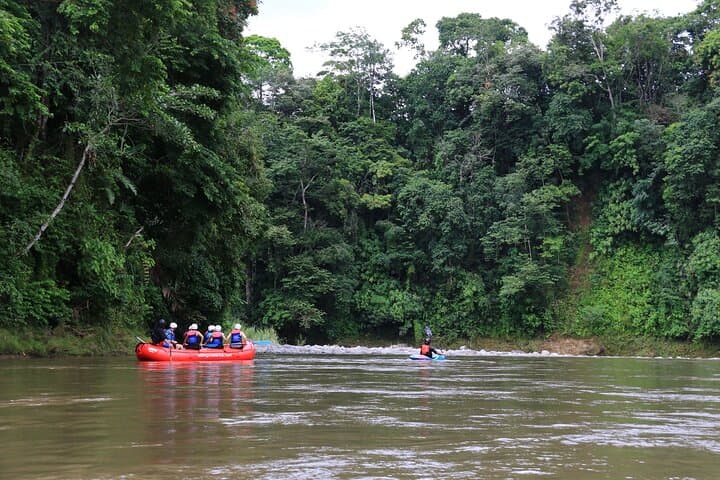
The raft heels, the river answers — a clean, narrow ribbon of water cutting through rainforest as you surge into the first string of Class II–III rapids. Morning mist lifts off the canopy and toucans flash like punctuation marks between broken sunlight; howler monkeys punctuate the rhythm with distant calls. The Balsa River moves with intent here, fast enough to excite but controlled by upstream dams to keep the run reliably raftable.
The raft heels, the river answers — a clean, narrow ribbon of water cutting through rainforest as you surge into the first string of Class II–III rapids. Morning mist lifts off the canopy and toucans flash like punctuation marks between broken sunlight; howler monkeys punctuate the rhythm with distant calls. The Balsa River moves with intent here, fast enough to excite but controlled by upstream dams to keep the run reliably raftable.
Geologically, the river slices volcanic soils from the Arenal region, yielding steep banks and sudden drops that form fun, punchy rapids concentrated in the first hour. Culturally, this stretch has long been part of local livelihoods—rivers that once fed cattle and crops now ferry visitors past waterfalls and riverine forest, where traditional carbonera cottages still dot secondary roads into the hills.
Expect about 11 km of guided whitewater, wildlife windows on the quieter second half, a riverside fruit stop, and a finished-off Costa Rican lunch. Guides brief paddling commands, safety positions, and what to do if you go overboard; most customers need no prior experience and swimming is helpful but not required.
Practical notes: arrive with quick-dry layers, secure footwear, and sunscreen; bring a small dry bag for phones or pick a water-resistant camera. Pickup from La Fortuna is standard — vans are air-conditioned and schedules typically leave mid-morning with a 3 p.m. return. The Balsa is an ideal half-day for families and first-time rafters seeking lively rapids backed by rich wildlife viewing.