THE ADVENTURE COLLECTIVE® · Independent discovery and booking for outdoor travel

Move from bustling market stalls to a family compound and an organic farm to learn authentic Balinese dishes. This full-day private class blends market insight, farm tours, and hands-on cooking with local hosts.
Move from bustling market stalls to a family compound and an organic farm to learn authentic Balinese dishes. This full-day private class blends market insight, farm tours, and hands-on cooking with local hosts.
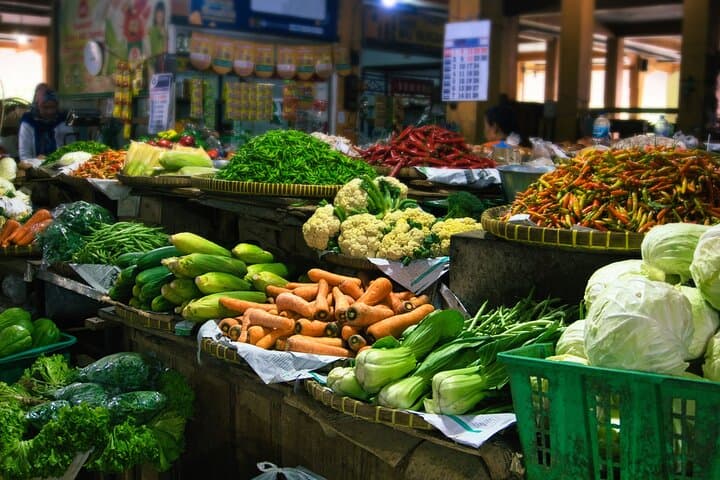
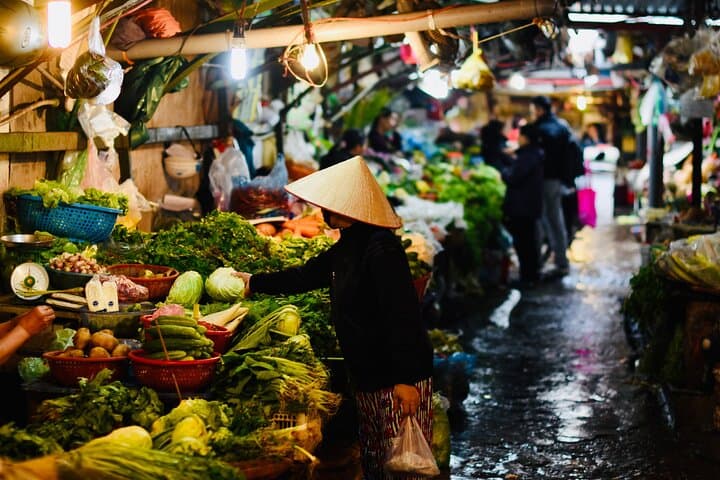
Stepping off the car into a Balinese market, the day opens with raw color: turmeric, kaffir lime leaves and chilies piled like small flags, vendors calling prices in easy rhythms. The tour moves on—through a family compound where carved wood and temple offerings mark daily life—then across narrow lanes to a small organic farm where soil and scent explain why the cuisine tastes like this place.
Verified experiences and guided adventures in the surrounding area.
Operated by Bali Gems Tours · Kuta, Bali
Stepping off the car into a Balinese market, the day opens with raw color: turmeric, kaffir lime leaves and chilies piled like small flags, vendors calling prices in easy rhythms. The tour moves on—through a family compound where carved wood and temple offerings mark daily life—then across narrow lanes to a small organic farm where soil and scent explain why the cuisine tastes like this place.
The experience stitches together three ingredients of place: the market’s sensory negotiation, the farm’s slow explanation of spice and soil, and the traditional house that frames communal cooking. Balinese cooking is shaped by Hindu-Indic ritual, centuries of regional trade in spices, and an island economy built on rice terraces and smallholdings; expect stories about local medicine, sambal recipes passed between families, and how volcanic soils feed the bold flavors.
Practically, the full program runs about eight hours: a market tour (≈60 min), house visit (≈60 min), farm walk (≈60 min) and a hands-on class (≈120 min). Paths are short but uneven—flat village lanes and soft farm tracks—so wear closed-toe shoes and bring a lightweight daypack. A private, air-conditioned car handles transfers; classes supply ingredients, mineral water, and a recipe booklet to take home.
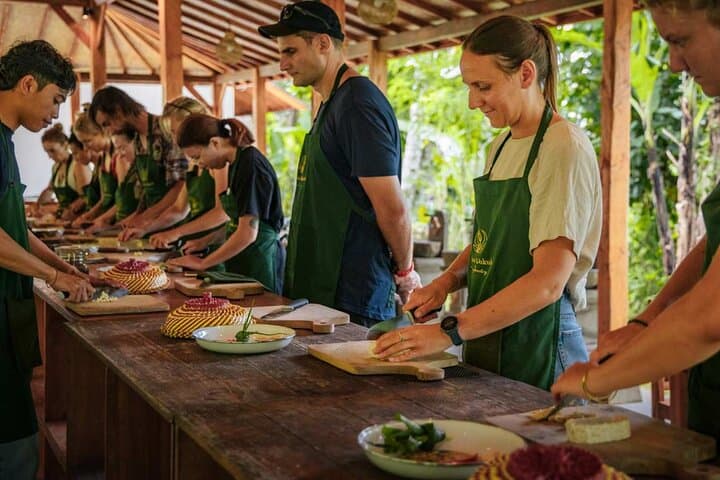
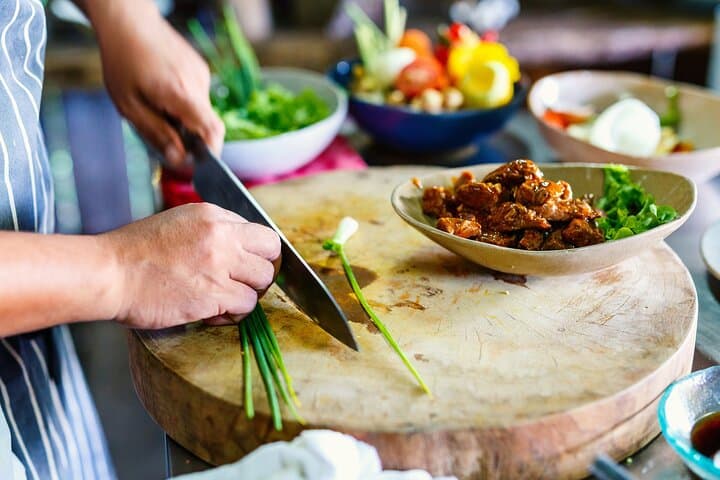
Timing matters: morning markets are livelier and produce-fresh; adjust recipes for dietary needs in advance. Expect to chop, pound, and cook on wood or gas stoves under local instruction; you’ll eat what you prepare. This trip suits travelers who want cultural context with a practical, hands-on culinary outcome.
easy.
8 hours.
Suitable for most fitness levels; requires standing, light walking on uneven ground, and basic kitchen tasks.
Yes; the tour includes free pickup and drop-off by private, air-conditioned car—confirm your pickup point and time when booking.
Infants must sit on laps; the class is family-friendly but involves sharp tools and hot surfaces, so parents should supervise younger children closely.
Yes, the dishes you prepare are yours to eat and take away; the class also provides a printed and PDF recipe booklet.
The market and farm include short, uneven sections; contact the operator before booking to discuss accessibility and possible adjustments.
Balinese cuisine reflects centuries of trade and Hindu ritual—the use of certain spices ties to traditional medicine and temple offerings.
Classes partner with small organic farms; guests are encouraged to avoid single-use plastics and support local producers by buying only what they need.
Bali Gems Tours operates guided outdoor trips and adventures with an emphasis on safety, stewardship, and memorable experiences.
Stepping off the car into a Balinese market, the day opens with raw color: turmeric, kaffir lime leaves and chilies piled like small flags, vendors calling prices in easy rhythms. The tour moves on—through a family compound where carved wood and temple offerings mark daily life—then across narrow lanes to a small organic farm where soil and scent explain why the cuisine tastes like this place.
Stepping off the car into a Balinese market, the day opens with raw color: turmeric, kaffir lime leaves and chilies piled like small flags, vendors calling prices in easy rhythms. The tour moves on—through a family compound where carved wood and temple offerings mark daily life—then across narrow lanes to a small organic farm where soil and scent explain why the cuisine tastes like this place.
The experience stitches together three ingredients of place: the market’s sensory negotiation, the farm’s slow explanation of spice and soil, and the traditional house that frames communal cooking. Balinese cooking is shaped by Hindu-Indic ritual, centuries of regional trade in spices, and an island economy built on rice terraces and smallholdings; expect stories about local medicine, sambal recipes passed between families, and how volcanic soils feed the bold flavors.
Practically, the full program runs about eight hours: a market tour (≈60 min), house visit (≈60 min), farm walk (≈60 min) and a hands-on class (≈120 min). Paths are short but uneven—flat village lanes and soft farm tracks—so wear closed-toe shoes and bring a lightweight daypack. A private, air-conditioned car handles transfers; classes supply ingredients, mineral water, and a recipe booklet to take home.
Timing matters: morning markets are livelier and produce-fresh; adjust recipes for dietary needs in advance. Expect to chop, pound, and cook on wood or gas stoves under local instruction; you’ll eat what you prepare. This trip suits travelers who want cultural context with a practical, hands-on culinary outcome.