THE ADVENTURE COLLECTIVE® · Independent discovery and booking for outdoor travel

Climb Mount Batur in the dark, reach the crater rim for a dramatic sunrise, and descend through lava fields to a lakeside village. This guided pre-dawn trek combines manageable terrain with vivid volcanic panoramas and local coffee stops.
Climb Mount Batur in the dark, reach the crater rim for a dramatic sunrise, and descend through lava fields to a lakeside village. This guided pre-dawn trek combines manageable terrain with vivid volcanic panoramas and local coffee stops.
A headlamp beam cuts through cool mountain air as you climb Mount Batur before dawn—footsteps crunch on volcanic scree while the horizon loosens color.
Verified experiences and guided adventures in the surrounding area.
Operated by Krisna Bali Trekking Tour · Kintamani, Bali
A headlamp beam cuts through cool mountain air as you climb Mount Batur before dawn—footsteps crunch on volcanic scree while the horizon loosens color.
This guided pre-dawn ascent focuses energy and timing: guides lead small groups up a route used by local porters and worshippers, reaching the caldera rim in time for a sunrise that floods the black lava fields and Toya Bungkah’s steaming lake with gold. Mount Batur sits inside a larger caldera formed by catastrophic eruptions; its current cone rises to about 1,717 meters and shows layers of volcanic history with fresh lava flows, ash bands, and terraces used by nearby farming communities.
Local culture threads the trail—Balinese offerings and shrines mark lower paths, and the nearby villages maintain coffee gardens that supply post-hike tastings. Geologically, the mountain is active; eruptions in the 20th century reshaped slopes and created the crater lake many hikers circle.
Practical guidance: start times are typically 2–4 a.m. to reach the summit for sunrise; expect 2–3 hours of steady uphill hiking on loose volcanic gravel and stairs, then a 1–2 hour descent. A local guide handles route-finding and permits; bring layers (it’s cold at the rim), a headlamp, at least 1–2 liters of water, and sturdy boots with traction. Watch footing on scree sections and allow extra time for photos at viewpoints. Post-hike, modest hot springs and coffee estates in Toya Bungkah make practical recovery stops before returning to your hotel.
moderate.
3–5 hours.
Moderate fitness—regular walkers who can sustain uphill hiking for 2–3 hours will be comfortable
Allow about 2–3 hours to ascend for beginner-paced walkers and 1–2 hours to descend; total on-trail time is typically 3–4 hours.
Local guides lead most sunrise treks for safety, route-finding, and permit compliance—this tour includes an experienced English-speaking guide.
Layered clothing, an insulated jacket for the summit, sturdy boots, and a headlamp; gloves and a hat are recommended for early-morning cold.
Mount Batur is an active volcano with monitored activity—operators cancel or alter trips if authorities advise against hiking due to safety concerns.
The present Mount Batur cone formed within a much larger caldera created by major eruptions; significant activity in the 20th century reshaped local villages and sacred sites.
Stay on established trails to limit erosion on fragile volcanic soils; support local guides and businesses that help fund trail maintenance and community conservation.
Krisna Bali Trekking Tour operates guided outdoor trips and adventures with an emphasis on safety, stewardship, and memorable experiences.
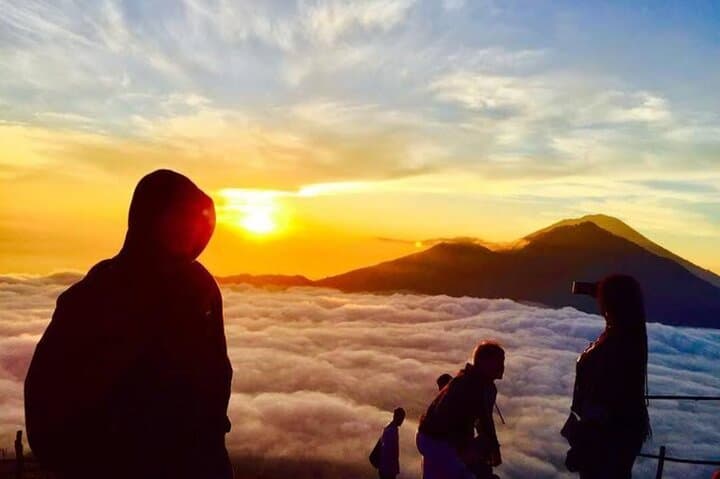
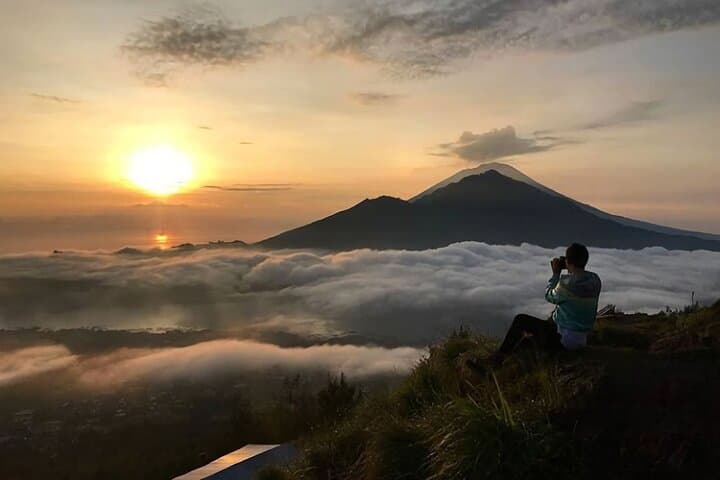
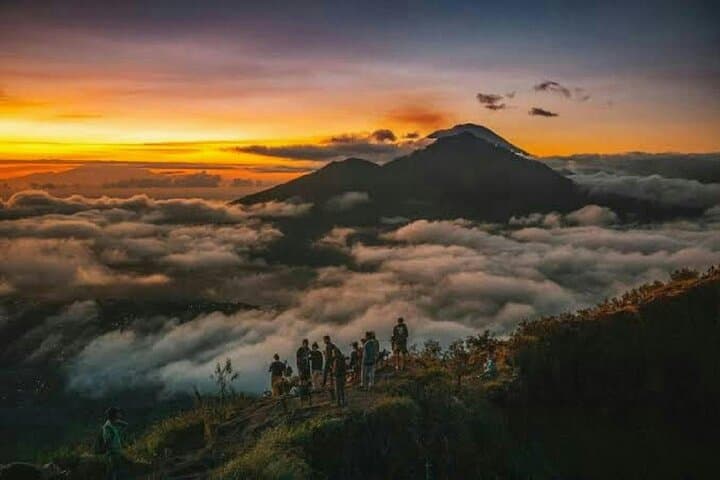
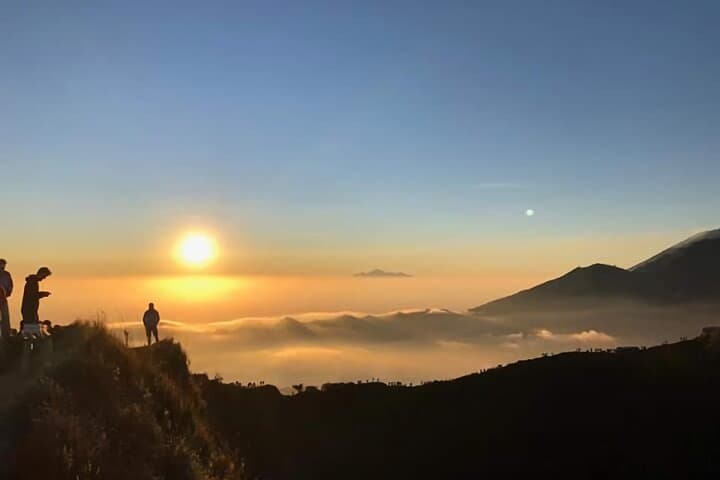
A headlamp beam cuts through cool mountain air as you climb Mount Batur before dawn—footsteps crunch on volcanic scree while the horizon loosens color.
A headlamp beam cuts through cool mountain air as you climb Mount Batur before dawn—footsteps crunch on volcanic scree while the horizon loosens color.
This guided pre-dawn ascent focuses energy and timing: guides lead small groups up a route used by local porters and worshippers, reaching the caldera rim in time for a sunrise that floods the black lava fields and Toya Bungkah’s steaming lake with gold. Mount Batur sits inside a larger caldera formed by catastrophic eruptions; its current cone rises to about 1,717 meters and shows layers of volcanic history with fresh lava flows, ash bands, and terraces used by nearby farming communities.
Local culture threads the trail—Balinese offerings and shrines mark lower paths, and the nearby villages maintain coffee gardens that supply post-hike tastings. Geologically, the mountain is active; eruptions in the 20th century reshaped slopes and created the crater lake many hikers circle.
Practical guidance: start times are typically 2–4 a.m. to reach the summit for sunrise; expect 2–3 hours of steady uphill hiking on loose volcanic gravel and stairs, then a 1–2 hour descent. A local guide handles route-finding and permits; bring layers (it’s cold at the rim), a headlamp, at least 1–2 liters of water, and sturdy boots with traction. Watch footing on scree sections and allow extra time for photos at viewpoints. Post-hike, modest hot springs and coffee estates in Toya Bungkah make practical recovery stops before returning to your hotel.