THE ADVENTURE COLLECTIVE® · Independent discovery and booking for outdoor travel

Walk on the seabed off Nusa Dua, meet macaques in Ubud’s sacred forest, and stand beneath Tegenungan Waterfall — all in one long, carefully paced day. This tour blends shallow-water wonder with Bali’s cultural highlights and rice-terrace views.
Walk on the seabed off Nusa Dua, meet macaques in Ubud’s sacred forest, and stand beneath Tegenungan Waterfall — all in one long, carefully paced day. This tour blends shallow-water wonder with Bali’s cultural highlights and rice-terrace views.
You step onto Nusa Dua’s hard-packed sand as the helmet for sea walking is lowered over your head; the ocean becomes a moving ceiling and schools of colorful reef fish inch close, curious. Thirty minutes at a maximum depth of about 15 feet hands you a view of shallow coral gardens without the need to surface or don scuba gear.
Verified experiences and guided adventures in the surrounding area.
Operated by Telaga Waja Rafting Bali · Ubud, Bali
You step onto Nusa Dua’s hard-packed sand as the helmet for sea walking is lowered over your head; the ocean becomes a moving ceiling and schools of colorful reef fish inch close, curious. Thirty minutes at a maximum depth of about 15 feet hands you a view of shallow coral gardens without the need to surface or don scuba gear.
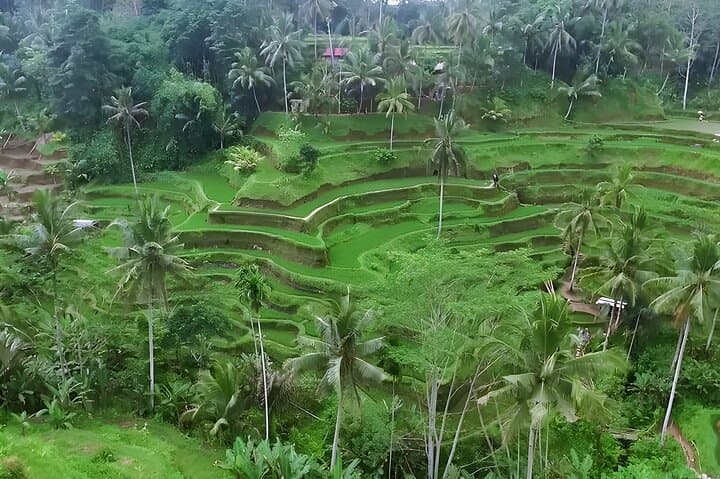
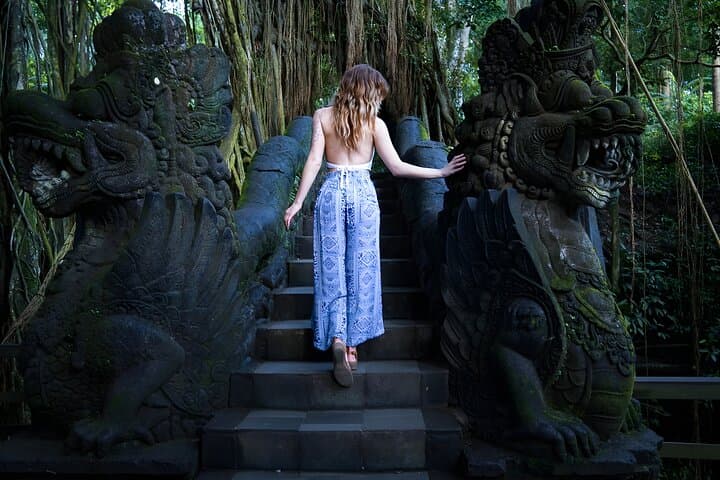
By midday the tour shifts inland. The Ubud Sacred Monkey Forest occupies roughly 27 acres and doubles as a living temple complex, where long-tailed macaques share space with 14th–19th century shrines maintained by Padangtegal village custodians. Nearby, Puri Saren Ubud displays classical Balinese court architecture; later, the Tegalalang terraces reveal the Subak irrigation lines carved into volcanic slopes — an agricultural system and cultural practice recognized across Bali.
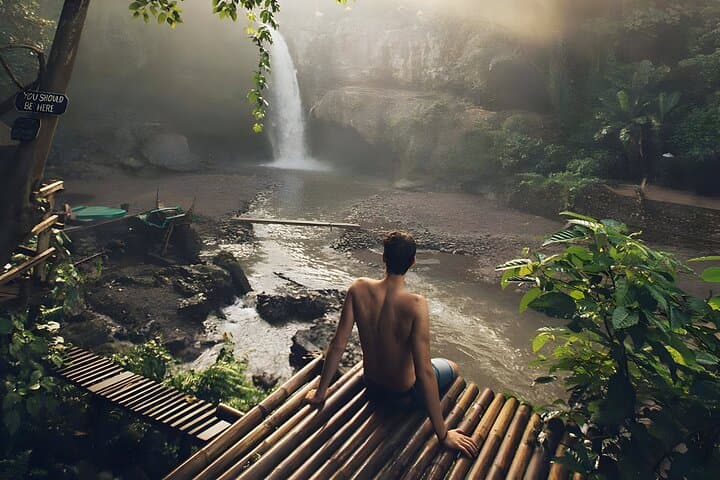
The final stop at Tegenungan Waterfall delivers a 20-meter drop and an up-close, tactile rush of river power through a green gorge. Between marine helmets and rice-terrace viewpoints you’ll pass artisan weaving and silver villages where traditional crafts continue alongside tourism.
Practical guidance: this is a long day (about 9–10 hours) with short periods of walking on uneven surfaces, steps at the waterfall, and wet areas around the seawalker entry; suitable for most travelers aged 9–60 in reasonable health. Bring reef-safe sunscreen, secure cameras from curious macaques, and a quick-change outfit for the drive between coast and highland humidity. Expect an early pickup, an English-speaking driver-guide, and modest lunches at local restaurants — a compact introduction to Bali’s coastal reefs, sacred sites, and rice-country scenery.
easy.
9–10 hours.
Light to moderate fitness; able to walk short uneven trails and climb stairs at the waterfall; not suitable for those with serious heart or spinal conditions.
No — sea walking uses a helmet that supplies air and allows you to walk on the seabed to about 15 feet; no certification or swimming skills are required, though basic comfort in water helps.
They are wild animals; the sanctuary manages interactions but visitors should avoid feeding them, keep a safe distance, and secure personal items to prevent bites or theft.
Yes — most bookings include hotel or villa pickup within the service area; confirm your pickup address and time when booking.
Light, quick-dry clothing and sturdy sandals or trainers are best; bring a light rain layer in wet season and modest attire for temple areas.
The Ubud area grew as a royal and artistic center; the Subak rice terraces reflect centuries-old cooperative irrigation rooted in Balinese Hindu practices.
Coral reefs near Nusa Dua are sensitive to sunscreen and boat activity—use reef-safe products and follow instructor guidance; the Monkey Forest is managed by village authorities to balance tourism and temple function.
Telaga Waja Rafting Bali operates guided outdoor trips and adventures with an emphasis on safety, stewardship, and memorable experiences.
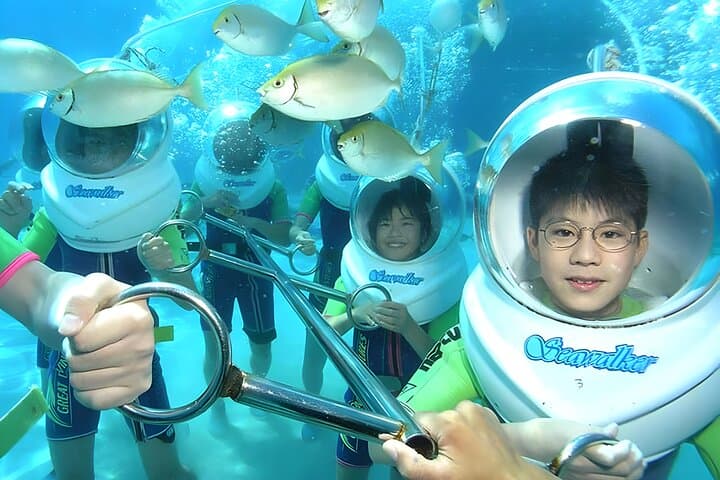
You step onto Nusa Dua’s hard-packed sand as the helmet for sea walking is lowered over your head; the ocean becomes a moving ceiling and schools of colorful reef fish inch close, curious. Thirty minutes at a maximum depth of about 15 feet hands you a view of shallow coral gardens without the need to surface or don scuba gear.
You step onto Nusa Dua’s hard-packed sand as the helmet for sea walking is lowered over your head; the ocean becomes a moving ceiling and schools of colorful reef fish inch close, curious. Thirty minutes at a maximum depth of about 15 feet hands you a view of shallow coral gardens without the need to surface or don scuba gear.
By midday the tour shifts inland. The Ubud Sacred Monkey Forest occupies roughly 27 acres and doubles as a living temple complex, where long-tailed macaques share space with 14th–19th century shrines maintained by Padangtegal village custodians. Nearby, Puri Saren Ubud displays classical Balinese court architecture; later, the Tegalalang terraces reveal the Subak irrigation lines carved into volcanic slopes — an agricultural system and cultural practice recognized across Bali.
The final stop at Tegenungan Waterfall delivers a 20-meter drop and an up-close, tactile rush of river power through a green gorge. Between marine helmets and rice-terrace viewpoints you’ll pass artisan weaving and silver villages where traditional crafts continue alongside tourism.
Practical guidance: this is a long day (about 9–10 hours) with short periods of walking on uneven surfaces, steps at the waterfall, and wet areas around the seawalker entry; suitable for most travelers aged 9–60 in reasonable health. Bring reef-safe sunscreen, secure cameras from curious macaques, and a quick-change outfit for the drive between coast and highland humidity. Expect an early pickup, an English-speaking driver-guide, and modest lunches at local restaurants — a compact introduction to Bali’s coastal reefs, sacred sites, and rice-country scenery.