THE ADVENTURE COLLECTIVE® · Independent discovery and booking for outdoor travel

Walk among temple-dotted forests and playful macaques, then watch fireflies ignite the night above Taro Village’s river fringe. This half-day-to-evening tour combines cultural context with intimate wildlife moments.
Walk among temple-dotted forests and playful macaques, then watch fireflies ignite the night above Taro Village’s river fringe. This half-day-to-evening tour combines cultural context with intimate wildlife moments.
You arrive under a canopy of banyan and fig trees, sunlight slanting through hanging roots as macaques leap between moss-dark temple stones. The air hums with insect life and the low, ceremonial murmur of Bali; the forest feels alive, even deliberate, as its long-tailed inhabitants move with familiar impatience and curiosity.
Verified experiences and guided adventures in the surrounding area.
Operated by TripGuru · Ubud, Bali
You arrive under a canopy of banyan and fig trees, sunlight slanting through hanging roots as macaques leap between moss-dark temple stones. The air hums with insect life and the low, ceremonial murmur of Bali; the forest feels alive, even deliberate, as its long-tailed inhabitants move with familiar impatience and curiosity.
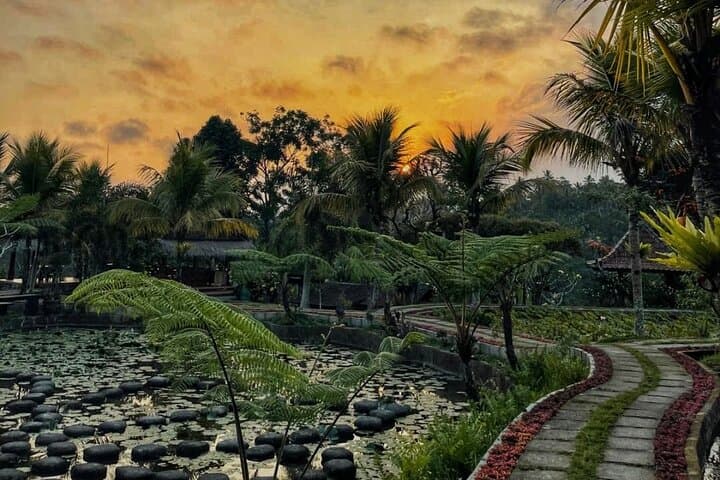
The Sacred Monkey Forest (Mandala Suci Wenara Wana) in Ubud sits on volcanic soils that have been shaped by centuries of human ritual; temples within the forest date to the 14th–18th centuries and the site remains culturally significant to local Balinese Hindus. Later, you travel north to Taro Village beside the Ayung River corridor, where darkness draws thousands of fireflies into a living constellation over village trees and riverine vegetation. The experience blends natural history—macaque social behavior, riparian microhabitats that support bioluminescent insects—with local stories told by village guides.
Practical guidance: wear sturdy closed-toe shoes for uneven temple paths and a light headlamp for the night transfer. Keep pockets zipped and avoid direct eye contact or feeding monkeys; they are quick and ingenious at taking loose items. Bring insect repellent and a reusable bottle; the tour includes mineral water but evenings near the river are humid and buggy. Expect roughly eight hours with hotel pickup in the afternoon and a late-evening return. This is a low-effort, high-engagement outing that suits curious travelers who want close encounters with wildlife and a quiet, luminous end to the day.
easy.
8 hours.
Suitable for most fitness levels; requires standing and short walks on uneven ground for up to 90 minutes.
Yes—families are welcome, but children should be supervised closely around macaques and may need guidance to avoid sudden movements.
Photography is allowed; use a quiet camera for macaques and low-light settings for fireflies—avoid flash which can disturb wildlife.
Yes, the tour includes hotel pickup and drop-off; confirm your pickup location when booking.
Feeding by visitors or guides is discouraged—restricted feeding helps maintain natural behavior and reduces conflict.
The Monkey Forest functions as a spiritual and community center dating back centuries; its temples and rituals reflect Balinese Hindu practices tied to forest guardianship.
Visitors are encouraged to minimize feeding and littering; local groups work to protect both temple precincts and river habitats that support fireflies and aquatic life.
TripGuru operates guided outdoor trips and adventures with an emphasis on safety, stewardship, and memorable experiences.

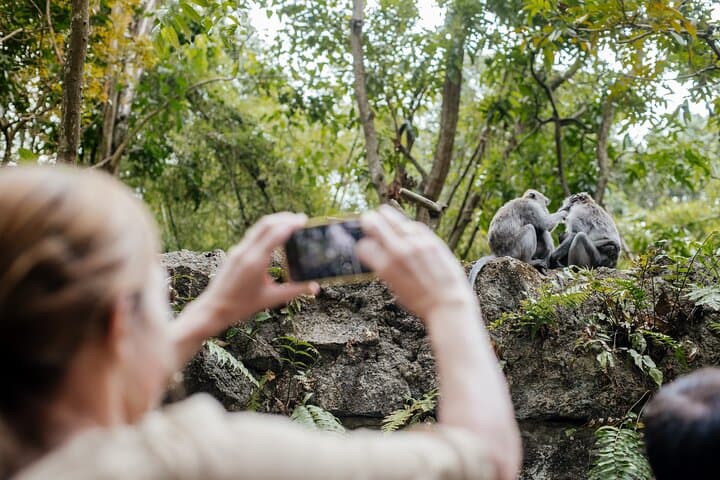
You arrive under a canopy of banyan and fig trees, sunlight slanting through hanging roots as macaques leap between moss-dark temple stones. The air hums with insect life and the low, ceremonial murmur of Bali; the forest feels alive, even deliberate, as its long-tailed inhabitants move with familiar impatience and curiosity.
You arrive under a canopy of banyan and fig trees, sunlight slanting through hanging roots as macaques leap between moss-dark temple stones. The air hums with insect life and the low, ceremonial murmur of Bali; the forest feels alive, even deliberate, as its long-tailed inhabitants move with familiar impatience and curiosity.
The Sacred Monkey Forest (Mandala Suci Wenara Wana) in Ubud sits on volcanic soils that have been shaped by centuries of human ritual; temples within the forest date to the 14th–18th centuries and the site remains culturally significant to local Balinese Hindus. Later, you travel north to Taro Village beside the Ayung River corridor, where darkness draws thousands of fireflies into a living constellation over village trees and riverine vegetation. The experience blends natural history—macaque social behavior, riparian microhabitats that support bioluminescent insects—with local stories told by village guides.
Practical guidance: wear sturdy closed-toe shoes for uneven temple paths and a light headlamp for the night transfer. Keep pockets zipped and avoid direct eye contact or feeding monkeys; they are quick and ingenious at taking loose items. Bring insect repellent and a reusable bottle; the tour includes mineral water but evenings near the river are humid and buggy. Expect roughly eight hours with hotel pickup in the afternoon and a late-evening return. This is a low-effort, high-engagement outing that suits curious travelers who want close encounters with wildlife and a quiet, luminous end to the day.