THE ADVENTURE COLLECTIVE® · Independent discovery and booking for outdoor travel

Cover Bali’s dramatic contrasts in one private day: a thunderous waterfall, temple-framed monkey groves, the volcano rim at Kintamani and restorative hot springs. This practical guide explains what to expect, how to prepare, and local nuances to make the most of a long—but highly rewarding—day.
Cover Bali’s dramatic contrasts in one private day: a thunderous waterfall, temple-framed monkey groves, the volcano rim at Kintamani and restorative hot springs. This practical guide explains what to expect, how to prepare, and local nuances to make the most of a long—but highly rewarding—day.
You step into a humid Balinese morning at 9:00 AM, the hum of a private car folding you into a day that moves from plunging falls to steam rising above volcanic lake water. First, Tegenungan’s curtain of spray dares you closer; later, the Monkey Forest’s shadowed paths and chattering long-tailed macaques test a relaxed confidence. By mid-afternoon the rim of Mount Batur opens like a theater, the caldera and lake laid out in austere black and blue. The closing act is Toya Devasya’s mineral tubs where heat loosens knots and conversation.
Verified experiences and guided adventures in the surrounding area.
Operated by ToBadaa · Ubud, Bali
You step into a humid Balinese morning at 9:00 AM, the hum of a private car folding you into a day that moves from plunging falls to steam rising above volcanic lake water. First, Tegenungan’s curtain of spray dares you closer; later, the Monkey Forest’s shadowed paths and chattering long-tailed macaques test a relaxed confidence. By mid-afternoon the rim of Mount Batur opens like a theater, the caldera and lake laid out in austere black and blue. The closing act is Toya Devasya’s mineral tubs where heat loosens knots and conversation.
This route stitches together Ubud’s living Hindu culture, the Subak rice-irrigation logic that shaped terraces and village life, and Bali’s volcanic geology—Mount Batur is an active caldera whose eruptions created the lake and hot springs. The Monkey Forest is both sanctuary and cultural site centered on a 14th-century temple complex; local guides point out temple rituals and conservation efforts.
Practical guidance: the tour runs roughly 10 hours (9:00 AM–7:00 PM) with private transport and multiple short walks on uneven, sometimes slippery surfaces. Wear grippy shoes, bring swimwear and a towel for the springs, and carry water—shops are available but stops are timed. Cameras and cash for small temple donations or local snacks are useful. Expect moderate walking, stair sections at viewpoints, and opportunistic photo stops like the Uma Ceking swing; plan for crowds at peak mid-day and aim to move through the busiest sites earlier or later. Respect wildlife: don’t feed or provoke macaques and secure loose items.
moderate.
10 hours.
Moderate fitness—able to handle several short hikes, stairs, and standing for photo stops throughout the day
Private transportation is included with pickup from common Ubud-area hotels—confirm your pickup point at booking.
Many transport and some surfaces are wheelchair accessible, but several highlights (waterfall platforms, temple steps, viewpoint stairs) involve steps or uneven ground.
There are scheduled refreshment stops; bring snacks if you prefer continuous energy—lunch timing varies by itinerary.
Monkeys are wild and can be unpredictable; observe from a short distance, avoid eye contact, and never feed them to reduce risk.
Ubud and surrounding villages are woven into Balinese Hindu practices and the Subak irrigation system—an agrarian governance method recognized by UNESCO that shaped terrace patterns and communal temples.
Respect sanctuary rules at the Monkey Forest and avoid feeding wildlife; choose tour operators that support local conservation and community initiatives.
ToBadaa operates guided outdoor trips and adventures with an emphasis on safety, stewardship, and memorable experiences.
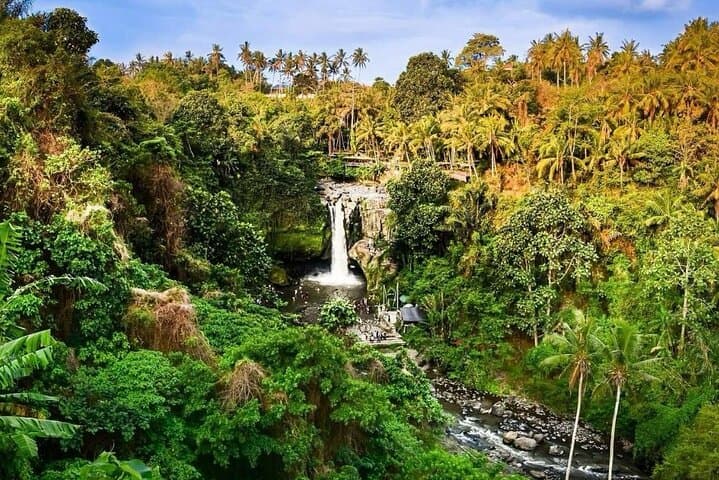
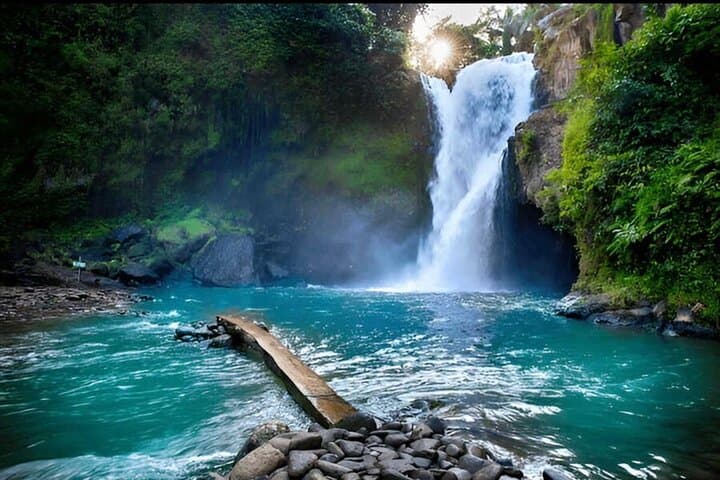
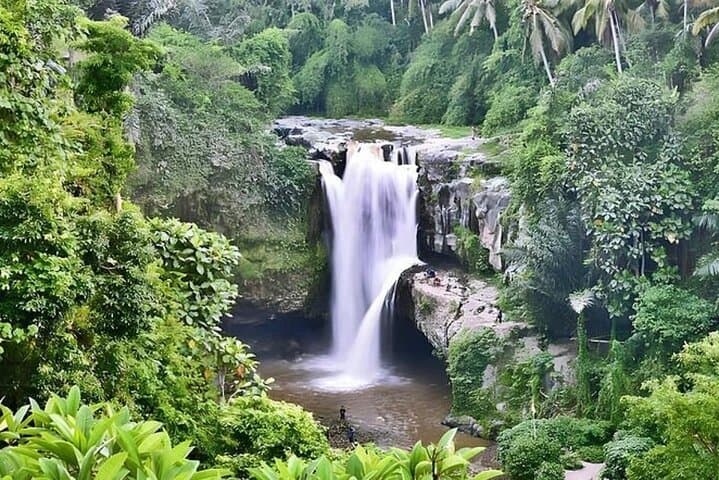
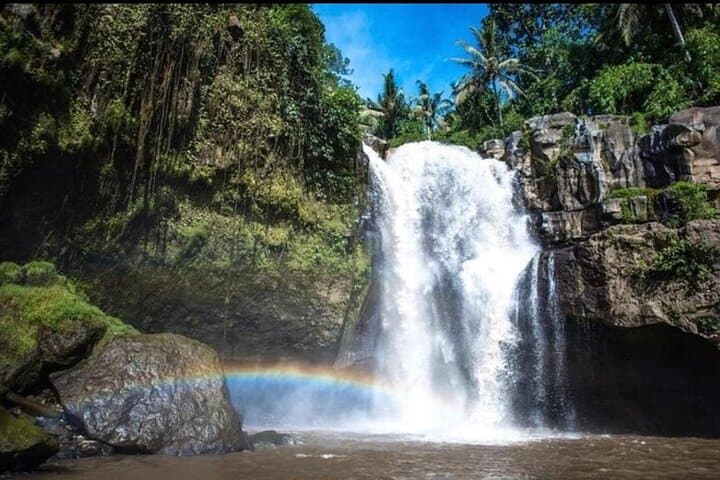
You step into a humid Balinese morning at 9:00 AM, the hum of a private car folding you into a day that moves from plunging falls to steam rising above volcanic lake water. First, Tegenungan’s curtain of spray dares you closer; later, the Monkey Forest’s shadowed paths and chattering long-tailed macaques test a relaxed confidence. By mid-afternoon the rim of Mount Batur opens like a theater, the caldera and lake laid out in austere black and blue. The closing act is Toya Devasya’s mineral tubs where heat loosens knots and conversation.
You step into a humid Balinese morning at 9:00 AM, the hum of a private car folding you into a day that moves from plunging falls to steam rising above volcanic lake water. First, Tegenungan’s curtain of spray dares you closer; later, the Monkey Forest’s shadowed paths and chattering long-tailed macaques test a relaxed confidence. By mid-afternoon the rim of Mount Batur opens like a theater, the caldera and lake laid out in austere black and blue. The closing act is Toya Devasya’s mineral tubs where heat loosens knots and conversation.
This route stitches together Ubud’s living Hindu culture, the Subak rice-irrigation logic that shaped terraces and village life, and Bali’s volcanic geology—Mount Batur is an active caldera whose eruptions created the lake and hot springs. The Monkey Forest is both sanctuary and cultural site centered on a 14th-century temple complex; local guides point out temple rituals and conservation efforts.
Practical guidance: the tour runs roughly 10 hours (9:00 AM–7:00 PM) with private transport and multiple short walks on uneven, sometimes slippery surfaces. Wear grippy shoes, bring swimwear and a towel for the springs, and carry water—shops are available but stops are timed. Cameras and cash for small temple donations or local snacks are useful. Expect moderate walking, stair sections at viewpoints, and opportunistic photo stops like the Uma Ceking swing; plan for crowds at peak mid-day and aim to move through the busiest sites earlier or later. Respect wildlife: don’t feed or provoke macaques and secure loose items.