THE ADVENTURE COLLECTIVE® · Independent discovery and booking for outdoor travel

Ride a camel across Nusa Dua’s shoreline and stage a tailored photo session—choose 30 or 60 minutes of seaside portraits with handlers on hand. This practical guide explains what to expect, where to aim your shots, and essential preparation tips.
Ride a camel across Nusa Dua’s shoreline and stage a tailored photo session—choose 30 or 60 minutes of seaside portraits with handlers on hand. This practical guide explains what to expect, where to aim your shots, and essential preparation tips.
A pale morning light slides across the broad sweep of Nusa Dua sand as a pair of camels trudges slowly along the shoreline, their hooves imprinting a transient story in the wet sand. The sea nudges at the shore, daring the procession forward; every slow sway becomes a frame for a photograph. This is a short, deliberate experience—30 or 60 minutes—built around composed poses, soft-glow portraits, and the slow rhythm of an animal not native to Bali but adapted to the showier side of its tourism.
Verified experiences and guided adventures in the surrounding area.
Operated by Wandernesia · Nusa Dua, Bali
A pale morning light slides across the broad sweep of Nusa Dua sand as a pair of camels trudges slowly along the shoreline, their hooves imprinting a transient story in the wet sand. The sea nudges at the shore, daring the procession forward; every slow sway becomes a frame for a photograph. This is a short, deliberate experience—30 or 60 minutes—built around composed poses, soft-glow portraits, and the slow rhythm of an animal not native to Bali but adapted to the showier side of its tourism.
Camels in Bali are a modern, ceremonial addition rather than a piece of local agrarian history; they arrived for spectacle and photography rather than centuries of traditional use. Geologically, the southern Bali coast is a narrow reef-backed beach of volcanic sand and coral fragments, where tides and seasonal winds sculpt the shoreline daily. Culturally, Nusa Dua is a purpose-built resort district from the late 20th century, where Hindu temple ceremonies and Balinese hospitality coexist with curated tourist experiences.
Practical guidance: arrive with costumes already on—the session clock starts immediately. Operators provide handlers; you must bring any photographer or camera equipment. Low tide yields firmer sand and better, wider shots; sunrise and late afternoon light give the most flattering colors. Not recommended for pregnant guests or those with spinal issues; wear flat, stable footwear for approach and quick exits.
Expect gentle pacing rather than exertion, with opportunities for posed and candid shots. Respect animal handlers’ instructions, keep the set tidy, and carry reef-safe sunscreen to protect both skin and the nearshore environment.
easy.
30–60 minutes.
Minimal fitness required—participants should be able to mount and sit upright for short periods and follow handlers' instructions.
No — the package assumes you bring your own camera or photographer; handlers can assist with framing and phone shots but don't provide professional photography.
There are typically 30-minute and 60-minute options; the booked duration includes all preparation and shooting time on site.
It is not recommended for pregnant travelers or those with spinal injuries; the operator lists health restrictions and may refuse participation for safety reasons.
Sunrise and late afternoon give the warmest, most flattering light; also aim for low tide for firmer sand and wider beach space.
Nusa Dua was developed as a resort district in the late 20th century; camels were introduced to southern Bali beaches as a tourism attraction rather than a traditional Balinese practice.
Respect the shoreline by using reef-safe sunscreen, taking all props and trash with you, and following handlers’ guidance to minimize disturbance to beach habitat.
Wandernesia operates guided outdoor trips and adventures with an emphasis on safety, stewardship, and memorable experiences.
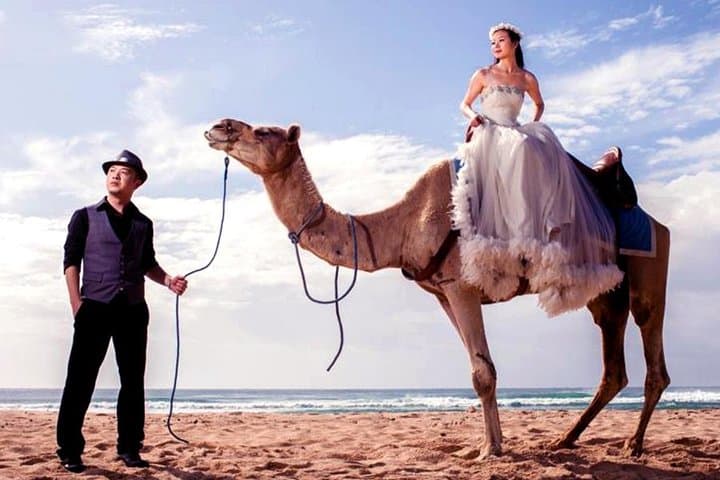
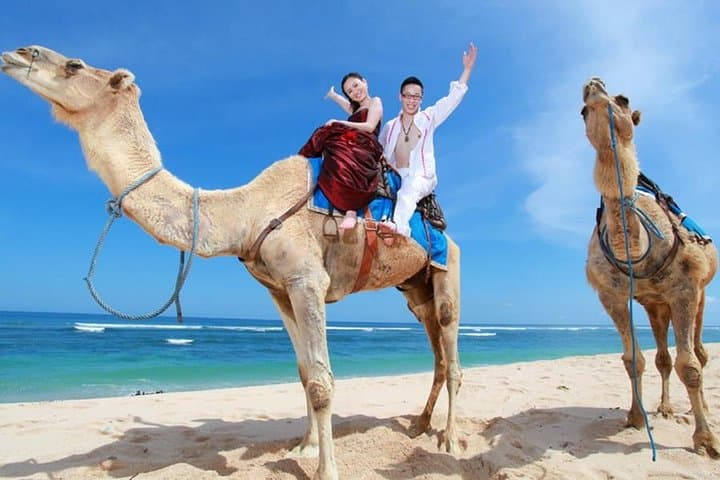

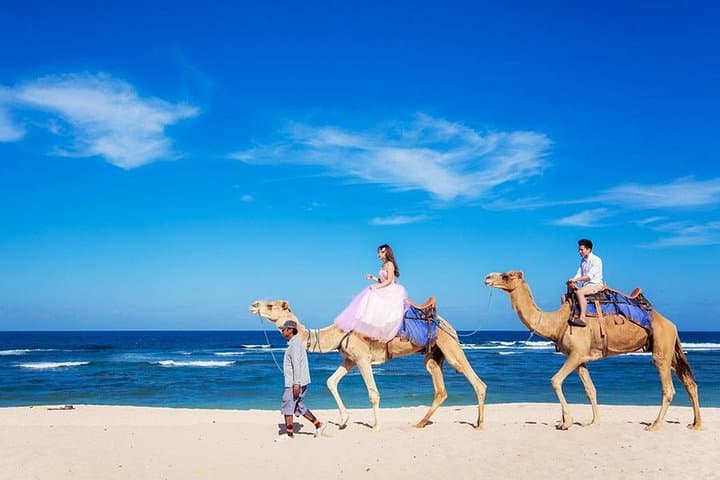
A pale morning light slides across the broad sweep of Nusa Dua sand as a pair of camels trudges slowly along the shoreline, their hooves imprinting a transient story in the wet sand. The sea nudges at the shore, daring the procession forward; every slow sway becomes a frame for a photograph. This is a short, deliberate experience—30 or 60 minutes—built around composed poses, soft-glow portraits, and the slow rhythm of an animal not native to Bali but adapted to the showier side of its tourism.
A pale morning light slides across the broad sweep of Nusa Dua sand as a pair of camels trudges slowly along the shoreline, their hooves imprinting a transient story in the wet sand. The sea nudges at the shore, daring the procession forward; every slow sway becomes a frame for a photograph. This is a short, deliberate experience—30 or 60 minutes—built around composed poses, soft-glow portraits, and the slow rhythm of an animal not native to Bali but adapted to the showier side of its tourism.
Camels in Bali are a modern, ceremonial addition rather than a piece of local agrarian history; they arrived for spectacle and photography rather than centuries of traditional use. Geologically, the southern Bali coast is a narrow reef-backed beach of volcanic sand and coral fragments, where tides and seasonal winds sculpt the shoreline daily. Culturally, Nusa Dua is a purpose-built resort district from the late 20th century, where Hindu temple ceremonies and Balinese hospitality coexist with curated tourist experiences.
Practical guidance: arrive with costumes already on—the session clock starts immediately. Operators provide handlers; you must bring any photographer or camera equipment. Low tide yields firmer sand and better, wider shots; sunrise and late afternoon light give the most flattering colors. Not recommended for pregnant guests or those with spinal issues; wear flat, stable footwear for approach and quick exits.
Expect gentle pacing rather than exertion, with opportunities for posed and candid shots. Respect animal handlers’ instructions, keep the set tidy, and carry reef-safe sunscreen to protect both skin and the nearshore environment.