THE ADVENTURE COLLECTIVE® · Independent discovery and booking for outdoor travel

Kick up mud through rice paddies and jungle fringe west of Ubud on a guided 250 cc ATV tour. Expect two hours of varied tracks, a safety briefing, showers and a local lunch at the finish.
Kick up mud through rice paddies and jungle fringe west of Ubud on a guided 250 cc ATV tour. Expect two hours of varied tracks, a safety briefing, showers and a local lunch at the finish.
The engine rumbles, mud flicks the undercarriage and the rice paddies open up like a network of cool green veins. Riders meet at a simple staging area in Bongkasa village west of Ubud for helmet fitting and a clear safety briefing. From there the semi-automatic 250 cc ATVs push through narrow village lanes, then onto flat and bumpy dirt tracks that thread between paddies, jungle fringe and small streams.
Verified experiences and guided adventures in the surrounding area.
Operated by Eco Bali Tours - Day Tours · Ubud, Bali
The engine rumbles, mud flicks the undercarriage and the rice paddies open up like a network of cool green veins. Riders meet at a simple staging area in Bongkasa village west of Ubud for helmet fitting and a clear safety briefing. From there the semi-automatic 250 cc ATVs push through narrow village lanes, then onto flat and bumpy dirt tracks that thread between paddies, jungle fringe and small streams.
This route follows land shaped by centuries of Subak irrigation—Balinese water temples and terraced fields that still feed local towns. Geology here is young volcanic soil over older lava flows, which makes tracks sticky in the wet season and pleasantly dusty when dry. Cultural life frequently appears en route: women hauling crops, children waving, and modest temples at field corners.
Practically: the guided portion runs about two hours of riding within a roughly 10–20 km loop depending on conditions, nested inside a 3–4 hour booking that includes transfers, showers and lunch. Riders should be comfortable shifting body weight on uneven terrain, expect brief climbs and low-water stream crossings, and plan for sunscreen and protective clothing.
Local guides handle navigation and safety; photography stops are frequent. Showers and changing facilities are available post-ride, and a local lunch offers a chance to try nasi campur. The experience is equally appealing to first-timers seeking controlled adrenaline and to experienced riders who want technical single-track and muddy corners without long logistics.
moderate.
3–4 hours (2-hour ride).
Moderate fitness: able to handle two hours of active riding with brief rests and some core strength for handling bumps.
No—professional instructors run a safety briefing and guide the route; beginners are welcome but should be physically able to operate controls.
Children under 12 are not permitted to self-ride; operators often allow younger passengers on tandem options—confirm at booking.
Tours typically run in light rain; operators will pause or alter sections if conditions become unsafe—check cancellation policy for heavy weather.
Some options include return hotel transfers; confirm at booking and provide arrival details for pickup scheduling.
The paddies and irrigation channels follow the Subak cooperative system, a centuries-old Balinese method that organizes water and rice cultivation around community temples.
Stay on designated tracks to protect fragile paddy bunds and avoid contaminating irrigation channels; support local guides and eateries to ensure economic benefits remain in the village.
Eco Bali Tours - Day Tours operates guided outdoor trips and adventures with an emphasis on safety, stewardship, and memorable experiences.
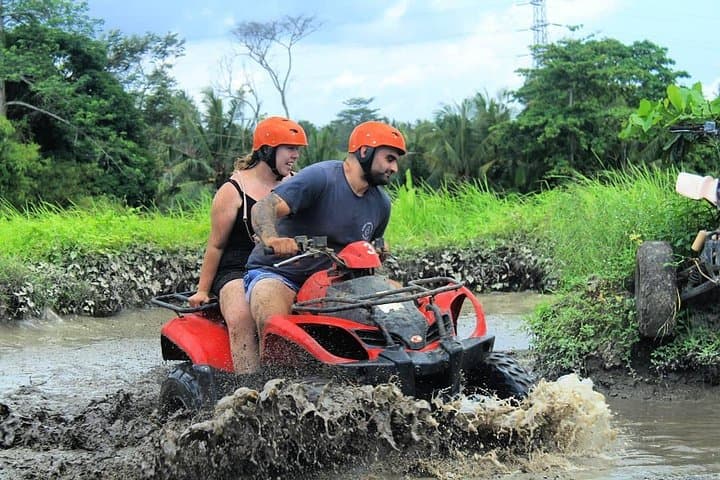
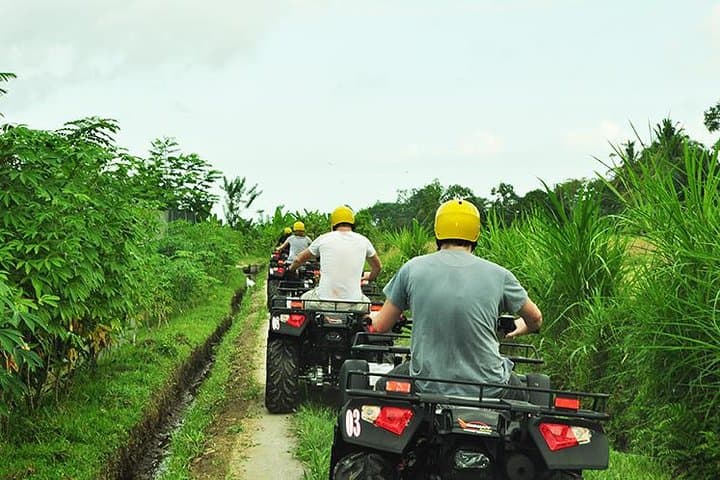
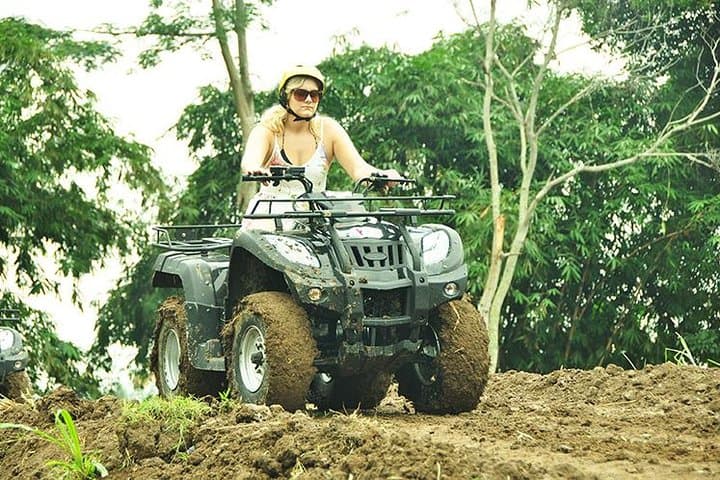
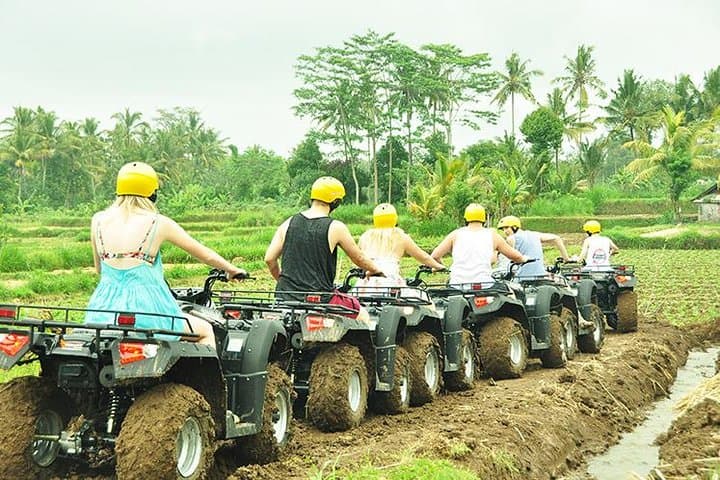
The engine rumbles, mud flicks the undercarriage and the rice paddies open up like a network of cool green veins. Riders meet at a simple staging area in Bongkasa village west of Ubud for helmet fitting and a clear safety briefing. From there the semi-automatic 250 cc ATVs push through narrow village lanes, then onto flat and bumpy dirt tracks that thread between paddies, jungle fringe and small streams.
The engine rumbles, mud flicks the undercarriage and the rice paddies open up like a network of cool green veins. Riders meet at a simple staging area in Bongkasa village west of Ubud for helmet fitting and a clear safety briefing. From there the semi-automatic 250 cc ATVs push through narrow village lanes, then onto flat and bumpy dirt tracks that thread between paddies, jungle fringe and small streams.
This route follows land shaped by centuries of Subak irrigation—Balinese water temples and terraced fields that still feed local towns. Geology here is young volcanic soil over older lava flows, which makes tracks sticky in the wet season and pleasantly dusty when dry. Cultural life frequently appears en route: women hauling crops, children waving, and modest temples at field corners.
Practically: the guided portion runs about two hours of riding within a roughly 10–20 km loop depending on conditions, nested inside a 3–4 hour booking that includes transfers, showers and lunch. Riders should be comfortable shifting body weight on uneven terrain, expect brief climbs and low-water stream crossings, and plan for sunscreen and protective clothing.
Local guides handle navigation and safety; photography stops are frequent. Showers and changing facilities are available post-ride, and a local lunch offers a chance to try nasi campur. The experience is equally appealing to first-timers seeking controlled adrenaline and to experienced riders who want technical single-track and muddy corners without long logistics.