THE ADVENTURE COLLECTIVE® · Independent discovery and booking for outdoor travel

Spend a full day tracing Balinese craft, ritual and rivers: watch a traditional dance, enter centuries-old temples, visit Mas woodcarvers and end at Tegenungan Waterfall. This guided loop mixes cultural insight with easy walking and practical logistics.
Spend a full day tracing Balinese craft, ritual and rivers: watch a traditional dance, enter centuries-old temples, visit Mas woodcarvers and end at Tegenungan Waterfall. This guided loop mixes cultural insight with easy walking and practical logistics.
You step out of the van while rice terraces hum with distant water flow and a temple bell ticks the hour—air thick with incense and the scent of wood shavings from nearby carving shops. The day moves like a procession: a traditional dance that opens the senses, a compact stone temple whose carvings crowd history into a single courtyard, a village workshop where artisans coax faces from teak, and finally a waterfall that dares you to step closer.
Verified experiences and guided adventures in the surrounding area.
Operated by Ubud baliday tour · Ubud, Bali
You step out of the van while rice terraces hum with distant water flow and a temple bell ticks the hour—air thick with incense and the scent of wood shavings from nearby carving shops. The day moves like a procession: a traditional dance that opens the senses, a compact stone temple whose carvings crowd history into a single courtyard, a village workshop where artisans coax faces from teak, and finally a waterfall that dares you to step closer.
The route threads through centuries of Balinese culture and volcanic geology. Pura Desa Batuan dates back over a millennium and reflects the island’s synthesis of Hindu iconography and local ritual. Nearby Mas village is known for generational woodcarvers; Ubud’s painting houses preserve modern Balinese visual traditions. Tegenungan offers a geological contrast—river-cut basalt and terraces that channel monsoon runoff into a plunging cascade.
Practical guidance is straightforward: the tour runs about 8–10 hours, starting early to avoid midday heat and late-afternoon storms during the wet season. Temples require modest dress—the operator provides sarongs—but bring a light, quick-dry layer for sudden showers and closed-toe shoes for uneven village paths. Hydrate frequently; bottled water is included, but a refillable bottle helps reduce plastic waste. Budget time for small purchases if you plan to support local artists—many workshops accept cash and card. The day balances immersive cultural encounters with accessible walking and plenty of photo opportunities, ideal for travelers who want art, ritual and a touch of raw nature in one organized day.
easy.
8–10 hours.
Suitable for most fitness levels; involves short stretches of walking, steps, and standing during performances.
Yes; entrance tickets and sarongs to enter temples are included in the tour price.
Walking is light to moderate—short periods at temples, workshops, and a modest walk to the waterfall; mostly on paved or compacted village paths.
The tour is rated easy and suitable for a wide range of ages, but travelers with limited mobility should note there are steps and uneven surfaces.
Yes—workshops and galleries welcome buyers; arrange shipping with vendors for large items or carry smaller pieces in luggage.
Sites include Pura Desa Batuan, with roots in early Balinese Hindu practice, and Goa Gajah-era ruins dating to around the 9th century discovered by archaeologists in the 1920s.
Support artisans directly and avoid single-use plastics; stick to marked paths at waterfalls to protect riverine vegetation and freshwater habitats.
Ubud baliday tour operates guided outdoor trips and adventures with an emphasis on safety, stewardship, and memorable experiences.


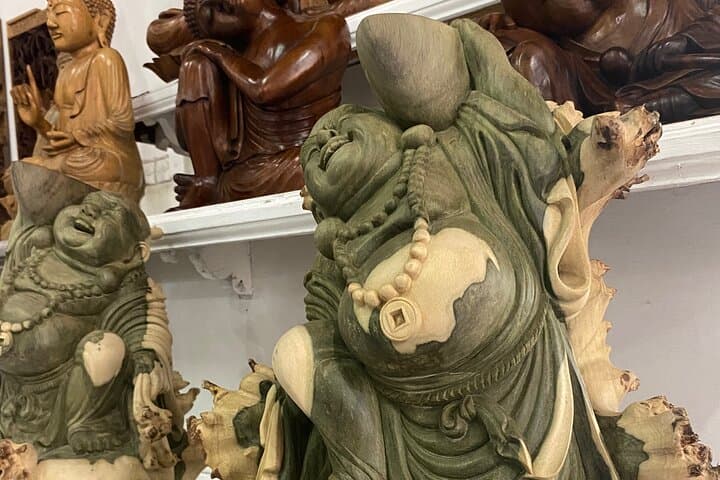

You step out of the van while rice terraces hum with distant water flow and a temple bell ticks the hour—air thick with incense and the scent of wood shavings from nearby carving shops. The day moves like a procession: a traditional dance that opens the senses, a compact stone temple whose carvings crowd history into a single courtyard, a village workshop where artisans coax faces from teak, and finally a waterfall that dares you to step closer.
You step out of the van while rice terraces hum with distant water flow and a temple bell ticks the hour—air thick with incense and the scent of wood shavings from nearby carving shops. The day moves like a procession: a traditional dance that opens the senses, a compact stone temple whose carvings crowd history into a single courtyard, a village workshop where artisans coax faces from teak, and finally a waterfall that dares you to step closer.
The route threads through centuries of Balinese culture and volcanic geology. Pura Desa Batuan dates back over a millennium and reflects the island’s synthesis of Hindu iconography and local ritual. Nearby Mas village is known for generational woodcarvers; Ubud’s painting houses preserve modern Balinese visual traditions. Tegenungan offers a geological contrast—river-cut basalt and terraces that channel monsoon runoff into a plunging cascade.
Practical guidance is straightforward: the tour runs about 8–10 hours, starting early to avoid midday heat and late-afternoon storms during the wet season. Temples require modest dress—the operator provides sarongs—but bring a light, quick-dry layer for sudden showers and closed-toe shoes for uneven village paths. Hydrate frequently; bottled water is included, but a refillable bottle helps reduce plastic waste. Budget time for small purchases if you plan to support local artists—many workshops accept cash and card. The day balances immersive cultural encounters with accessible walking and plenty of photo opportunities, ideal for travelers who want art, ritual and a touch of raw nature in one organized day.