THE ADVENTURE COLLECTIVE® · Independent discovery and booking for outdoor travel

Run Johannesburg with local Baleka Nathi guides who combine history, neighborhoods and skyline views into tailored city routes. Perfect for runners who want culture with their miles—routes range from park loops to Soweto street runs.
Run Johannesburg with local Baleka Nathi guides who combine history, neighborhoods and skyline views into tailored city routes. Perfect for runners who want culture with their miles—routes range from park loops to Soweto street runs.
A dawn run across the Nelson Mandela Bridge puts the city skyline into sharp relief: concrete bones warmed by first light, the calm of the river valley below, and the steady pulse of feet on metal. Baleka Nathi’s guided runs thread those contrasts—urban edges, leafy park loops, and township streets—into routes that read like a walking tour at a jogger’s cadence.
Verified experiences and guided adventures in the surrounding area.
Operated by Baleka Nathi-Run Experience · Johannesburg, Gauteng
A dawn run across the Nelson Mandela Bridge puts the city skyline into sharp relief: concrete bones warmed by first light, the calm of the river valley below, and the steady pulse of feet on metal. Baleka Nathi’s guided runs thread those contrasts—urban edges, leafy park loops, and township streets—into routes that read like a walking tour at a jogger’s cadence.
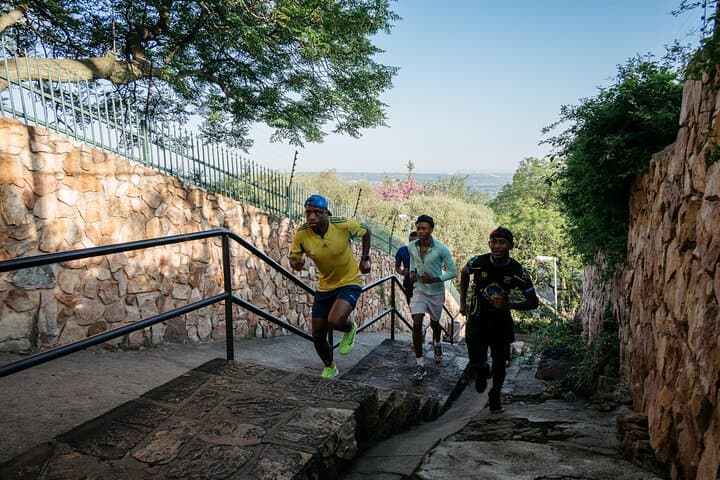
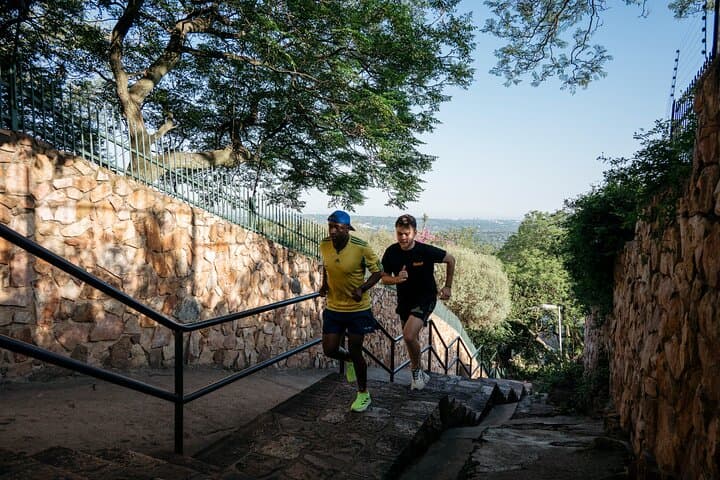
Johannesburg sits on the Highveld plateau, its modern grid layered on top of a Gold Rush history that reshaped landscapes and communities. Runners sweep past sites of civic memory—Constitution Hill’s fortified walls and Soweto’s Vilakazi Street—where stories of struggle and resilience are visible in murals, markets, and brickwork. The city’s geology is quiet but present: compacted koppies and dam shores shape easy ascents and cooling descents.
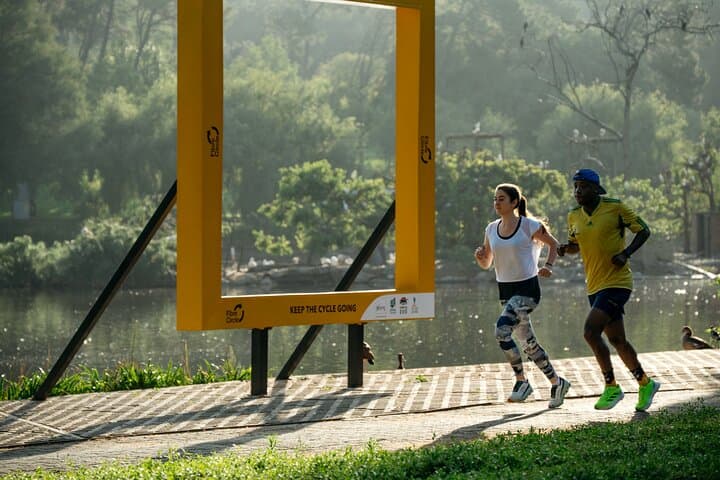
Routes vary from smooth waterfront paths at Emmarentia Dam to the louder, market-lined streets of Soweto; knowledgeable local guides add cultural context and safety on busier stretches. Expect tree-lined suburban segments with café stops, and louder urban crossings where traffic dictates short walk breaks. The experience balances tempo with interpretation—designed for runners of most levels who can sustain steady effort for 30–90 minutes depending on itinerary.
Practically: bring stable road shoes, a small hydration system, sun protection, and layered clothing for Johannesburg’s sharp morning-to-afternoon swings. Start early to avoid midday heat and markets’ busiest periods. Use public transport or a short taxi to central meeting points; guides often adapt pace to groups, making this an accessible, interpretive way to learn the city through its streets and stories.
moderate.
1–4 hours.
Should be comfortable running or jogging for 30–90 minutes; moderate aerobic fitness recommended for longer private routes.
Routes are tailored for different paces; beginners can choose shorter, slower options while experienced runners can extend distance—moderate baseline fitness recommended.
Some park and waterfront sections are wheelchair accessible, but many township streets and bridge crossings include steps or uneven surfaces; check with the operator for specific route accessibility.
Common meeting points include Nelson Mandela Bridge, Emmarentia Dam, or Soweto landmarks like Orlando Towers—exact locations depend on the chosen itinerary and will be confirmed at booking.
Full refunds are available if you cancel at least 24 hours before the scheduled start; later cancellations are generally not refundable—confirm details when booking.
Runs pass sites tied to Johannesburg’s mining origins and political history—Constitution Hill and Vilakazi Street provide civic context to the city’s transformation.
Stick to paved paths and marked trails in parks; supporting local guides and markets helps fund community conservation and urban greening projects.
Baleka Nathi-Run Experience operates guided outdoor trips and adventures with an emphasis on safety, stewardship, and memorable experiences.
A dawn run across the Nelson Mandela Bridge puts the city skyline into sharp relief: concrete bones warmed by first light, the calm of the river valley below, and the steady pulse of feet on metal. Baleka Nathi’s guided runs thread those contrasts—urban edges, leafy park loops, and township streets—into routes that read like a walking tour at a jogger’s cadence.
A dawn run across the Nelson Mandela Bridge puts the city skyline into sharp relief: concrete bones warmed by first light, the calm of the river valley below, and the steady pulse of feet on metal. Baleka Nathi’s guided runs thread those contrasts—urban edges, leafy park loops, and township streets—into routes that read like a walking tour at a jogger’s cadence.
Johannesburg sits on the Highveld plateau, its modern grid layered on top of a Gold Rush history that reshaped landscapes and communities. Runners sweep past sites of civic memory—Constitution Hill’s fortified walls and Soweto’s Vilakazi Street—where stories of struggle and resilience are visible in murals, markets, and brickwork. The city’s geology is quiet but present: compacted koppies and dam shores shape easy ascents and cooling descents.
Routes vary from smooth waterfront paths at Emmarentia Dam to the louder, market-lined streets of Soweto; knowledgeable local guides add cultural context and safety on busier stretches. Expect tree-lined suburban segments with café stops, and louder urban crossings where traffic dictates short walk breaks. The experience balances tempo with interpretation—designed for runners of most levels who can sustain steady effort for 30–90 minutes depending on itinerary.
Practically: bring stable road shoes, a small hydration system, sun protection, and layered clothing for Johannesburg’s sharp morning-to-afternoon swings. Start early to avoid midday heat and markets’ busiest periods. Use public transport or a short taxi to central meeting points; guides often adapt pace to groups, making this an accessible, interpretive way to learn the city through its streets and stories.