THE ADVENTURE COLLECTIVE® · Independent discovery and booking for outdoor travel

A compact, full-day loop from Baku that pairs Gobustan’s 20,000-year-old petroglyphs with bubbling mud volcanoes, the Ateshgah Fire Temple and Yanar Dag’s eternal flame. Practical, interpretive and perfect for a one-day cultural-geology fix.
A compact, full-day loop from Baku that pairs Gobustan’s 20,000-year-old petroglyphs with bubbling mud volcanoes, the Ateshgah Fire Temple and Yanar Dag’s eternal flame. Practical, interpretive and perfect for a one-day cultural-geology fix.
The minivan peels away from Baku’s glass-and-concrete edges and the Caspian’s shimmer recedes into a flat, wind-swept plain. Within an hour the city’s geometry gives way to a pocked landscape of low ridges and bare stone where human marks go back far beyond recorded history. At Gobustan you step off the bus and face panels of rock that stop the day: figures of hunters, boats and animals scratched into volcanic rock, their lines worn soft by millennia of wind but still sharp with intent.
Verified experiences and guided adventures in the surrounding area.
Operated by GoBakutour · Baku, Baku
The minivan peels away from Baku’s glass-and-concrete edges and the Caspian’s shimmer recedes into a flat, wind-swept plain. Within an hour the city’s geometry gives way to a pocked landscape of low ridges and bare stone where human marks go back far beyond recorded history. At Gobustan you step off the bus and face panels of rock that stop the day: figures of hunters, boats and animals scratched into volcanic rock, their lines worn soft by millennia of wind but still sharp with intent.
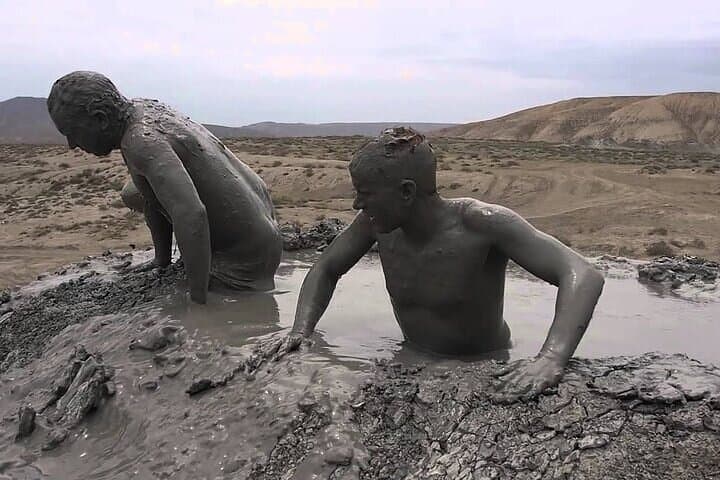
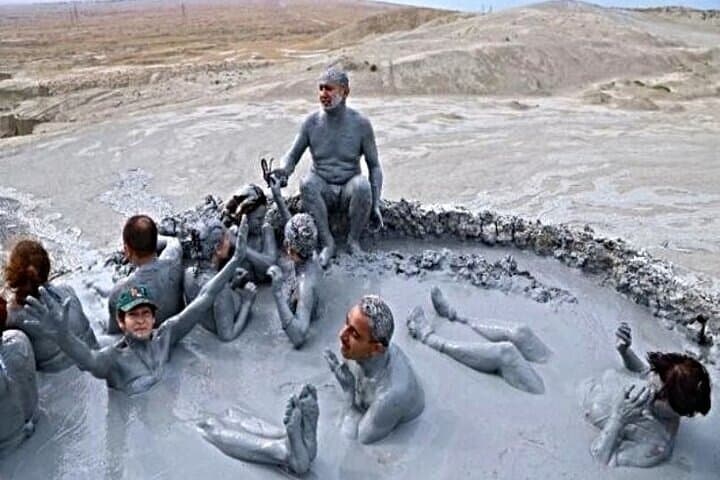
Gobustan’s petroglyphs—some researchers date them to 20,000 years ago—are more than static art; they’re a record of changing coastlines, migrating herds and early ritual. The site sits on Pleistocene deposits and ancient shoreline terraces; the bedrock was worked by hunters and herders who left a running log of survival. Nearby, the mud volcanoes—bubbling cones that bleed mineral-rich mud to the surface—remind you that the Caspian region is a landscape still being written by heat and gas beneath the crust.
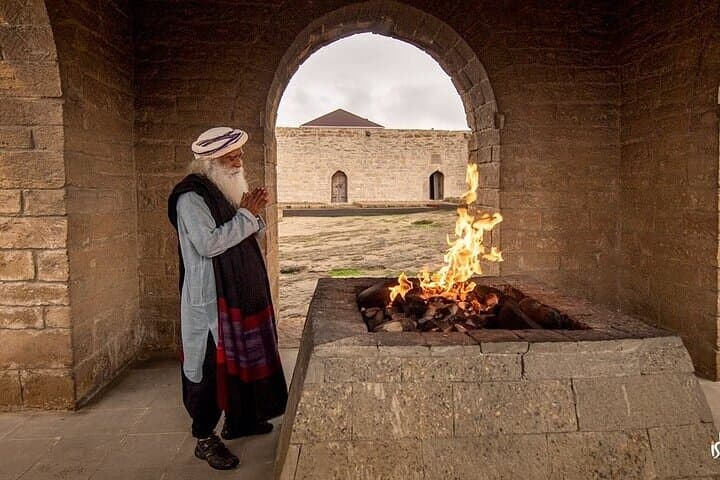
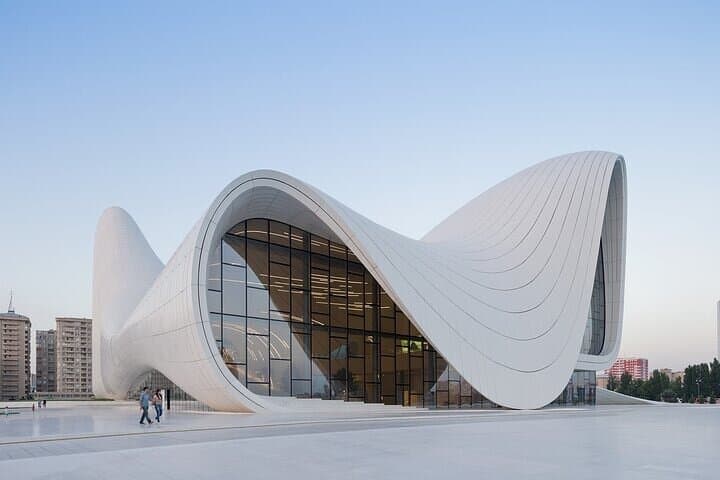
On this full-day loop you’ll also visit Absheron’s cultural oddities: Ateshgah, the Fire Temple whose courtyard and Sanskrit inscriptions point to centuries of Zoroastrian and Hindu pilgrims, and Yanar Dag, a hillside where natural gas vents have kept a flame alight for generations. A final stop outside the Heydar Aliyev Center gives the modernist counterpoint: Zaha Hadid’s curving form, a reminder that Baku’s conversation is between past and present.
Practicalities: the tour is about 8–9 hours with hotel pickup and drop-off in Baku (group max ~15). Admission to Gobustan and Ateshgah is included on-site but some stops—like entry to the Heydar Aliyev Center—are photo-only from outside unless you purchase your own ticket. Terrain at Gobustan and the mud volcanoes is uneven, loose and sometimes slippery; closed-toe shoes and steady footing are essential. The guide provides context—dating panels, explaining geology and the region’s fire worship history—so bring questions and a camera with spare batteries.
Timing matters: morning light brings out the relief on the petroglyphs, while late afternoon softens the rock and makes the burning hillside glow. Respect the sites: petroglyphs are fragile—don’t touch or climb on panels—and stay on marked paths around mud volcanoes.
If you want a compact day that mixes archaeology, raw geology and cultural history without driving yourself, this Absheron loop delivers a layered portrait of Azerbaijan: the ancient human story carved in stone, the earth still bubbling beneath your feet, and a city that keeps remaking its face.
easy.
8–9 hours.
Suitable for travelers in average physical condition; involves short walks over uneven ground so basic mobility and balance are required.
Entrance fees for Gobustan and visits are handled locally; the tour includes access and a guide, but some optional site entrances (like museum interiors) may require separate payment.
The tour is approximately 8–9 hours (510 minutes) and a fuel-style lunch and bottled water are included.
Yes—the operator provides hotel pickup and drop-off across central Baku; confirm your pickup point when booking.
Yes—listed as physically easy, but the uneven terrain at Gobustan and mud volcanoes can be challenging for those with limited mobility; infants must sit on laps.
No—do not take samples; some mud volcanoes may allow shallow dipping but always follow guide instructions for safety and conservation.
Comfortable closed-toe shoes, layers for wind, sun protection, and a light jacket for coastal or evening winds are recommended.
Gobustan’s rock art records thousands of years of human presence; Ateshgah reflects Absheron’s role as a crossroads for Zoroastrian, Hindu and later communities.
Gobustan is a UNESCO site—stay on marked trails, avoid touching rock art and minimize waste; the area is ecologically sensitive and visitor impact is managed by local authorities.
GoBakutour operates guided outdoor trips and adventures with an emphasis on safety, stewardship, and memorable experiences.
The minivan peels away from Baku’s glass-and-concrete edges and the Caspian’s shimmer recedes into a flat, wind-swept plain. Within an hour the city’s geometry gives way to a pocked landscape of low ridges and bare stone where human marks go back far beyond recorded history. At Gobustan you step off the bus and face panels of rock that stop the day: figures of hunters, boats and animals scratched into volcanic rock, their lines worn soft by millennia of wind but still sharp with intent.
The minivan peels away from Baku’s glass-and-concrete edges and the Caspian’s shimmer recedes into a flat, wind-swept plain. Within an hour the city’s geometry gives way to a pocked landscape of low ridges and bare stone where human marks go back far beyond recorded history. At Gobustan you step off the bus and face panels of rock that stop the day: figures of hunters, boats and animals scratched into volcanic rock, their lines worn soft by millennia of wind but still sharp with intent.
Gobustan’s petroglyphs—some researchers date them to 20,000 years ago—are more than static art; they’re a record of changing coastlines, migrating herds and early ritual. The site sits on Pleistocene deposits and ancient shoreline terraces; the bedrock was worked by hunters and herders who left a running log of survival. Nearby, the mud volcanoes—bubbling cones that bleed mineral-rich mud to the surface—remind you that the Caspian region is a landscape still being written by heat and gas beneath the crust.
On this full-day loop you’ll also visit Absheron’s cultural oddities: Ateshgah, the Fire Temple whose courtyard and Sanskrit inscriptions point to centuries of Zoroastrian and Hindu pilgrims, and Yanar Dag, a hillside where natural gas vents have kept a flame alight for generations. A final stop outside the Heydar Aliyev Center gives the modernist counterpoint: Zaha Hadid’s curving form, a reminder that Baku’s conversation is between past and present.
Practicalities: the tour is about 8–9 hours with hotel pickup and drop-off in Baku (group max ~15). Admission to Gobustan and Ateshgah is included on-site but some stops—like entry to the Heydar Aliyev Center—are photo-only from outside unless you purchase your own ticket. Terrain at Gobustan and the mud volcanoes is uneven, loose and sometimes slippery; closed-toe shoes and steady footing are essential. The guide provides context—dating panels, explaining geology and the region’s fire worship history—so bring questions and a camera with spare batteries.
Timing matters: morning light brings out the relief on the petroglyphs, while late afternoon softens the rock and makes the burning hillside glow. Respect the sites: petroglyphs are fragile—don’t touch or climb on panels—and stay on marked paths around mud volcanoes.
If you want a compact day that mixes archaeology, raw geology and cultural history without driving yourself, this Absheron loop delivers a layered portrait of Azerbaijan: the ancient human story carved in stone, the earth still bubbling beneath your feet, and a city that keeps remaking its face.