THE ADVENTURE COLLECTIVE® · Independent discovery and booking for outdoor travel

Visit Ateshgah and Yanardag on a 3–4 hour private tour from Baku to see ancient fire worship sites and naturally burning hills. This short tour mixes geology, history and local culture with easy walking and dramatic flames best observed at dusk.
Visit Ateshgah and Yanardag on a 3–4 hour private tour from Baku to see ancient fire worship sites and naturally burning hills. This short tour mixes geology, history and local culture with easy walking and dramatic flames best observed at dusk.
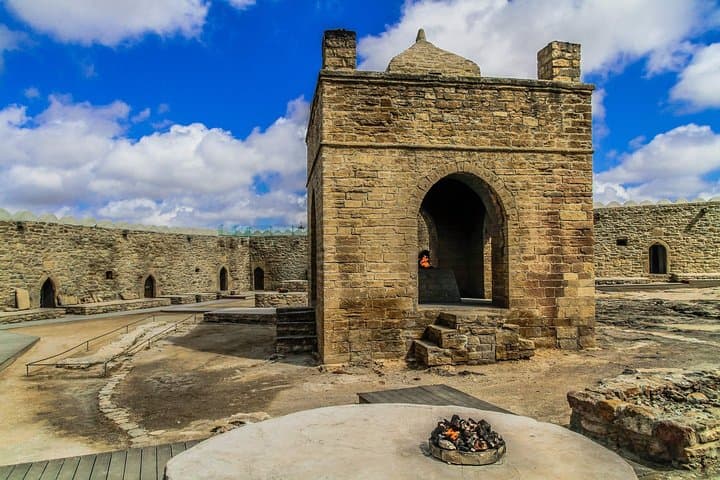
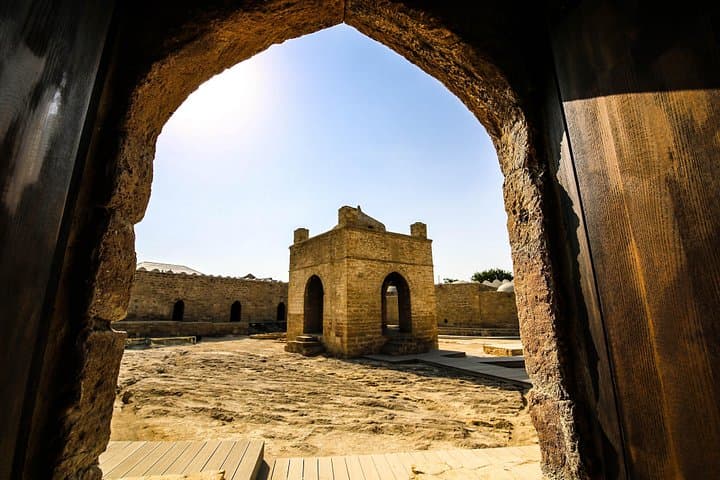
You step out of a city hum and into a wind that smells faintly of gas and salt — the Absheron Peninsula lays out flat and bright toward the Caspian. Within an hour from central Baku a pentagonal stone complex appears: Ateshgah, the Fire Temple, its courtyard quiet except for the low voices of visitors and the hiss of small gas-fed flames that once drew pilgrims.
Verified experiences and guided adventures in the surrounding area.
Operated by Cactus Travel Azerbaijan · Baku, Absheron
You step out of a city hum and into a wind that smells faintly of gas and salt — the Absheron Peninsula lays out flat and bright toward the Caspian. Within an hour from central Baku a pentagonal stone complex appears: Ateshgah, the Fire Temple, its courtyard quiet except for the low voices of visitors and the hiss of small gas-fed flames that once drew pilgrims.
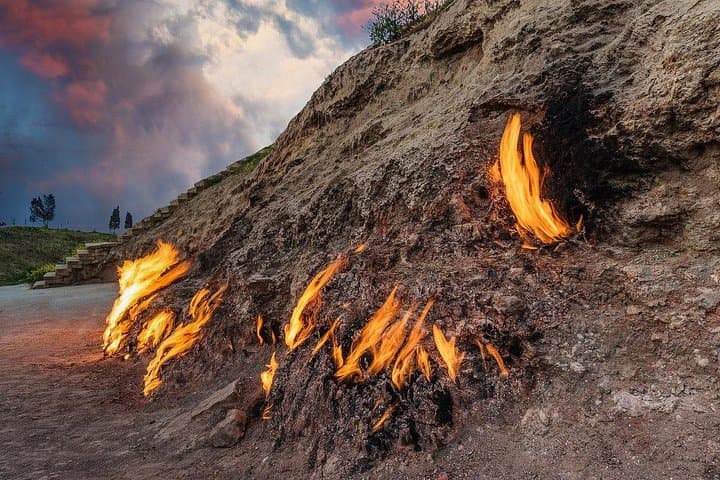
The tour threads history and geology together. Ateshgah dates to the 17th–18th centuries and reflects Indian and Zoroastrian ties to the region; its cells and tetragonal altar tell a story of merchants on the old trade routes. A few miles away, Yanardag (Burning Mountain) keeps flames licking from porous sandstone — natural hydrocarbon seepage that ancient travelers, including Marco Polo’s contemporaries, remarked upon. The landscape here is raw: wind-sculpted scrub, low cliffs and salt flats that underline why fire worship took hold.
Culturally, the sites act as a bridge between pre-Islamic beliefs and modern Baku; guides typically thread folklore and geology into a clear narrative. Practically, the standard private tour lasts about 3–4 hours with hotel pickup and drop-off; admissions are usually paid on-site.
Expect short walks on flat, uneven ground, open exposure to sun and wind, and close-up views of sustained natural flames best seen at dusk. Bring cash for entry, a lightweight jacket for coastal wind, and enough water. Respect fenced areas and cultural markers; these are active archaeological and natural sites, and leaving them intact preserves what drew humanity here in the first place.
easy.
3–4 hours.
Suitable for most fitness levels; includes short, flat walks and standing at viewpoints
Admissions are typically not included—most visitors pay entry at each site on arrival, so bring local currency.
The private tour runs about 3–4 hours and usually includes hotel or apartment pickup and drop-off in Baku.
Yes; the operator notes stroller accessibility and infant seats are available, but uneven ground at viewpoints may require carrying very small children briefly.
Guides commonly speak English and Azerbaijani; confirm language needs when booking to ensure a match.
The permanent flames here influenced Zoroastrian practices and drew Indian traders; Ateshgah’s architecture reflects 17th–18th century pilgrimage links across the region.
These are fragile cultural and geological sites—stick to paths, avoid touching archaeological fabric, and support local guides who practice low-impact touring.
Cactus Travel Azerbaijan operates guided outdoor trips and adventures with an emphasis on safety, stewardship, and memorable experiences.
You step out of a city hum and into a wind that smells faintly of gas and salt — the Absheron Peninsula lays out flat and bright toward the Caspian. Within an hour from central Baku a pentagonal stone complex appears: Ateshgah, the Fire Temple, its courtyard quiet except for the low voices of visitors and the hiss of small gas-fed flames that once drew pilgrims.
You step out of a city hum and into a wind that smells faintly of gas and salt — the Absheron Peninsula lays out flat and bright toward the Caspian. Within an hour from central Baku a pentagonal stone complex appears: Ateshgah, the Fire Temple, its courtyard quiet except for the low voices of visitors and the hiss of small gas-fed flames that once drew pilgrims.
The tour threads history and geology together. Ateshgah dates to the 17th–18th centuries and reflects Indian and Zoroastrian ties to the region; its cells and tetragonal altar tell a story of merchants on the old trade routes. A few miles away, Yanardag (Burning Mountain) keeps flames licking from porous sandstone — natural hydrocarbon seepage that ancient travelers, including Marco Polo’s contemporaries, remarked upon. The landscape here is raw: wind-sculpted scrub, low cliffs and salt flats that underline why fire worship took hold.
Culturally, the sites act as a bridge between pre-Islamic beliefs and modern Baku; guides typically thread folklore and geology into a clear narrative. Practically, the standard private tour lasts about 3–4 hours with hotel pickup and drop-off; admissions are usually paid on-site.
Expect short walks on flat, uneven ground, open exposure to sun and wind, and close-up views of sustained natural flames best seen at dusk. Bring cash for entry, a lightweight jacket for coastal wind, and enough water. Respect fenced areas and cultural markers; these are active archaeological and natural sites, and leaving them intact preserves what drew humanity here in the first place.