THE ADVENTURE COLLECTIVE® · Independent discovery and booking for outdoor travel

Covering Gobustan’s ancient rock art, nearby mud volcanoes, the Ateshgah Fire Temple and the ever-burning Yanar Dag, this full-day Baku tour compresses Azerbaijan’s geological drama and cultural crosscurrents into one 7–8 hour loop. Expect short hikes, off-road views and easy logistics with hotel pickup.
Covering Gobustan’s ancient rock art, nearby mud volcanoes, the Ateshgah Fire Temple and the ever-burning Yanar Dag, this full-day Baku tour compresses Azerbaijan’s geological drama and cultural crosscurrents into one 7–8 hour loop. Expect short hikes, off-road views and easy logistics with hotel pickup.
You step out of Baku’s glass-and-steel edge into wind and raw geology: the highway peels away from the Caspian’s calm, and the land opens into scrub, salt flats and low, wind-worn hills. In the rearview, Flame Towers wink; ahead, the mud volcanoes’ grey cones puncture the horizon like small moons, and beyond them the weathered stone canvases of Gobustan await — panels carved by hands that predate written history.
Verified experiences and guided adventures in the surrounding area.
Operated by Old City Tours LLC · Baku, Absheron District
You step out of Baku’s glass-and-steel edge into wind and raw geology: the highway peels away from the Caspian’s calm, and the land opens into scrub, salt flats and low, wind-worn hills. In the rearview, Flame Towers wink; ahead, the mud volcanoes’ grey cones puncture the horizon like small moons, and beyond them the weathered stone canvases of Gobustan await — panels carved by hands that predate written history.
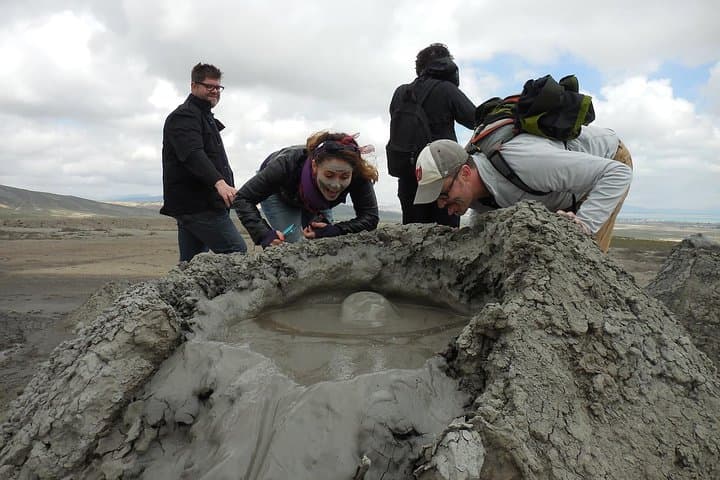
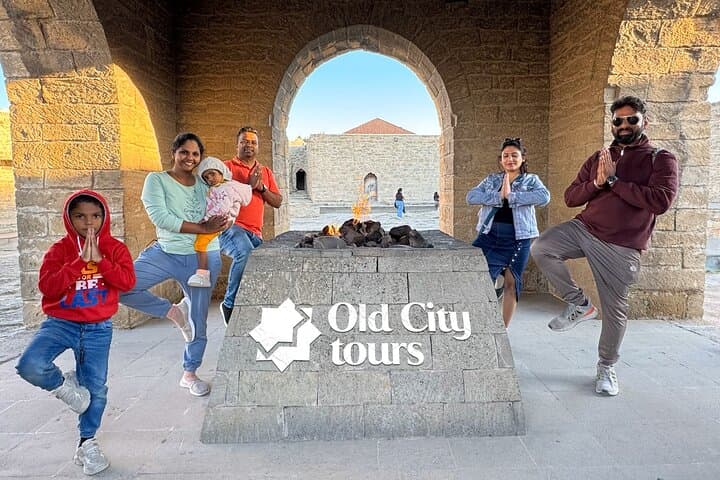
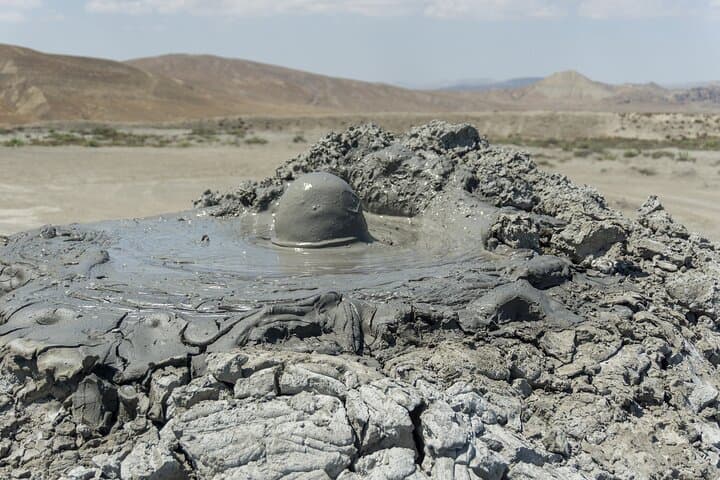
Gobustan National Park carries a human archive: petroglyphs that record hunting scenes, boats and ritual marks going back tens of thousands of years, a rare, readable record of Pleistocene life on the Absheron peninsula. The mud volcanoes nearby are geological showmen — expulsions of gas and cold slurry that rise and sink in slow, stubborn pulses. Ateshgah Fire Temple brings a different flame: a built place of pilgrimage whose Persian and Indian inscriptions reflect centuries of Zoroastrian, Hindu and Sikh devotion. Then there’s Yanar Dag, the roadside slope where natural gas-fed flames lick continuously from seams in the sandstone — a landscape that refuses to go quietly out of time.
Geology here is literal: subterranean gas, clay and pressure shape the surface. Culture overlays those forces. The Ateshgah complex, once a caravan-era site, highlights the region’s role as a crossroads where pilgrims and traders paused beside natural flames. Gobustan’s carved stones are protected now — they are vulnerable to weather and to the temptation of touch, so guides focus on interpretation and stewardship.
The itinerary compresses these distinct energies into a full day: hotel pickup in central Baku, a 60–90 minute drive to Gobustan (about 65 km), time at the mud volcanoes, a guided walk among petroglyph panels, lunch, then a return toward the Absheron coast for Ateshgah and the low, relentless blaze of Yanar Dag. Drive time links sites; the route also passes modern Baku landmarks like Heydar Aliyev Center and the city boulevard.
Practical edge: this is a day that mixes short walks, uneven ground, and open sun. Bring sturdy shoes for the rocky plateaus and mud cones, a wide-brim hat and layers for gusts off the Caspian, and at least one liter of water per person. Photography is generous but respect ropes at petroglyphs and follow your guide on permitted angles. If you’re traveling on a tight schedule, book an early pickup — public transit won’t stitch these sites together efficiently.
For visitors who want a compact, geological and cultural primer on Azerbaijan in one day, this tour works: it pairs readable interpretation with efficient logistics, saving you the hassle of taxis and timing while leaving time for small discoveries — a roadside tea stall, a lone shepherding dog, the strange stillness of a mud cone erupting.
easy.
7–8 hours.
Light walking with occasional short climbs and standing; suitable for most fitness levels.
Admission to Gobustan and the Ateshgah/ Yanar Dag sites can be covered by the operator depending on the option; check your booking details — the tour notes some admissions are not included.
The tour runs about 7–8 hours with a typical start near 10:00; hotel pickups begin 30–60 minutes earlier and exact pickup time will be confirmed after booking.
Children are welcome; short walks over uneven ground mean strollers are only useful at paved areas. Infants should be in carriers for petroglyph plateaus.
Drone rules vary and archaeological sites often prohibit them; confirm with the guide beforehand and obtain any necessary permits.
A lunch break is included in the schedule; vegetarian options may be available if requested at booking.
Pack a hat, sunscreen, light jacket for wind, and a refillable water bottle; spring and autumn can be breezy, summer is hot and winter may be cool and windy.
Gobustan’s rock art records human activity up to around 40,000 years ago; Ateshgah’s inscriptions reflect Zoroastrian, Hindu and Sikh traditions tied to natural gas seeps.
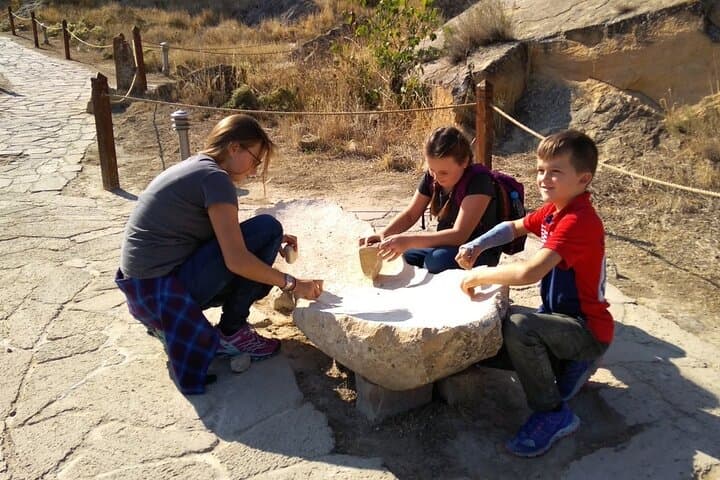
The petroglyphs and geological features are sensitive to erosion and vandalism; stick to marked paths, follow guide instructions and avoid touching rock art.
Old City Tours LLC operates guided outdoor trips and adventures with an emphasis on safety, stewardship, and memorable experiences.
You step out of Baku’s glass-and-steel edge into wind and raw geology: the highway peels away from the Caspian’s calm, and the land opens into scrub, salt flats and low, wind-worn hills. In the rearview, Flame Towers wink; ahead, the mud volcanoes’ grey cones puncture the horizon like small moons, and beyond them the weathered stone canvases of Gobustan await — panels carved by hands that predate written history.
You step out of Baku’s glass-and-steel edge into wind and raw geology: the highway peels away from the Caspian’s calm, and the land opens into scrub, salt flats and low, wind-worn hills. In the rearview, Flame Towers wink; ahead, the mud volcanoes’ grey cones puncture the horizon like small moons, and beyond them the weathered stone canvases of Gobustan await — panels carved by hands that predate written history.
Gobustan National Park carries a human archive: petroglyphs that record hunting scenes, boats and ritual marks going back tens of thousands of years, a rare, readable record of Pleistocene life on the Absheron peninsula. The mud volcanoes nearby are geological showmen — expulsions of gas and cold slurry that rise and sink in slow, stubborn pulses. Ateshgah Fire Temple brings a different flame: a built place of pilgrimage whose Persian and Indian inscriptions reflect centuries of Zoroastrian, Hindu and Sikh devotion. Then there’s Yanar Dag, the roadside slope where natural gas-fed flames lick continuously from seams in the sandstone — a landscape that refuses to go quietly out of time.
Geology here is literal: subterranean gas, clay and pressure shape the surface. Culture overlays those forces. The Ateshgah complex, once a caravan-era site, highlights the region’s role as a crossroads where pilgrims and traders paused beside natural flames. Gobustan’s carved stones are protected now — they are vulnerable to weather and to the temptation of touch, so guides focus on interpretation and stewardship.
The itinerary compresses these distinct energies into a full day: hotel pickup in central Baku, a 60–90 minute drive to Gobustan (about 65 km), time at the mud volcanoes, a guided walk among petroglyph panels, lunch, then a return toward the Absheron coast for Ateshgah and the low, relentless blaze of Yanar Dag. Drive time links sites; the route also passes modern Baku landmarks like Heydar Aliyev Center and the city boulevard.
Practical edge: this is a day that mixes short walks, uneven ground, and open sun. Bring sturdy shoes for the rocky plateaus and mud cones, a wide-brim hat and layers for gusts off the Caspian, and at least one liter of water per person. Photography is generous but respect ropes at petroglyphs and follow your guide on permitted angles. If you’re traveling on a tight schedule, book an early pickup — public transit won’t stitch these sites together efficiently.
For visitors who want a compact, geological and cultural primer on Azerbaijan in one day, this tour works: it pairs readable interpretation with efficient logistics, saving you the hassle of taxis and timing while leaving time for small discoveries — a roadside tea stall, a lone shepherding dog, the strange stillness of a mud cone erupting.