THE ADVENTURE COLLECTIVE® · Independent discovery and booking for outdoor travel

Experience Bai Dinh Pagoda after dark: illuminated halls, bell-ringing ceremonies, floating lanterns and a soothing tea-and-foot-soak finale. This guided night tour pairs cultural ritual with quiet, small-group transport for an accessible, atmospheric evening in Ninh Binh.
Experience Bai Dinh Pagoda after dark: illuminated halls, bell-ringing ceremonies, floating lanterns and a soothing tea-and-foot-soak finale. This guided night tour pairs cultural ritual with quiet, small-group transport for an accessible, atmospheric evening in Ninh Binh.
A late-afternoon drive brings you to Bai Dinh under a cooling sky; electric shuttles hum between polished courtyards while warm light pours from the Three Periods Hall. Night turns the complex into a place of low voices and gold bronze, where ceremonial bells and lanterns set the tempo and the wide stone steps feel alive underfoot.
Verified experiences and guided adventures in the surrounding area.
Operated by Hanoi Transfer Service · Ninh Binh, Ninh Binh Province
A late-afternoon drive brings you to Bai Dinh under a cooling sky; electric shuttles hum between polished courtyards while warm light pours from the Three Periods Hall. Night turns the complex into a place of low voices and gold bronze, where ceremonial bells and lanterns set the tempo and the wide stone steps feel alive underfoot.
Built around an ancient shrine and expanded into Vietnam’s largest pagoda complex in the 2000s, Bai Dinh combines modern scale with traditional Buddhist art: colossal Buddha statues, the ornate Tam Quan gate, and the long Arhat Corridor of carved figures. Geologically, the pagoda sits on the karst plain of Ninh Binh—limestone peaks and rice paddies frame the approach, offering far-reaching views from upper terraces on clear evenings.
Culturally, the night tour emphasizes ritual — floating flower lanterns on Release Lake, ringing the bell for merit, and visiting Bao Thien Stupa’s upper floors where relics are housed. The tour ends with a simple but restorative tea and an herbal foot soak at Chime Coffee, a quiet local practice of hospitality.
Practical guidance: arrive with modest clothing and shoes for steps and uneven paving; carry a light layer for cooler nights and a small flashlight for stairways. Bring modest cash for donations or snacks and be prepared to follow temple etiquette—no loud talk, remove hats in prayer halls, and don’t release non-biodegradable items into the water. The guided night experience is low exertion but rich in sensory detail: listen for the bell, watch lanterns drift, and allow time to move slowly through illuminated halls.
easy.
1–2 hours.
Minimal fitness required; mostly walking on paved and stone surfaces, short stair climbs.
Yes — this guided experience specifically visits the complex after dusk using electric shuttles and includes entry to key halls and the lantern ritual.
Families are welcome; strollers are usable in many areas but some stair sections require carrying children—infants may need to sit on laps on shuttles.
Modest dress is expected: cover shoulders and knees, and avoid hats inside prayer halls; the guide will remind the group of etiquette.
The tour lasts about 60–120 minutes and includes pick-up/drop-off at the listed meeting point plus electric shuttle transfers within the complex.
The modern Bai Dinh complex was expanded in the early 21st century around an older temple; it now combines monumental contemporary construction with centuries-old devotional traditions.
Guides stress responsible lantern releases and discourage non-biodegradable materials; sticking to paths helps protect surrounding karst vegetation and rice fields.
Hanoi Transfer Service operates guided outdoor trips and adventures with an emphasis on safety, stewardship, and memorable experiences.

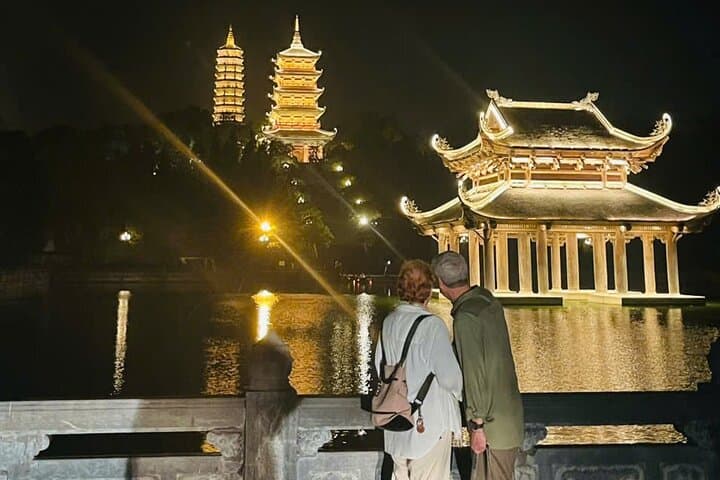
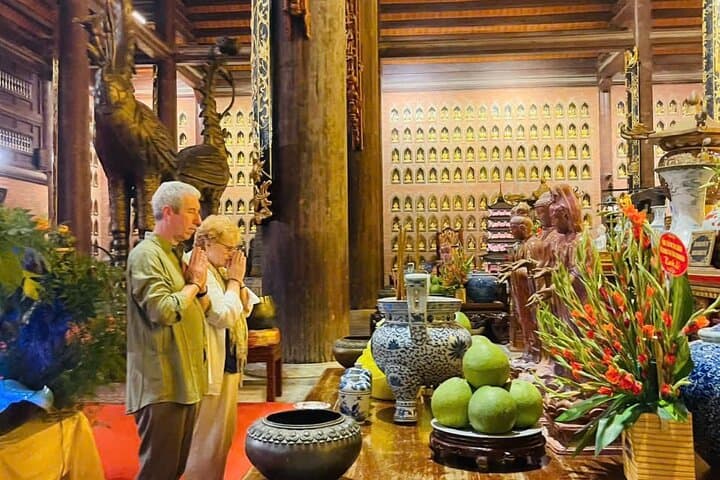
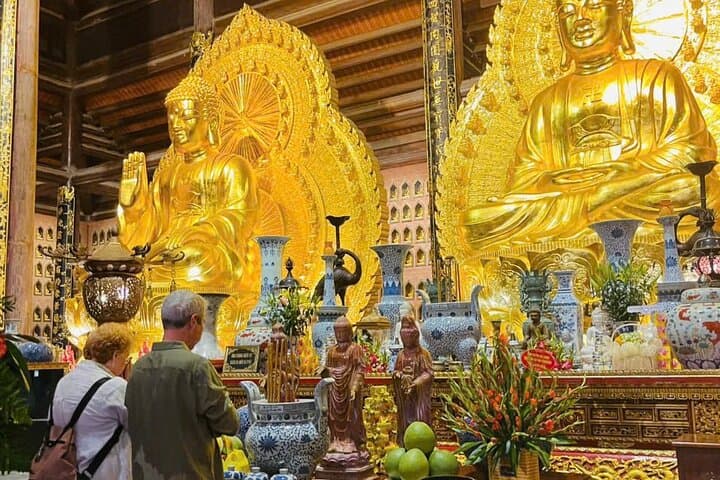
A late-afternoon drive brings you to Bai Dinh under a cooling sky; electric shuttles hum between polished courtyards while warm light pours from the Three Periods Hall. Night turns the complex into a place of low voices and gold bronze, where ceremonial bells and lanterns set the tempo and the wide stone steps feel alive underfoot.
A late-afternoon drive brings you to Bai Dinh under a cooling sky; electric shuttles hum between polished courtyards while warm light pours from the Three Periods Hall. Night turns the complex into a place of low voices and gold bronze, where ceremonial bells and lanterns set the tempo and the wide stone steps feel alive underfoot.
Built around an ancient shrine and expanded into Vietnam’s largest pagoda complex in the 2000s, Bai Dinh combines modern scale with traditional Buddhist art: colossal Buddha statues, the ornate Tam Quan gate, and the long Arhat Corridor of carved figures. Geologically, the pagoda sits on the karst plain of Ninh Binh—limestone peaks and rice paddies frame the approach, offering far-reaching views from upper terraces on clear evenings.
Culturally, the night tour emphasizes ritual — floating flower lanterns on Release Lake, ringing the bell for merit, and visiting Bao Thien Stupa’s upper floors where relics are housed. The tour ends with a simple but restorative tea and an herbal foot soak at Chime Coffee, a quiet local practice of hospitality.
Practical guidance: arrive with modest clothing and shoes for steps and uneven paving; carry a light layer for cooler nights and a small flashlight for stairways. Bring modest cash for donations or snacks and be prepared to follow temple etiquette—no loud talk, remove hats in prayer halls, and don’t release non-biodegradable items into the water. The guided night experience is low exertion but rich in sensory detail: listen for the bell, watch lanterns drift, and allow time to move slowly through illuminated halls.