THE ADVENTURE COLLECTIVE® · Independent discovery and booking for outdoor travel

Depart Hanoi for a full-day loop through Ninh Binh: monumental Buddhist architecture at Bai Dinh followed by a guided boat passage through Trang An’s limestone caves. This day tour pairs cultural monuments with slow river scenery and practical logistics like hotel pickup and buffet lunch.
Depart Hanoi for a full-day loop through Ninh Binh: monumental Buddhist architecture at Bai Dinh followed by a guided boat passage through Trang An’s limestone caves. This day tour pairs cultural monuments with slow river scenery and practical logistics like hotel pickup and buffet lunch.
You step out of Hanoi’s Old Quarter before sunrise and the city’s hum thins into the steady thrum of the road. Rice paddies blur past, and limestone towers begin to puncture the horizon; by late morning the bronze bell of Bai Dinh tolls across a complex of terraces and stone arhats that crowd an enormous courtyard.
Verified experiences and guided adventures in the surrounding area.
Operated by Local Tours ASIA · Ninh Binh, Ninh Binh Province
You step out of Hanoi’s Old Quarter before sunrise and the city’s hum thins into the steady thrum of the road. Rice paddies blur past, and limestone towers begin to puncture the horizon; by late morning the bronze bell of Bai Dinh tolls across a complex of terraces and stone arhats that crowd an enormous courtyard.
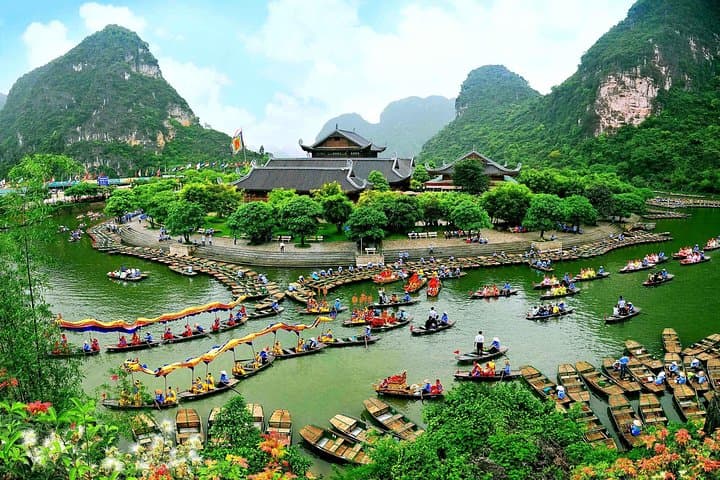
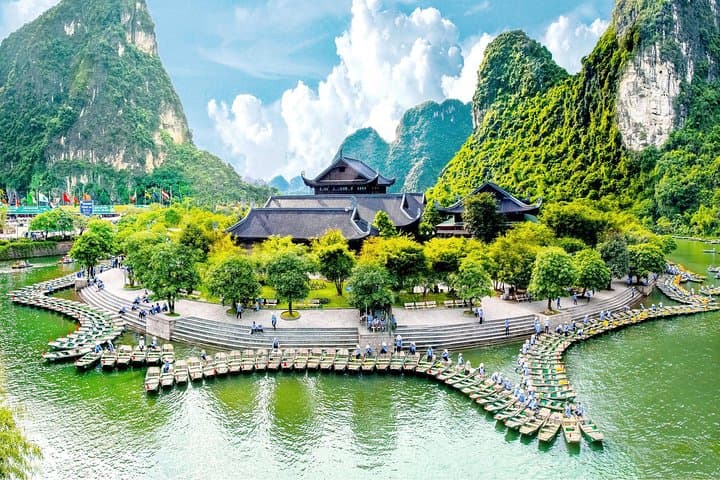
Bai Dinh is a modern temple complex built across older sacred ground — its oversized statues and record-setting bells reflect contemporary devotion and tourism. The karst landscape around Trang An, by contrast, is ancient: limestone folded and dissolved over millions of years into fissures, caves and narrow waterways. Locals have long guided boats through those tunnels; today the same channels thread past grottoes used as movie sets and small temple shrines that watch the river.
Expect a calm, slow-moving day: about 2.5 hours drive each way from Hanoi, an hour exploring the pagoda, a buffet lunch of local dishes, then roughly 2–3 hours of rowed boat time through Trang An’s caves and channels where the current seems to nudge the boat forward.
Practical notes: wear sturdy, comfortable shoes for temple steps and slick stone paths; sun protection and a light rain layer are essential in summer; bring cash for small offerings or snacks. The tour is low-impact on fitness but high on sensory contrast — from polished bronze and incense at the pagoda to damp, echoing tunnels where water dares you to peer into the dark.
Timing matters: arrive early to avoid crowds at Bai Dinh and plan for a full 10–11 hour day with hotel pickup and drop-off included.
easy.
10–11 hours.
Suitable for most fitness levels; expect short walks, steps at the pagoda, and sitting during a multi-hour coach ride.
Most standard tours include Bai Dinh and the Trang An boat trip; confirm on booking and keep small cash for any optional fees.
Expect roughly 2–3 hours on the water depending on the route and boat traffic; some itineraries list up to 2.5 hours for the main circuit.
Yes — the tour is classified easy, with minimal physical strain, but boat access involves low tunnels that may be uncomfortable for those with mobility issues.
Buffet lunches typically include vegetarian options; notify the operator in advance for specific dietary needs.
Bai Dinh is a large contemporary Buddhist complex built over older sacred sites and holds several regional records for statues and bells; Trang An was inscribed as a UNESCO World Heritage site in 2014 for its outstanding karst landscape and cultural landscape.
Heavy visitor numbers stress karst waterways and temple grounds — follow ‘leave no trace’ practices, avoid single-use plastics, and support local guides and community-based services.
Local Tours ASIA operates guided outdoor trips and adventures with an emphasis on safety, stewardship, and memorable experiences.


You step out of Hanoi’s Old Quarter before sunrise and the city’s hum thins into the steady thrum of the road. Rice paddies blur past, and limestone towers begin to puncture the horizon; by late morning the bronze bell of Bai Dinh tolls across a complex of terraces and stone arhats that crowd an enormous courtyard.
You step out of Hanoi’s Old Quarter before sunrise and the city’s hum thins into the steady thrum of the road. Rice paddies blur past, and limestone towers begin to puncture the horizon; by late morning the bronze bell of Bai Dinh tolls across a complex of terraces and stone arhats that crowd an enormous courtyard.
Bai Dinh is a modern temple complex built across older sacred ground — its oversized statues and record-setting bells reflect contemporary devotion and tourism. The karst landscape around Trang An, by contrast, is ancient: limestone folded and dissolved over millions of years into fissures, caves and narrow waterways. Locals have long guided boats through those tunnels; today the same channels thread past grottoes used as movie sets and small temple shrines that watch the river.
Expect a calm, slow-moving day: about 2.5 hours drive each way from Hanoi, an hour exploring the pagoda, a buffet lunch of local dishes, then roughly 2–3 hours of rowed boat time through Trang An’s caves and channels where the current seems to nudge the boat forward.
Practical notes: wear sturdy, comfortable shoes for temple steps and slick stone paths; sun protection and a light rain layer are essential in summer; bring cash for small offerings or snacks. The tour is low-impact on fitness but high on sensory contrast — from polished bronze and incense at the pagoda to damp, echoing tunnels where water dares you to peer into the dark.
Timing matters: arrive early to avoid crowds at Bai Dinh and plan for a full 10–11 hour day with hotel pickup and drop-off included.