THE ADVENTURE COLLECTIVE® · Independent discovery and booking for outdoor travel

Leave Cairo before sunrise and cross the Western Desert to Bahariya Oasis, then ride 4x4 tracks through the Black Desert to the alien chalk sculptures of the White Desert. This overnight tour blends geology, Bedouin culture, and open-sky camping for a compact desert adventure.
Leave Cairo before sunrise and cross the Western Desert to Bahariya Oasis, then ride 4x4 tracks through the Black Desert to the alien chalk sculptures of the White Desert. This overnight tour blends geology, Bedouin culture, and open-sky camping for a compact desert adventure.
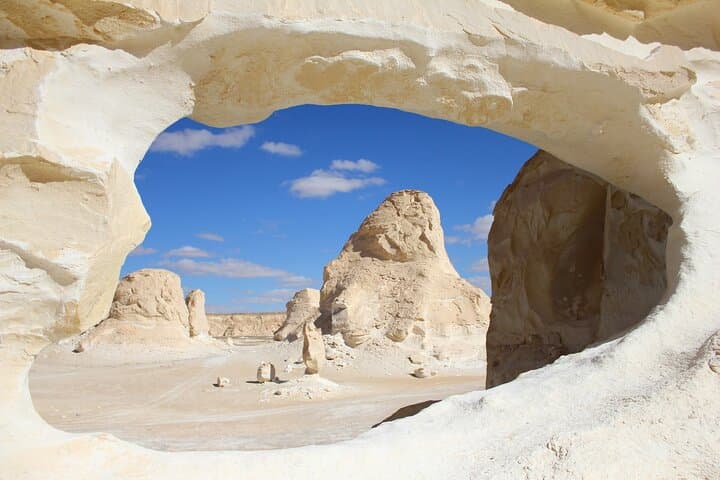
Dawn in Cairo is still rubbing sleep from its eyes when the van pulls away toward the Western Desert. The city’s lights thin, then disappear, and the road unspools across flat, ochre plains. By late morning you reach Bahariya Oasis, a ribbon of green and date palms where Bedouin smoke curls and the land begins to change—first to the coal-black outcrops of the Black Desert, then to the chalk sculptures of the White Desert that look as if some giant hand carved mushrooms and rabbits from sandstone.
Verified experiences and guided adventures in the surrounding area.
Operated by Emo Tours Swiss · Bawiti, Giza
Dawn in Cairo is still rubbing sleep from its eyes when the van pulls away toward the Western Desert. The city’s lights thin, then disappear, and the road unspools across flat, ochre plains. By late morning you reach Bahariya Oasis, a ribbon of green and date palms where Bedouin smoke curls and the land begins to change—first to the coal-black outcrops of the Black Desert, then to the chalk sculptures of the White Desert that look as if some giant hand carved mushrooms and rabbits from sandstone.
Geology here reads like chapters of Earth's weather: volcanic basalt forms the Black Desert’s pimpled hills, while wind and sand have whittled fragile chalk into surreal pillars in the White Desert. Bahariya itself has been a crossroads for millennia—Pharaonic tombs and Roman-age artifacts have been found nearby, and the Oasis supported ancient caravan routes. Today, Bedouin hospitality, strong tea, and campfire cooking shape the human side of the trip.
Practical notes: expect about 350 km of driving from Cairo (roughly 4 hours), then 4x4 tracks of 40–100 km across soft sand and rocky flats; elevation changes are modest, typically under 200 m. Nights are cold and winds can pick up; days can be intensely hot. Pack layered clothing, sun protection, plenty of water, and a reliable phone battery or power bank. Bring cash for local purchases and tips. The overnight format gives prime light for photography—soft dawn and lunar-like night skies—so aim to time your shutter between golden hour and the moonrise. Respect fragile formations and follow your guide: the desert will let you pass, but it won’t forgive careless footprints.
moderate.
17–18 hours.
No special fitness required, but be comfortable with bumpy 4x4 rides and short walks over uneven sand and rock.
The transfer is roughly 350 km and typically takes about four hours each way by private vehicle.
Many operators provide bedding in desert camps, but bringing your own warm sleeping bag is recommended for winter months.
The itinerary is physically easy but involves long drives and bumpy 4x4 sections; it’s generally suitable if mobility is reasonable and medical restrictions are considered.
Service is intermittent or absent in remote desert sections; plan accordingly and inform your guide of any emergencies beforehand.
Bahariya Oasis has supported human settlement for millennia and produced notable archaeological finds, including Roman-era mummies and fossil beds noted by paleontologists.
The White Desert is protected, and visitors should stick to established routes to avoid damaging fragile chalk formations and disturb local wildlife as little as possible.
Emo Tours Swiss operates guided outdoor trips and adventures with an emphasis on safety, stewardship, and memorable experiences.


Dawn in Cairo is still rubbing sleep from its eyes when the van pulls away toward the Western Desert. The city’s lights thin, then disappear, and the road unspools across flat, ochre plains. By late morning you reach Bahariya Oasis, a ribbon of green and date palms where Bedouin smoke curls and the land begins to change—first to the coal-black outcrops of the Black Desert, then to the chalk sculptures of the White Desert that look as if some giant hand carved mushrooms and rabbits from sandstone.
Dawn in Cairo is still rubbing sleep from its eyes when the van pulls away toward the Western Desert. The city’s lights thin, then disappear, and the road unspools across flat, ochre plains. By late morning you reach Bahariya Oasis, a ribbon of green and date palms where Bedouin smoke curls and the land begins to change—first to the coal-black outcrops of the Black Desert, then to the chalk sculptures of the White Desert that look as if some giant hand carved mushrooms and rabbits from sandstone.
Geology here reads like chapters of Earth's weather: volcanic basalt forms the Black Desert’s pimpled hills, while wind and sand have whittled fragile chalk into surreal pillars in the White Desert. Bahariya itself has been a crossroads for millennia—Pharaonic tombs and Roman-age artifacts have been found nearby, and the Oasis supported ancient caravan routes. Today, Bedouin hospitality, strong tea, and campfire cooking shape the human side of the trip.
Practical notes: expect about 350 km of driving from Cairo (roughly 4 hours), then 4x4 tracks of 40–100 km across soft sand and rocky flats; elevation changes are modest, typically under 200 m. Nights are cold and winds can pick up; days can be intensely hot. Pack layered clothing, sun protection, plenty of water, and a reliable phone battery or power bank. Bring cash for local purchases and tips. The overnight format gives prime light for photography—soft dawn and lunar-like night skies—so aim to time your shutter between golden hour and the moonrise. Respect fragile formations and follow your guide: the desert will let you pass, but it won’t forgive careless footprints.