THE ADVENTURE COLLECTIVE® · Independent discovery and booking for outdoor travel

Ride across the broad Bagan plain on this full-day bicycle tour and pass centuries of temple architecture, village workshops, and riverside stupas. Expect eight hours of mostly flat riding, temple walks, and local lunches while learning the history behind the ruins.
Ride across the broad Bagan plain on this full-day bicycle tour and pass centuries of temple architecture, village workshops, and riverside stupas. Expect eight hours of mostly flat riding, temple walks, and local lunches while learning the history behind the ruins.
You begin before the heat—cool dust under rubber tires, the Ayeyarwady low and glinting to the west. Pedals click as a narrow road opens onto the plain: hundreds of brick spires and gilded stupas puncture the horizon, some squat and battered, others rising in careful symmetry. The air smells of warm earth and fried snacks from a roadside stall.
Verified experiences and guided adventures in the surrounding area.
Operated by Grayline Vietnam Threeland Travel · Nyaung-U, Mandalay Region
You begin before the heat—cool dust under rubber tires, the Ayeyarwady low and glinting to the west. Pedals click as a narrow road opens onto the plain: hundreds of brick spires and gilded stupas puncture the horizon, some squat and battered, others rising in careful symmetry. The air smells of warm earth and fried snacks from a roadside stall.
Bagan’s plains were the heart of the Pagan Kingdom from the 11th to 13th centuries, when kings commissioned thousands of temples. The landscape sits on an alluvial plain carved by river floods; softer soils and fired brick gave rise to the region’s distinctive stepped stupas and tall pahtos. Local villages still repair ancient murals and practice lacquerware craft passed down for generations.
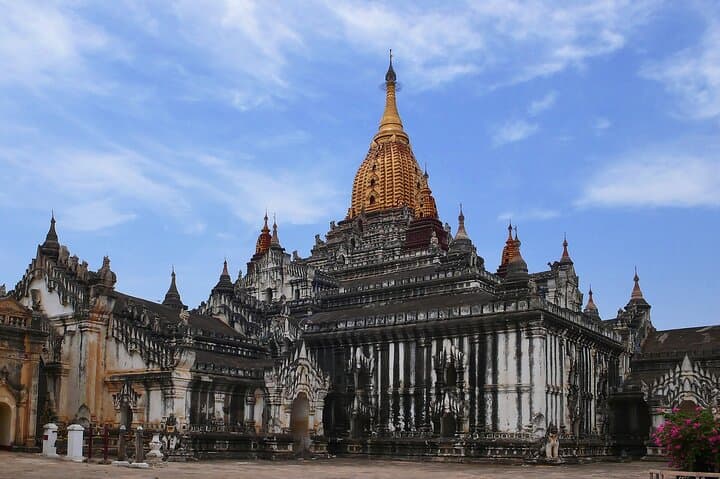
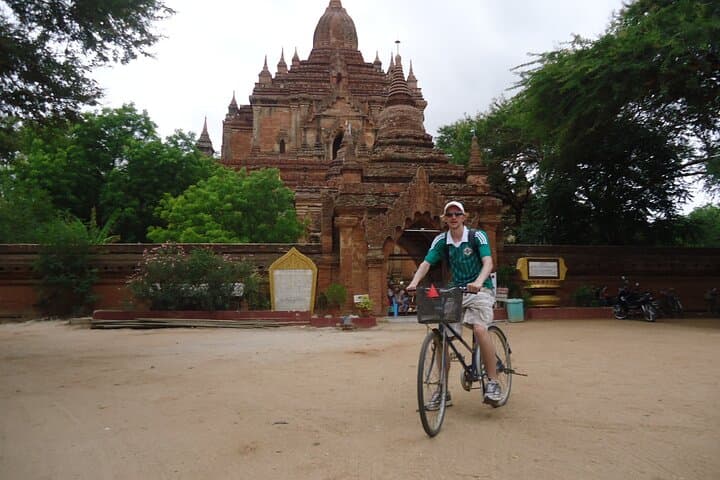
On two wheels you move between eras—Ananda Pahto’s airy corridors, a compact 14th‑century pahto of Alaungsithu, a tall 61 m tower that watches the plain, and a riverside Pyu-style stupa near the Ayeyarwady. Stops include small temples where faded murals and library chambers reveal how Buddhist texts were protected.
Practicalities: expect an 8‑hour day on mostly flat dirt tracks with occasional sand; the pace is steady with frequent stops. Bring sun protection, at least 2 liters of water, and shoes that tolerate dust. Entry to the Bagan Archaeological Zone requires a separate permit—carry your pass and ID. Morning light is best for photos and cooler riding; plan breaks in villages to sample snacks and support local artisans. Respect ropes and signage—many structures are fragile and closed to climbing.
moderate.
8 hours.
Suitable for riders with basic fitness who can sit and pedal for several hours with breaks; no intense climbs but expect dust and heat.
No—entry to the Bagan Archaeological Zone requires a separate permit (BPAC pass); check current fees and carry ID for inspection.
Most operators provide helmets on request; confirm when booking and consider bringing your own for fit and comfort.
Children under 2 are free; ages 2–12 are charged at a reduced rate—assess stamina for an 8‑hour day and arrange child seats or a support vehicle if needed.
Tracks are mostly flat compact dirt with occasional sand and rutted stretches—no technical climbs, but bikes with wider tires handle better.
Bagan was the capital of the Pagan Kingdom (11th–13th centuries) and contains thousands of temples built during its golden age, reflecting evolving Burmese temple styles.
Many structures are fragile—stick to designated paths, avoid climbing closed stupas, and support local conservation efforts and licensed guides to reduce impact.
Grayline Vietnam Threeland Travel operates guided outdoor trips and adventures with an emphasis on safety, stewardship, and memorable experiences.
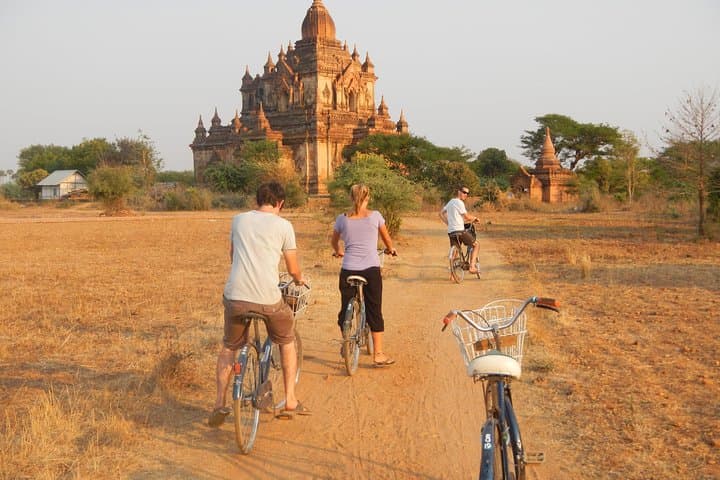
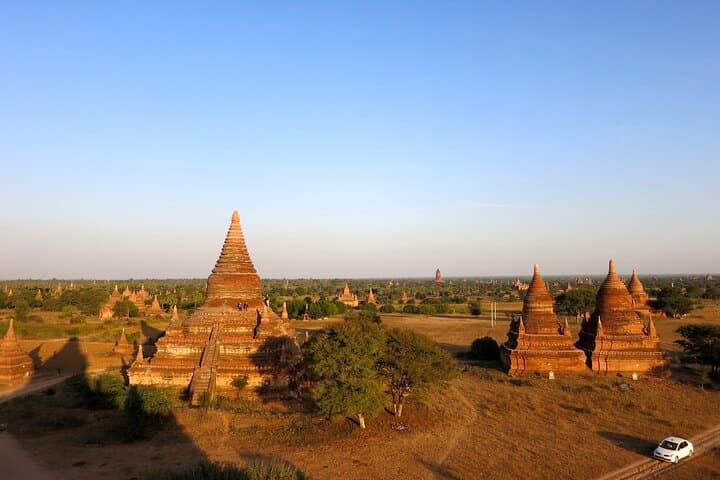
You begin before the heat—cool dust under rubber tires, the Ayeyarwady low and glinting to the west. Pedals click as a narrow road opens onto the plain: hundreds of brick spires and gilded stupas puncture the horizon, some squat and battered, others rising in careful symmetry. The air smells of warm earth and fried snacks from a roadside stall.
You begin before the heat—cool dust under rubber tires, the Ayeyarwady low and glinting to the west. Pedals click as a narrow road opens onto the plain: hundreds of brick spires and gilded stupas puncture the horizon, some squat and battered, others rising in careful symmetry. The air smells of warm earth and fried snacks from a roadside stall.
Bagan’s plains were the heart of the Pagan Kingdom from the 11th to 13th centuries, when kings commissioned thousands of temples. The landscape sits on an alluvial plain carved by river floods; softer soils and fired brick gave rise to the region’s distinctive stepped stupas and tall pahtos. Local villages still repair ancient murals and practice lacquerware craft passed down for generations.
On two wheels you move between eras—Ananda Pahto’s airy corridors, a compact 14th‑century pahto of Alaungsithu, a tall 61 m tower that watches the plain, and a riverside Pyu-style stupa near the Ayeyarwady. Stops include small temples where faded murals and library chambers reveal how Buddhist texts were protected.
Practicalities: expect an 8‑hour day on mostly flat dirt tracks with occasional sand; the pace is steady with frequent stops. Bring sun protection, at least 2 liters of water, and shoes that tolerate dust. Entry to the Bagan Archaeological Zone requires a separate permit—carry your pass and ID. Morning light is best for photos and cooler riding; plan breaks in villages to sample snacks and support local artisans. Respect ropes and signage—many structures are fragile and closed to climbing.