THE ADVENTURE COLLECTIVE® · Independent discovery and booking for outdoor travel

Trade crowded overlooks for a high-country winter traverse: an all-day private snowshoe from Badger Pass up to Dewey Point that finishes with sweeping views of El Capitan and Yosemite Valley. Expect guided technique instruction, steady climbing, and a dramatic ridge-top outlook.
Trade crowded overlooks for a high-country winter traverse: an all-day private snowshoe from Badger Pass up to Dewey Point that finishes with sweeping views of El Capitan and Yosemite Valley. Expect guided technique instruction, steady climbing, and a dramatic ridge-top outlook.
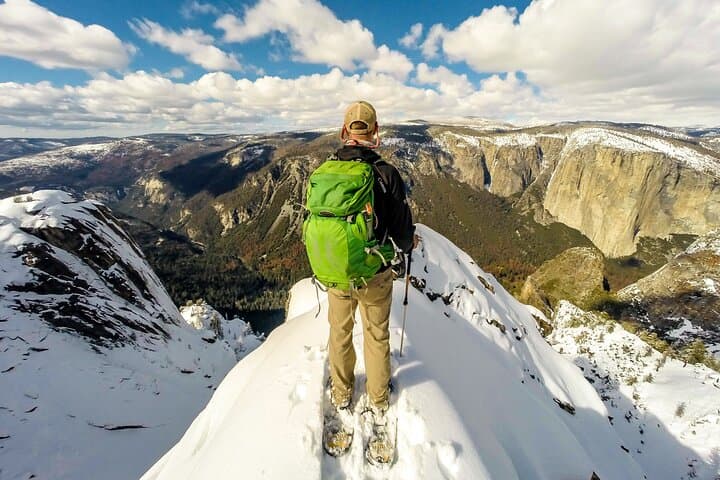
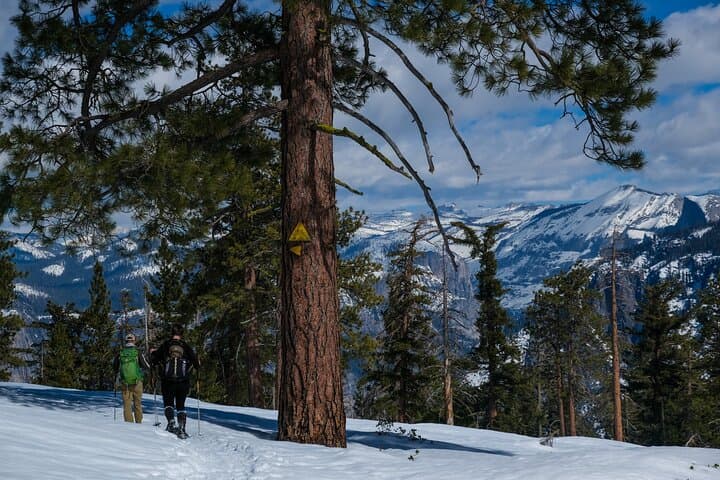
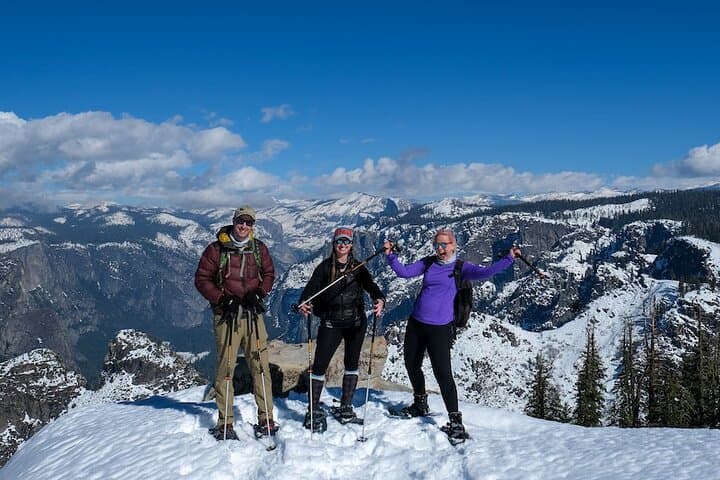
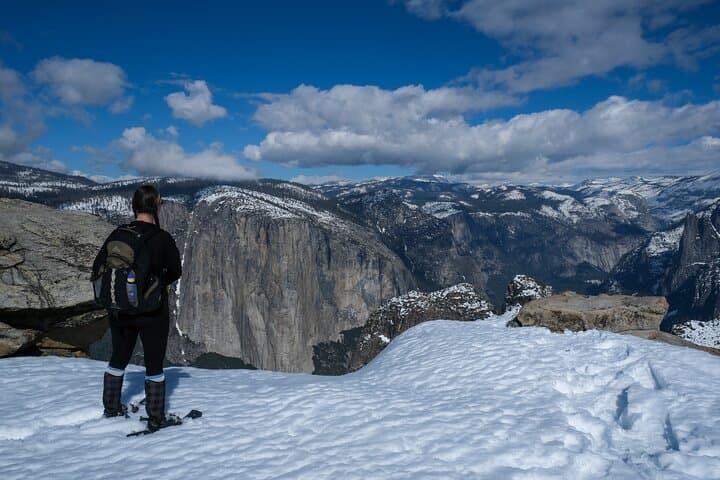
The morning air at Badger Pass bites with a clean, metallic cold as your guide arranges snowshoes and tightens gaiters. A hush settles over the lodge parking area—trees laden with recent snow, the slope of the Sierra pressing quiet against the sky. You push off, the snow compacting under a rhythm of poles and frames; the forest opens and closes like pages in a travel log, and every turn widens the view. At the rim, Dewey Point waits: a raw granite outcrop that dares you to move closer and look down into the gorge where El Capitan rises, vertical and indifferent, above the river below.
Verified experiences and guided adventures in the surrounding area.
Operated by Lasting Adventures · Yosemite Valley, California
The morning air at Badger Pass bites with a clean, metallic cold as your guide arranges snowshoes and tightens gaiters. A hush settles over the lodge parking area—trees laden with recent snow, the slope of the Sierra pressing quiet against the sky. You push off, the snow compacting under a rhythm of poles and frames; the forest opens and closes like pages in a travel log, and every turn widens the view. At the rim, Dewey Point waits: a raw granite outcrop that dares you to move closer and look down into the gorge where El Capitan rises, vertical and indifferent, above the river below.
This route is both simple and elemental. Yosemite’s valley is the work of ice—glaciers that carved and polished the granite into cliffs and domes. In winter the park reads differently: ridgelines and meadows become sculpted white forms, and the trails that learn to avoid crowds reveal how the Ahwahneechee and later explorers understood these high places—routes defined by water, rock, and shelter. Badger Pass, built as one of California’s early ski areas, has long been a winter gateway to less-traveled panoramas; Dewey Point, on the south rim, offers one of the clearest vantage lines across the valley’s geologic drama.
Culturally the area is quiet but storied—rangers and local guides weave natural history into each step, pointing out how freeze-thaw fractures the granite, where avalanches historically track, and the seasonal movements of wildlife that still depend on connected snowfields.
Practical guidance: the tour is private and full-day (about 8 hours). Guides supply snowshoes and poles and will teach technique and safe winter travel basics. Expect a steady uphill on packed snow with intermittent sections that require route-finding and steady pacing; altitude and cold add a level of challenge even on moderate terrain. Dress in breathable synthetic layers, carry plenty of water (insulated bottles to avoid freezing), and bring high-traction waterproof footwear.
Timing matters: travel early to catch clearer skies and firmer snow; storm days can be spectacular but slower and riskier. Your guide will monitor conditions and may adapt the route if snow or park operations alter access. Fitness expectations are higher than a casual walk—regular cardio and comfort on uneven snowy ground will make the day enjoyable rather than exhausting.
Leave no trace: pack out anything you bring and stay on durable snow corridors to protect the fragile alpine soil beneath. Photographs at Dewey Point capture the scale: a foreground of wind-scoured ledge, El Capitan’s face across the valley, and the clean horizon of the Sierra—images that stay with you long after the breath comes back to normal.
challenging.
8 hours.
Recommended for hikers in good cardiovascular shape who are comfortable with sustained uphill travel at moderate altitude.
You should have a high level of fitness—expect sustained uphill travel on snow for several hours; guides provide pacing but not rescue-level assistance.
Yes—professional guides supply snowshoes and trekking poles, and will teach proper technique before you head out.
Meet in front of the main building at Badger Pass Ski Area; park roads and seasonal openings are listed by the National Park Service—plan extra time for winter travel.
Private tours can accommodate families, but participants should be old enough to handle long days in cold conditions and follow guide instructions.
Trips may be modified or canceled for safety; the operator will contact you about alternative itineraries or full refunds per their policy.
No formal avalanche certification is required for this guided route, but guides assess conditions and avoid hazardous terrain; advanced groups can request more technical objectives.
Badger Pass has served as a winter gateway since the 1930s, providing access to Yosemite’s high-country traditions and early recreational developments.
Winter travel compacts snow which protects fragile alpine soils; stay on established tracks, pack out waste, and follow park rules to minimize impact.
Lasting Adventures operates guided outdoor trips and adventures with an emphasis on safety, stewardship, and memorable experiences.
The morning air at Badger Pass bites with a clean, metallic cold as your guide arranges snowshoes and tightens gaiters. A hush settles over the lodge parking area—trees laden with recent snow, the slope of the Sierra pressing quiet against the sky. You push off, the snow compacting under a rhythm of poles and frames; the forest opens and closes like pages in a travel log, and every turn widens the view. At the rim, Dewey Point waits: a raw granite outcrop that dares you to move closer and look down into the gorge where El Capitan rises, vertical and indifferent, above the river below.
The morning air at Badger Pass bites with a clean, metallic cold as your guide arranges snowshoes and tightens gaiters. A hush settles over the lodge parking area—trees laden with recent snow, the slope of the Sierra pressing quiet against the sky. You push off, the snow compacting under a rhythm of poles and frames; the forest opens and closes like pages in a travel log, and every turn widens the view. At the rim, Dewey Point waits: a raw granite outcrop that dares you to move closer and look down into the gorge where El Capitan rises, vertical and indifferent, above the river below.
This route is both simple and elemental. Yosemite’s valley is the work of ice—glaciers that carved and polished the granite into cliffs and domes. In winter the park reads differently: ridgelines and meadows become sculpted white forms, and the trails that learn to avoid crowds reveal how the Ahwahneechee and later explorers understood these high places—routes defined by water, rock, and shelter. Badger Pass, built as one of California’s early ski areas, has long been a winter gateway to less-traveled panoramas; Dewey Point, on the south rim, offers one of the clearest vantage lines across the valley’s geologic drama.
Culturally the area is quiet but storied—rangers and local guides weave natural history into each step, pointing out how freeze-thaw fractures the granite, where avalanches historically track, and the seasonal movements of wildlife that still depend on connected snowfields.
Practical guidance: the tour is private and full-day (about 8 hours). Guides supply snowshoes and poles and will teach technique and safe winter travel basics. Expect a steady uphill on packed snow with intermittent sections that require route-finding and steady pacing; altitude and cold add a level of challenge even on moderate terrain. Dress in breathable synthetic layers, carry plenty of water (insulated bottles to avoid freezing), and bring high-traction waterproof footwear.
Timing matters: travel early to catch clearer skies and firmer snow; storm days can be spectacular but slower and riskier. Your guide will monitor conditions and may adapt the route if snow or park operations alter access. Fitness expectations are higher than a casual walk—regular cardio and comfort on uneven snowy ground will make the day enjoyable rather than exhausting.
Leave no trace: pack out anything you bring and stay on durable snow corridors to protect the fragile alpine soil beneath. Photographs at Dewey Point capture the scale: a foreground of wind-scoured ledge, El Capitan’s face across the valley, and the clean horizon of the Sierra—images that stay with you long after the breath comes back to normal.