THE ADVENTURE COLLECTIVE® · Independent discovery and booking for outdoor travel

Spend a full day exploring Badami’s sixth‑century cave temples, hilltop ruins and lakes on an eight‑hour guided loop from Hampi. This practical guide covers what to expect on the road and on the stone steps.
Spend a full day exploring Badami’s sixth‑century cave temples, hilltop ruins and lakes on an eight‑hour guided loop from Hampi. This practical guide covers what to expect on the road and on the stone steps.
You arrive at the edge of a red‑sandstone cliff as the sun warms carved reliefs and steps that still hold ancient footprints. The Badami basin opens like a carved amphitheater: cave shrines cut into scarp, a small lake reflecting temple towers, and a handful of market stalls selling jaggery and chai.
Verified experiences and guided adventures in the surrounding area.
Operated by Yo Tours Goa · Badami, Karnataka
You arrive at the edge of a red‑sandstone cliff as the sun warms carved reliefs and steps that still hold ancient footprints. The Badami basin opens like a carved amphitheater: cave shrines cut into scarp, a small lake reflecting temple towers, and a handful of market stalls selling jaggery and chai.
Badami was the Chalukya capital in the 6th–8th centuries and its caves are among South Asia’s earliest examples of rock‑cut temple architecture. The geology here is coarse sandstone and laterite; the rock’s grain makes for sharp reliefs and durable ledges but also loose scree on steeper approaches. Culture remains present—daily temple rituals at Bhutanatha and Banashankari echo a living tradition among a landscape of royal ruins and fort foundations.
A guided day trip from Hampi or Hospet compresses travel, history, and local food into an eight‑hour loop: scenic hilltop views, close‑up time in Cave Temples with their Vishnu and Shiva panels, a stroll along Agasthya Lake, and a stop at the Banashankari temple in Tilakaaranya forest.
Practical notes: start early to avoid midday heat, wear sturdy shoes for uneven stone steps, and bring water and sun protection. Expect some short climbs and uneven walking surfaces; most sections are accessible without technical equipment. Photography is rewarding at golden hour and the guide will help with historical context and local customs. If rain is forecast, ask about flexible pickup—monsoon can make some pathways slippery. Leave no trace and respect active temple sites to preserve carvings and rituals for the next travelers.
easy.
8 hours.
Suitable for most fitness levels; expect sustained walking and short climbs on uneven stone steps.
Guides typically allot 1.5–2 hours to explore the main Badami cave temples, allowing time for interpretation and photos.
Yes; the tour is rated easy and suitable for most ages, though there are uneven steps and short climbs that may be challenging for limited mobility.
This tour description lists admissions as not applicable; confirm with the operator whether any temple donations or fees are expected on arrival.
Yes—operators commonly offer pickup/drop‑off in Hospet (Hospet/Hosapete) as an alternate meeting point.
Badami was the early Chalukya capital (6th–8th centuries CE); its cave temples showcase transitionary techniques from rock‑cut to structural temple building in southern India.
Heavy visitation and seasonal rains stress exposed carvings; visitors should avoid touching reliefs, stay on marked paths, and follow guide instructions to reduce erosion and wear.
Yo Tours Goa operates guided outdoor trips and adventures with an emphasis on safety, stewardship, and memorable experiences.
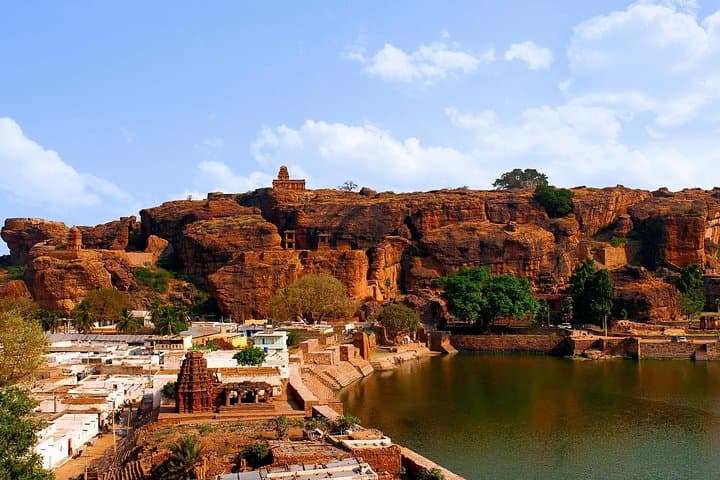
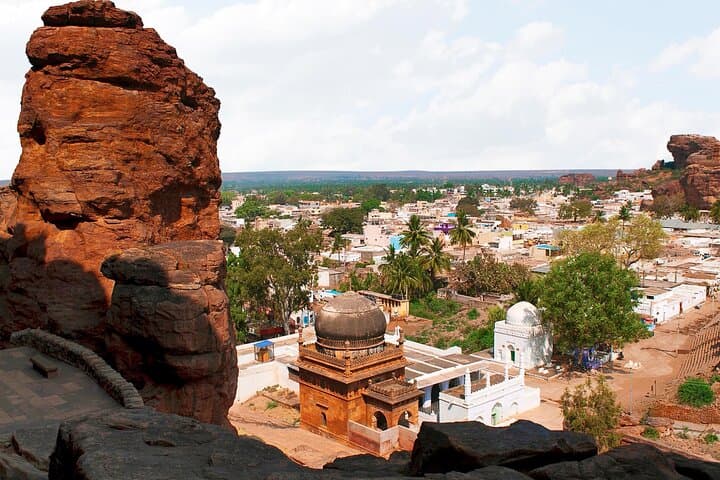
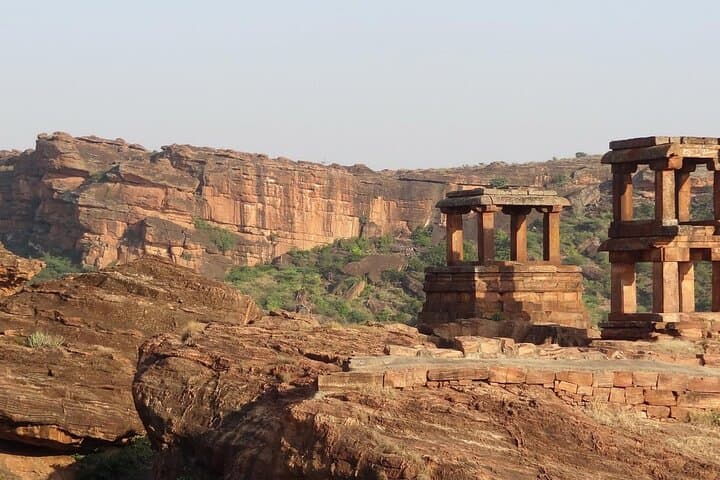
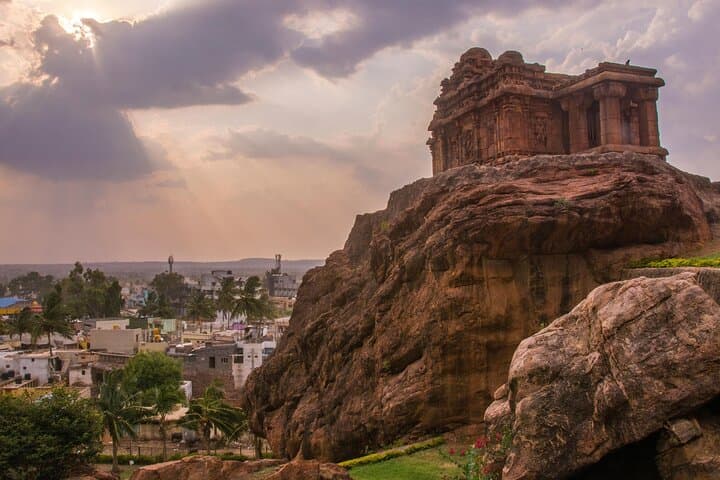
You arrive at the edge of a red‑sandstone cliff as the sun warms carved reliefs and steps that still hold ancient footprints. The Badami basin opens like a carved amphitheater: cave shrines cut into scarp, a small lake reflecting temple towers, and a handful of market stalls selling jaggery and chai.
You arrive at the edge of a red‑sandstone cliff as the sun warms carved reliefs and steps that still hold ancient footprints. The Badami basin opens like a carved amphitheater: cave shrines cut into scarp, a small lake reflecting temple towers, and a handful of market stalls selling jaggery and chai.
Badami was the Chalukya capital in the 6th–8th centuries and its caves are among South Asia’s earliest examples of rock‑cut temple architecture. The geology here is coarse sandstone and laterite; the rock’s grain makes for sharp reliefs and durable ledges but also loose scree on steeper approaches. Culture remains present—daily temple rituals at Bhutanatha and Banashankari echo a living tradition among a landscape of royal ruins and fort foundations.
A guided day trip from Hampi or Hospet compresses travel, history, and local food into an eight‑hour loop: scenic hilltop views, close‑up time in Cave Temples with their Vishnu and Shiva panels, a stroll along Agasthya Lake, and a stop at the Banashankari temple in Tilakaaranya forest.
Practical notes: start early to avoid midday heat, wear sturdy shoes for uneven stone steps, and bring water and sun protection. Expect some short climbs and uneven walking surfaces; most sections are accessible without technical equipment. Photography is rewarding at golden hour and the guide will help with historical context and local customs. If rain is forecast, ask about flexible pickup—monsoon can make some pathways slippery. Leave no trace and respect active temple sites to preserve carvings and rituals for the next travelers.