THE ADVENTURE COLLECTIVE® · Independent discovery and booking for outdoor travel

Spend a day from Beijing crossing time—from the restored Ming ramparts of Badaling to the iron-willed cliff dwellings of Guyaju. This eight-hour tour blends dramatic views, quiet archaeology, and practical local culture in one compact loop.
Spend a day from Beijing crossing time—from the restored Ming ramparts of Badaling to the iron-willed cliff dwellings of Guyaju. This eight-hour tour blends dramatic views, quiet archaeology, and practical local culture in one compact loop.
You step out of an air-conditioned van into a wind that seems to be brushing centuries from the stone. At Badaling the wall rises and folds like an old spine across the ridge; watchtowers peer down while the path alternates between steep, repaired steps and broad walking platforms. Later, at Guyaju, cliffs hold a village of carved rooms where doorways stare out over the scrub—174 cavities hinting at household life etched into limestone and conglomerate.
Verified experiences and guided adventures in the surrounding area.
Operated by Marco Polo electronic commerce co.,LTD · Beijing, Beijing
You step out of an air-conditioned van into a wind that seems to be brushing centuries from the stone. At Badaling the wall rises and folds like an old spine across the ridge; watchtowers peer down while the path alternates between steep, repaired steps and broad walking platforms. Later, at Guyaju, cliffs hold a village of carved rooms where doorways stare out over the scrub—174 cavities hinting at household life etched into limestone and conglomerate.
Badaling is the restored, busiest Ming-era section—engineered for defense and recently rebuilt to preserve its crenellations—while Guyaju's cave dwellings are a quieter, more mysterious relic, often dated to the Liao–Song periods and showing the technical skill of early cliff-cut habitation. Geologically, the northern Hebei ridges are composed of folded sedimentary rock that channels wind and light into dramatic contrasts, and locally you'll notice small farming communities and roadside noodle stalls that keep centuries-old recipes alive.
Practical guidance: this is an eight-hour day with hotel pickup in Beijing and moderate walking; choose the cable car at Badaling if you prefer fewer stairs. Wear sturdy walking shoes with good traction—some stretches are uneven—and bring sun protection and water. Carry your passport or ID; guides and operators will need booking details. Expect basic village food for lunch (payable locally) and limited shade at both sites. Pace yourself on cliffside routes, keep to marked paths at Guyaju to protect fragile architecture, and arrive early to avoid peak buses. This one-day loop gives a compact view of imperial fortification and vernacular cliff life—history, geology, and modern China passing by in eight focused hours.
moderate.
8 hours.
Moderate fitness—able to handle repeated stair sections and short steep walks over uneven stone.
Yes—admissions for both Badaling and Guyaju are included in the tour price per the itinerary.
No—lunch is not included; the guide can recommend a local restaurant and you pay on site.
Not recommended—sites have steep steps and uneven ground; the tour notes it’s unsuitable for travelers with spinal, heart, or pregnancy-related restrictions.
Yes—hotel pickup and drop-off in Beijing are included; the booking asks for your pickup point details.
Badaling is a heavily restored Ming-dynasty section designed for defense; Guyaju’s cliff dwellings are a rare example of medieval cliff-cut housing in northern China, often linked to Liao–Song era communities.
Both sites are managed to limit wear—stay on marked paths, avoid touching fragile stonework at Guyaju, and follow guide instructions to minimize visitor impact.
Marco Polo electronic commerce co.,LTD operates guided outdoor trips and adventures with an emphasis on safety, stewardship, and memorable experiences.
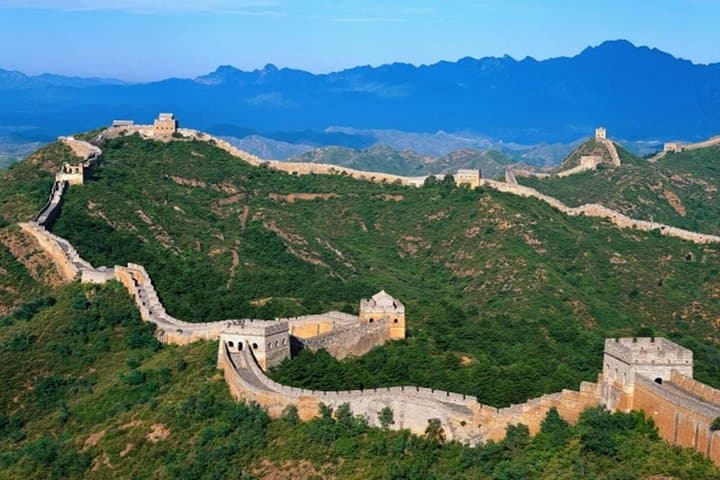
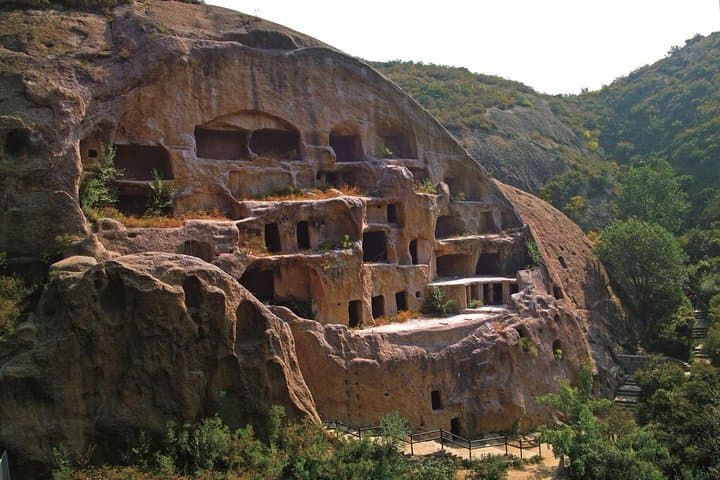

You step out of an air-conditioned van into a wind that seems to be brushing centuries from the stone. At Badaling the wall rises and folds like an old spine across the ridge; watchtowers peer down while the path alternates between steep, repaired steps and broad walking platforms. Later, at Guyaju, cliffs hold a village of carved rooms where doorways stare out over the scrub—174 cavities hinting at household life etched into limestone and conglomerate.
You step out of an air-conditioned van into a wind that seems to be brushing centuries from the stone. At Badaling the wall rises and folds like an old spine across the ridge; watchtowers peer down while the path alternates between steep, repaired steps and broad walking platforms. Later, at Guyaju, cliffs hold a village of carved rooms where doorways stare out over the scrub—174 cavities hinting at household life etched into limestone and conglomerate.
Badaling is the restored, busiest Ming-era section—engineered for defense and recently rebuilt to preserve its crenellations—while Guyaju's cave dwellings are a quieter, more mysterious relic, often dated to the Liao–Song periods and showing the technical skill of early cliff-cut habitation. Geologically, the northern Hebei ridges are composed of folded sedimentary rock that channels wind and light into dramatic contrasts, and locally you'll notice small farming communities and roadside noodle stalls that keep centuries-old recipes alive.
Practical guidance: this is an eight-hour day with hotel pickup in Beijing and moderate walking; choose the cable car at Badaling if you prefer fewer stairs. Wear sturdy walking shoes with good traction—some stretches are uneven—and bring sun protection and water. Carry your passport or ID; guides and operators will need booking details. Expect basic village food for lunch (payable locally) and limited shade at both sites. Pace yourself on cliffside routes, keep to marked paths at Guyaju to protect fragile architecture, and arrive early to avoid peak buses. This one-day loop gives a compact view of imperial fortification and vernacular cliff life—history, geology, and modern China passing by in eight focused hours.