THE ADVENTURE COLLECTIVE® · Independent discovery and booking for outdoor travel

This full-day coach tour from Beijing pairs a visit to the Ming Tombs with a two-hour walk along Badaling, the best-preserved Ming-era section of the Great Wall. Expect museum exhibits, restored battlements, and practical tips for timing and gear.
This full-day coach tour from Beijing pairs a visit to the Ming Tombs with a two-hour walk along Badaling, the best-preserved Ming-era section of the Great Wall. Expect museum exhibits, restored battlements, and practical tips for timing and gear.
A coach rumbles north out of Beijing and the city’s grid gives way to rolling scrub and low karst hills; within an hour the Great Wall appears, stone ribs climbing the ridgelines and folding over the landscape like an engineered cliff-top road. At Badaling, travelers step onto wide, well-preserved battlements where the wind tests your balance and distant pines stand watch over a sweep of valley and village.
Verified experiences and guided adventures in the surrounding area.
Operated by Marco Polo electronic commerce co.,LTD · Beijing, Beijing
A coach rumbles north out of Beijing and the city’s grid gives way to rolling scrub and low karst hills; within an hour the Great Wall appears, stone ribs climbing the ridgelines and folding over the landscape like an engineered cliff-top road. At Badaling, travelers step onto wide, well-preserved battlements where the wind tests your balance and distant pines stand watch over a sweep of valley and village.
The itinerary pairs two clear chapters of Ming-era imperial life: Dingling, one of the Ming Tombs, where an excavated underground palace reveals funerary chambers and the burial practices of 16th–17th century emperors; and the Badaling section of the Great Wall, rebuilt and reinforced during the Ming Dynasty to guard against northern incursions. Geologically the wall follows limestone ridges and eroded foothills, a practical route chosen for visibility and defensibility.
Culturally, the sites show how military need, funerary ritual, and imperial display intertwined—expect masonry walkways, restored towers, and museum displays with artifacts and explanatory panels. Local insights: visit early in the morning or late afternoon to avoid the midday coach surge; a short tea ceremony included on some tours is a compact way to sample local ritual hospitality.
Practical guidance: the day runs about eight hours with coach transfers and two main stops—wear sturdy walking shoes for uneven stone and steps, bring layered clothing (winds pick up on the ramparts), sunscreen and a filled water bottle. Carry passport or ID for tomb access, and plan for roughly two hours walking on the wall and an hour at the Dingling site. The tour is suitable for most fitness levels but involves stairs and some steep sections on the wall.
easy.
8 hours.
Suitable for most fitness levels; able to climb stairs and walk uneven stone for up to two hours.
The tour is approximately eight hours total, including coach transfers, about two hours on the Great Wall, and roughly one hour at Dingling.
Yes; admission to Dingling (the Underground Palace) is included in the tour price per the itinerary.
Many sections are suitable for children and older travelers, but there are steep steps and uneven surfaces—assess mobility and allow extra time.
Most coach tours provide guided time on-site rather than extended independent exploration; expect guided windows and a museum visit at Dingling.
Badaling and the Ming Tombs reflect Ming Dynasty military strategy and imperial burial customs from the 14th–17th centuries, with modern restoration shaping much of what visitors see today.
High visitor numbers strain paths and facilities—stick to marked routes, avoid littering, and respect exhibit rules to reduce impact.
Marco Polo electronic commerce co.,LTD operates guided outdoor trips and adventures with an emphasis on safety, stewardship, and memorable experiences.

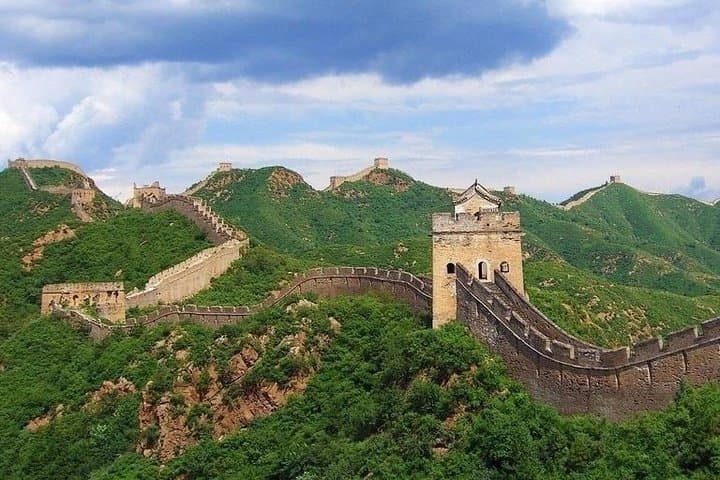
A coach rumbles north out of Beijing and the city’s grid gives way to rolling scrub and low karst hills; within an hour the Great Wall appears, stone ribs climbing the ridgelines and folding over the landscape like an engineered cliff-top road. At Badaling, travelers step onto wide, well-preserved battlements where the wind tests your balance and distant pines stand watch over a sweep of valley and village.
A coach rumbles north out of Beijing and the city’s grid gives way to rolling scrub and low karst hills; within an hour the Great Wall appears, stone ribs climbing the ridgelines and folding over the landscape like an engineered cliff-top road. At Badaling, travelers step onto wide, well-preserved battlements where the wind tests your balance and distant pines stand watch over a sweep of valley and village.
The itinerary pairs two clear chapters of Ming-era imperial life: Dingling, one of the Ming Tombs, where an excavated underground palace reveals funerary chambers and the burial practices of 16th–17th century emperors; and the Badaling section of the Great Wall, rebuilt and reinforced during the Ming Dynasty to guard against northern incursions. Geologically the wall follows limestone ridges and eroded foothills, a practical route chosen for visibility and defensibility.
Culturally, the sites show how military need, funerary ritual, and imperial display intertwined—expect masonry walkways, restored towers, and museum displays with artifacts and explanatory panels. Local insights: visit early in the morning or late afternoon to avoid the midday coach surge; a short tea ceremony included on some tours is a compact way to sample local ritual hospitality.
Practical guidance: the day runs about eight hours with coach transfers and two main stops—wear sturdy walking shoes for uneven stone and steps, bring layered clothing (winds pick up on the ramparts), sunscreen and a filled water bottle. Carry passport or ID for tomb access, and plan for roughly two hours walking on the wall and an hour at the Dingling site. The tour is suitable for most fitness levels but involves stairs and some steep sections on the wall.