THE ADVENTURE COLLECTIVE® · Independent discovery and booking for outdoor travel

Join a guided night walk with the Torá Carey turtle project at Dreams Las Mareas and help release hatchling olive ridley turtles. Expect a three-hour, low-light beach patrol with bilingual guides, essential conservation rules and a real chance to witness hatchlings reach the sea.
Join a guided night walk with the Torá Carey turtle project at Dreams Las Mareas and help release hatchling olive ridley turtles. Expect a three-hour, low-light beach patrol with bilingual guides, essential conservation rules and a real chance to witness hatchlings reach the sea.
You step off the resort shuttle into a warm, salt-scented night where the dark ocean hisses at the edge of the sand and guides from the Torá Carey project sweep the shoreline with soft, red-filtered lamps.
Verified experiences and guided adventures in the surrounding area.
Operated by Real Tours Costa Rica · El Jobo, Guanacaste
You step off the resort shuttle into a warm, salt-scented night where the dark ocean hisses at the edge of the sand and guides from the Torá Carey project sweep the shoreline with soft, red-filtered lamps.
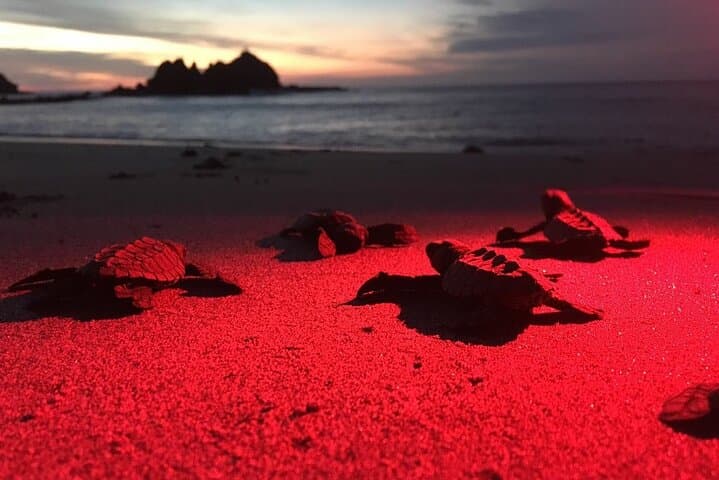
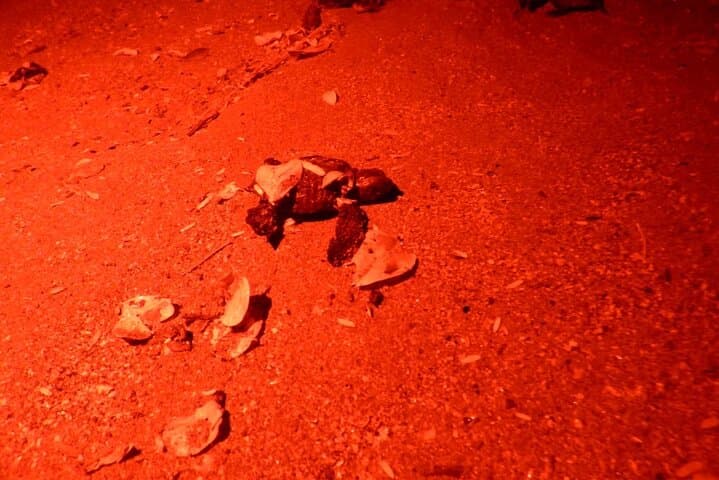
On beaches near El Jobo, the sea becomes an active partner: olive ridley hatchlings emerge from timed sand nests and make their first frantic crawl toward the surf. The walk is quiet and methodical — volunteers scan for nests and signs of poaching while guides explain incubation, nest temperature effects and the 60-day rule for emergence.
Guanacaste’s volcanic past shaped these black-sand stretches; coarse sand and steep tidal slopes influence where turtles nest and how hatchlings orient to the moonlit horizon. Culturally, community-led patrols grew from anti-poaching efforts in the 1990s, evolving into education programs that involve resorts and local NGOs.
Practical guidance: tours run after sunset (roughly 7–10pm), last about three hours and include bilingual guides and resort transport. Expect uneven sand, low light and the real chance that nests may not hatch the night you visit — patience and quiet are part of the experience.
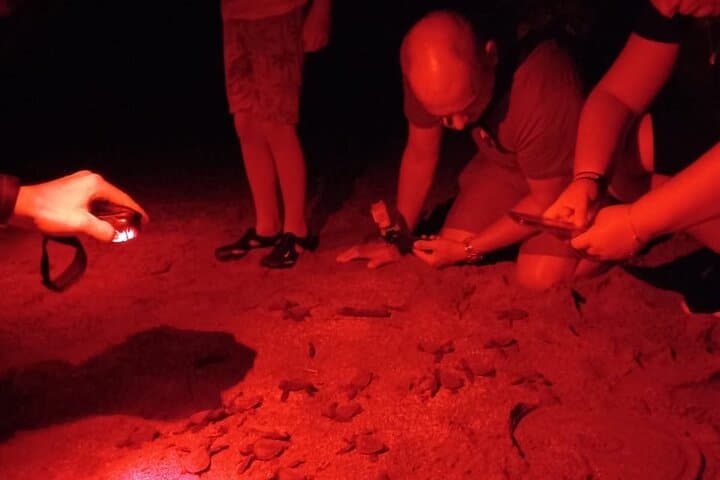
Bring a red-filter headlamp, wear closed footwear for walking on cool, grainy sand, and leave phones in pockets or use them without flash; flashes disorient hatchlings and attract predators. Photography is restricted; follow guide instructions.
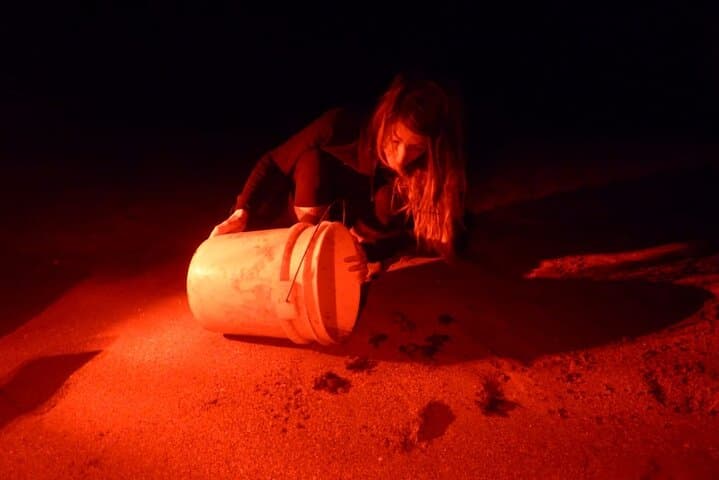
This is a hands-on conservation activity: you may assist in gently carrying hatchlings to the water under supervision, while learning how volunteers, temperature and tides shape the next generation of turtles.
easy.
2–3 hours.
Suitable for most fitness levels; involves short walks on sand at night and standing.
No — hatching is natural and unpredictable; guides patrol multiple beaches and explain nesting cycles, but some nights yield no emergences.
Yes — tours are family-friendly and listed as physically easy, but children must follow guide rules and avoid flash photography.
Photography without flash is generally allowed but only under guide direction; flash and direct lighting are prohibited to protect the animals.
Yes — resort minibus transport is typically included or arranged; travel to patrol sites is short (about 10–15 minutes).
Local anti-poaching patrols evolved into organized conservation efforts in the late 20th century, now involving NGOs, resorts and community volunteers.
Tours support reef-and-beach stewardship; staying dark, limiting handling and following guide rules reduce disturbance and predator attraction.
Real Tours Costa Rica operates guided outdoor trips and adventures with an emphasis on safety, stewardship, and memorable experiences.
You step off the resort shuttle into a warm, salt-scented night where the dark ocean hisses at the edge of the sand and guides from the Torá Carey project sweep the shoreline with soft, red-filtered lamps.
You step off the resort shuttle into a warm, salt-scented night where the dark ocean hisses at the edge of the sand and guides from the Torá Carey project sweep the shoreline with soft, red-filtered lamps.
On beaches near El Jobo, the sea becomes an active partner: olive ridley hatchlings emerge from timed sand nests and make their first frantic crawl toward the surf. The walk is quiet and methodical — volunteers scan for nests and signs of poaching while guides explain incubation, nest temperature effects and the 60-day rule for emergence.
Guanacaste’s volcanic past shaped these black-sand stretches; coarse sand and steep tidal slopes influence where turtles nest and how hatchlings orient to the moonlit horizon. Culturally, community-led patrols grew from anti-poaching efforts in the 1990s, evolving into education programs that involve resorts and local NGOs.
Practical guidance: tours run after sunset (roughly 7–10pm), last about three hours and include bilingual guides and resort transport. Expect uneven sand, low light and the real chance that nests may not hatch the night you visit — patience and quiet are part of the experience.
Bring a red-filter headlamp, wear closed footwear for walking on cool, grainy sand, and leave phones in pockets or use them without flash; flashes disorient hatchlings and attract predators. Photography is restricted; follow guide instructions.
This is a hands-on conservation activity: you may assist in gently carrying hatchlings to the water under supervision, while learning how volunteers, temperature and tides shape the next generation of turtles.