THE ADVENTURE COLLECTIVE® · Independent discovery and booking for outdoor travel

Spend a day trekking Ba Vi’s cool cloud forest, exploring French-era ruins and finishing at a panoramic tower. This full-day route combines moderate jungle trails, cultural sites, and dramatic views close to Hanoi.
Spend a day trekking Ba Vi’s cool cloud forest, exploring French-era ruins and finishing at a panoramic tower. This full-day route combines moderate jungle trails, cultural sites, and dramatic views close to Hanoi.
The morning air at Ba Vi carries the cool, damp smell of mountain moss as the trail peels away from the small visitor hub and folds into the forest. Trees press close; lianas tug at sleeves; birds punctuate the climb while low clouds lift from ridgelines to reveal a broad green slope and, in the distance, a lone observation tower that frames the plain.
Verified experiences and guided adventures in the surrounding area.
Operated by Crossing Vietnam Tour · Ba Vi, Hanoi
The morning air at Ba Vi carries the cool, damp smell of mountain moss as the trail peels away from the small visitor hub and folds into the forest. Trees press close; lianas tug at sleeves; birds punctuate the climb while low clouds lift from ridgelines to reveal a broad green slope and, in the distance, a lone observation tower that frames the plain.
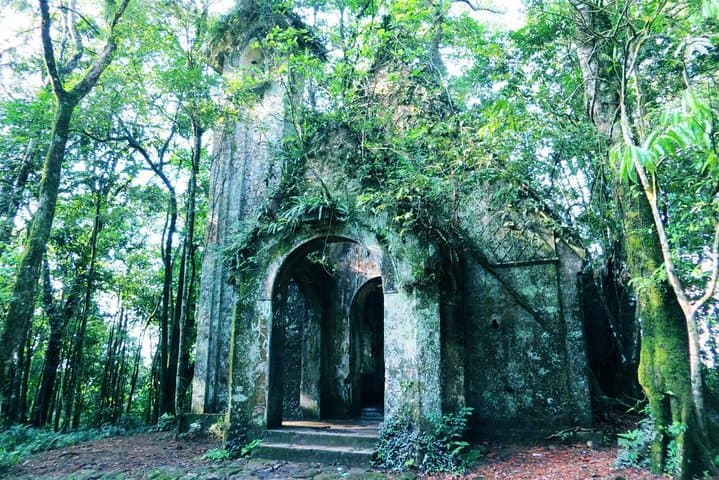
Ba Vi’s limestone and volcanic soils fed centuries of tropical forest that supported local hill communities and drew French colonists in the 19th century—evidence remains in scattered stone villas and concrete ruins along the paths. The park’s three peaks form a short range that catches monsoon clouds, delivering a mix of evergreen and secondary growth and creating the cool ‘island’ climate that sets Ba Vi apart from Hanoi’s lowlands.
Culturally, the area is threaded with small temples and pilgrimage sites at higher elevation; visitors will see modern worship alongside traces of colonial leisure architecture. Geologically, expect steep, eroded gullies on the descent and firm, root-strewn soil on flatter sections.
Practically, the common day itinerary includes hotel pick-up from Hanoi, a local lunch, and a roughly two-hour descent trek from near 1,100 m down to about 800 m. Trails range from packed dirt to loose leaf and exposed roots—good ankle support matters. Guides point out ruins and viewpoints; groups often avoid other visitors on quieter routes. Bring water, layers for quick weather shifts, and footwear with grip. Start early to beat afternoon clouds and maximize views from the park’s highest observation tower.
moderate.
8–10 hours.
Suitable for travelers in average physical condition comfortable walking 2–4 hours on uneven terrain; brief steep sections require knee control on descent.
The guided trek described is about 2 hours on the main route (descending from roughly 1,100 m to 800 m), embedded in a full-day tour with transport and lunch.
Children can join if supervised; operators note special seats for infants, but stamina for steep sections varies—expect uneven footing and keep a close watch.
Most day tours include park entrance in the price; confirm with the operator whether entrance fees or tower access are covered before booking.
Ba Vi is cooler than Hanoi and often misty; weather can change rapidly—bring layers and a waterproof layer especially in summer.
Ba Vi attracted French colonial retreat development in the late 19th and early 20th centuries; remnants of villas and concrete structures remain along some trails.
The park manages visitor access to protect cloud forest pockets—stick to trails, avoid feeding wildlife, and carry out waste to reduce human impact.
Crossing Vietnam Tour operates guided outdoor trips and adventures with an emphasis on safety, stewardship, and memorable experiences.
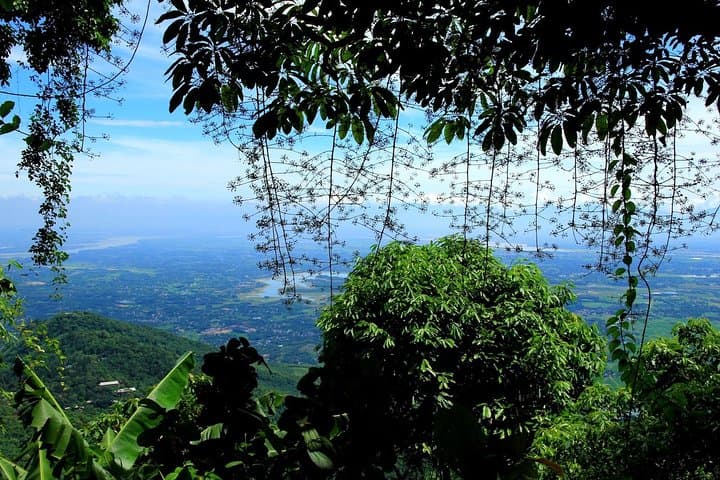
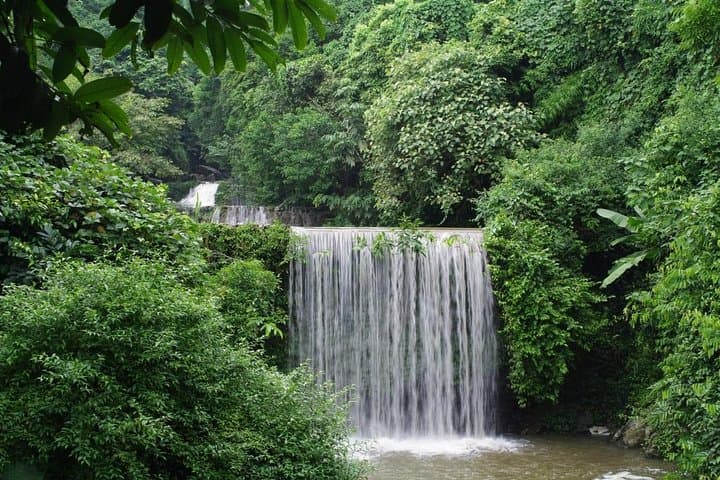
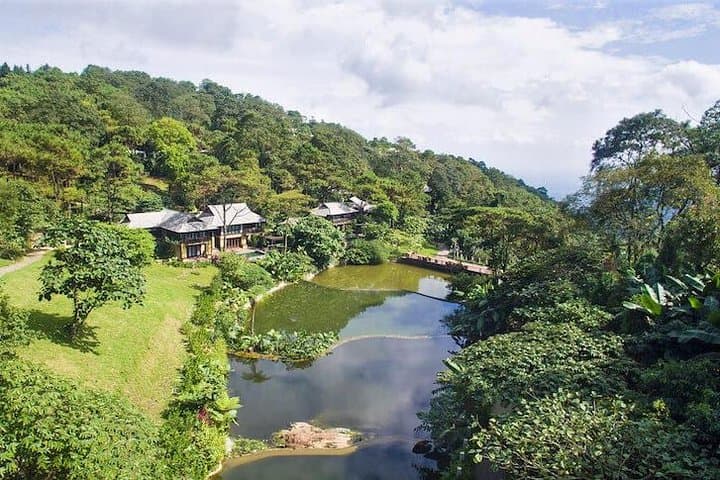
The morning air at Ba Vi carries the cool, damp smell of mountain moss as the trail peels away from the small visitor hub and folds into the forest. Trees press close; lianas tug at sleeves; birds punctuate the climb while low clouds lift from ridgelines to reveal a broad green slope and, in the distance, a lone observation tower that frames the plain.
The morning air at Ba Vi carries the cool, damp smell of mountain moss as the trail peels away from the small visitor hub and folds into the forest. Trees press close; lianas tug at sleeves; birds punctuate the climb while low clouds lift from ridgelines to reveal a broad green slope and, in the distance, a lone observation tower that frames the plain.
Ba Vi’s limestone and volcanic soils fed centuries of tropical forest that supported local hill communities and drew French colonists in the 19th century—evidence remains in scattered stone villas and concrete ruins along the paths. The park’s three peaks form a short range that catches monsoon clouds, delivering a mix of evergreen and secondary growth and creating the cool ‘island’ climate that sets Ba Vi apart from Hanoi’s lowlands.
Culturally, the area is threaded with small temples and pilgrimage sites at higher elevation; visitors will see modern worship alongside traces of colonial leisure architecture. Geologically, expect steep, eroded gullies on the descent and firm, root-strewn soil on flatter sections.
Practically, the common day itinerary includes hotel pick-up from Hanoi, a local lunch, and a roughly two-hour descent trek from near 1,100 m down to about 800 m. Trails range from packed dirt to loose leaf and exposed roots—good ankle support matters. Guides point out ruins and viewpoints; groups often avoid other visitors on quieter routes. Bring water, layers for quick weather shifts, and footwear with grip. Start early to beat afternoon clouds and maximize views from the park’s highest observation tower.