THE ADVENTURE COLLECTIVE® · Independent discovery and booking for outdoor travel

Ride the world-record cable car to Ba Na Hills, cross the Golden Bridge held by giant hands, then finish the day wandering Hoi An’s lantern-lit alleys. This full-day loop blends high-mountain views, colonial relics and UNESCO-listed streets.
Ride the world-record cable car to Ba Na Hills, cross the Golden Bridge held by giant hands, then finish the day wandering Hoi An’s lantern-lit alleys. This full-day loop blends high-mountain views, colonial relics and UNESCO-listed streets.
You step into mist at the cable car station and the valley falls away—an artery of glass cabins spiraling up through cloud and forest. By the time the Golden Bridge appears, two stone hands lift a thin, gilded walkway above mossy ridgelines; wind and cloud trade places around your shoulders.
Verified experiences and guided adventures in the surrounding area.
Operated by THE SINH CAFE TRAVEL · Da Nang, Da Nang
You step into mist at the cable car station and the valley falls away—an artery of glass cabins spiraling up through cloud and forest. By the time the Golden Bridge appears, two stone hands lift a thin, gilded walkway above mossy ridgelines; wind and cloud trade places around your shoulders.
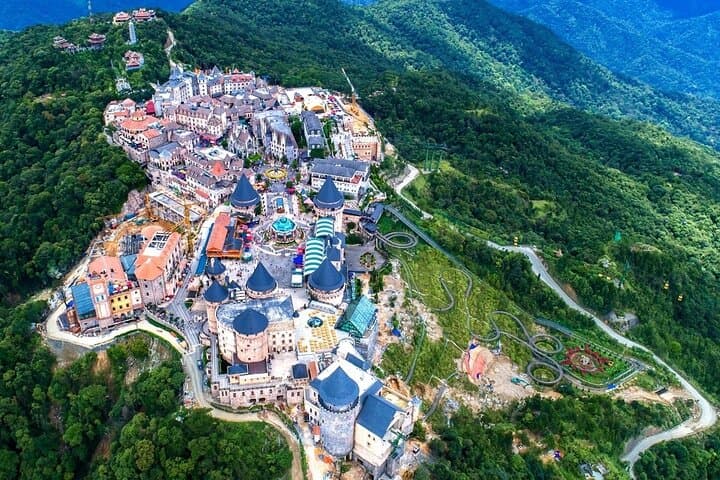
Ba Na Hills began as a French-era mountain retreat in the early 20th century and now mixes colonial villas with modern attractions. Geologically the massif sits above central Vietnam’s coastal plain; steep slopes and high rainfall feed a patchwork of montane rainforest that can change from warm sun to heavy fog within hours. Hoi An, your evening stop, is a UNESCO-recognized trading port whose wooden shop houses and covered bridge reflect centuries of Chinese, Japanese and European influence.
Expect long cable-car spans, short walking circuits between viewpoints, and a motorized mountain train that loops flowered terraces and old villas. The Golden Bridge perches around 1,400 m elevation, so temperatures dip and visibility can shift fast. After a buffet lunch on the hill, the tour moves to Hoi An where lantern-lit streets, the 400-year-old Japanese Covered Bridge and traditional Bai Choi performances round out the night.
Practical edge: bring layered clothing, a compact rain jacket and a camera with spare battery; plan for crowds at peak times and limited walking but many stairs at viewpoints. The experience balances easy access with striking high-altitude scenery—ideal for a long, photo-focused day from Da Nang.
easy.
8–10 hours.
Light fitness required—mostly short walks, stairs at viewpoints; no sustained hiking.
The cable-car system has multiple long spans; individual segments last roughly 15–25 minutes depending on the route and stops.
No—the bridge is accessible via paved paths and cable car; there are some short flights of stairs at viewing platforms.
Yes—the tour schedules an evening visit to Hoi An for lanterns, the Japanese Covered Bridge and cultural performances, typically with a group dinner included.
Most day tours include buffet lunch on Ba Na Hill and entrance fees for advertised attractions; check your booking for exact inclusions.
Ba Na was developed by the French in the early 1900s as a cool-season hill station; many stone villas and colonial layouts remain part of the site’s character.
High visitor numbers strain fragile montane vegetation—stay on marked paths, avoid littering and support operators that follow local waste-management practices.
THE SINH CAFE TRAVEL operates guided outdoor trips and adventures with an emphasis on safety, stewardship, and memorable experiences.
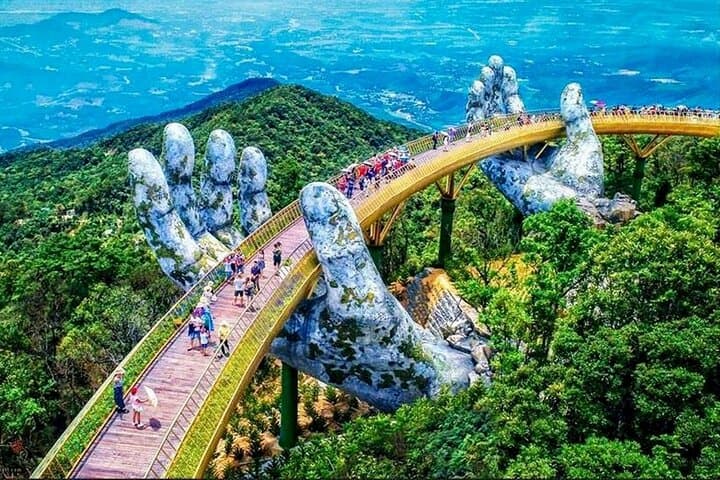
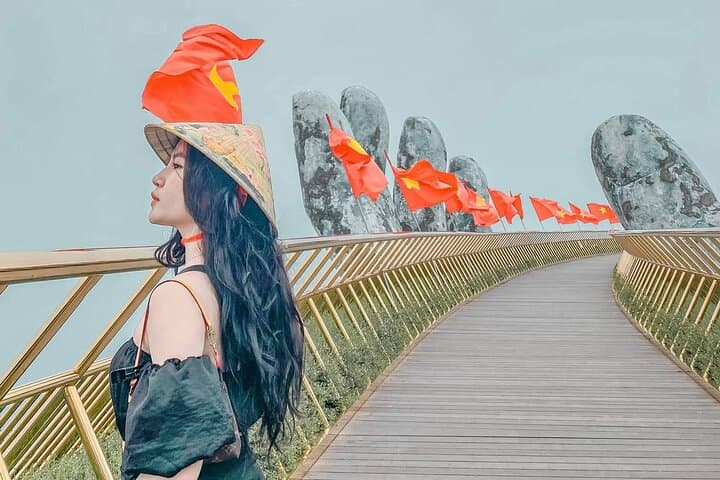

You step into mist at the cable car station and the valley falls away—an artery of glass cabins spiraling up through cloud and forest. By the time the Golden Bridge appears, two stone hands lift a thin, gilded walkway above mossy ridgelines; wind and cloud trade places around your shoulders.
You step into mist at the cable car station and the valley falls away—an artery of glass cabins spiraling up through cloud and forest. By the time the Golden Bridge appears, two stone hands lift a thin, gilded walkway above mossy ridgelines; wind and cloud trade places around your shoulders.
Ba Na Hills began as a French-era mountain retreat in the early 20th century and now mixes colonial villas with modern attractions. Geologically the massif sits above central Vietnam’s coastal plain; steep slopes and high rainfall feed a patchwork of montane rainforest that can change from warm sun to heavy fog within hours. Hoi An, your evening stop, is a UNESCO-recognized trading port whose wooden shop houses and covered bridge reflect centuries of Chinese, Japanese and European influence.
Expect long cable-car spans, short walking circuits between viewpoints, and a motorized mountain train that loops flowered terraces and old villas. The Golden Bridge perches around 1,400 m elevation, so temperatures dip and visibility can shift fast. After a buffet lunch on the hill, the tour moves to Hoi An where lantern-lit streets, the 400-year-old Japanese Covered Bridge and traditional Bai Choi performances round out the night.
Practical edge: bring layered clothing, a compact rain jacket and a camera with spare battery; plan for crowds at peak times and limited walking but many stairs at viewpoints. The experience balances easy access with striking high-altitude scenery—ideal for a long, photo-focused day from Da Nang.