THE ADVENTURE COLLECTIVE® · Independent discovery and booking for outdoor travel

A compact three-day circuit from Hanoi that mixes boat and bamboo-raft travel, village treks to Dzao and Tay communities, and motorbike exploration of waterfalls and caves around Ba Be Lake. Expect moderate trails, limestone cliffs, and authentic homestay nights.
A compact three-day circuit from Hanoi that mixes boat and bamboo-raft travel, village treks to Dzao and Tay communities, and motorbike exploration of waterfalls and caves around Ba Be Lake. Expect moderate trails, limestone cliffs, and authentic homestay nights.
Morning light breaks over Ba Be Lake and the karst cliffs throw long, cool shadows across still water. You step off a wooden boat onto Bo Lu’s stony shore, bamboo raft waiting like a slow-moving invitation. Over the next three days the route alternates between quiet paddles, single-track climbs through secondary forest, and motorbike spits along rural lanes—each stretch revealing the limestone bones of northern Vietnam and the lived-in rhythms of ethnic Dzao and Tay villages.
Verified experiences and guided adventures in the surrounding area.
Operated by Daisy Tourist · Ba Be (Bo Lu / Pac Ngoi area), Bac Kan Province
Morning light breaks over Ba Be Lake and the karst cliffs throw long, cool shadows across still water. You step off a wooden boat onto Bo Lu’s stony shore, bamboo raft waiting like a slow-moving invitation. Over the next three days the route alternates between quiet paddles, single-track climbs through secondary forest, and motorbike spits along rural lanes—each stretch revealing the limestone bones of northern Vietnam and the lived-in rhythms of ethnic Dzao and Tay villages.
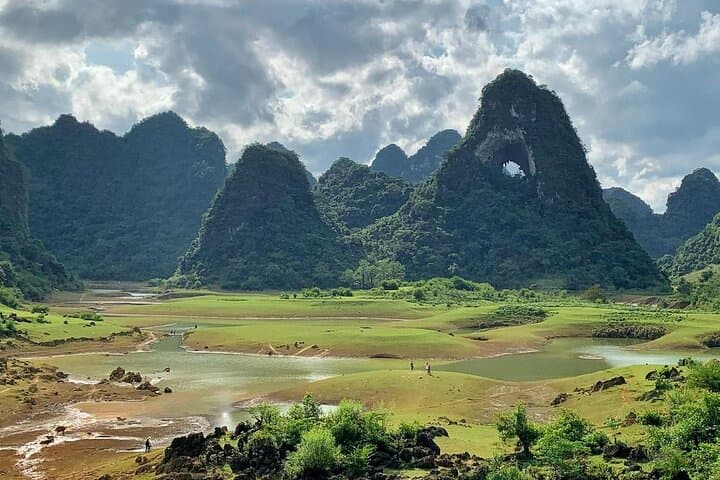
Ba Be sits on an ancient karst plateau; limestone cliffs, caves and sinkholes carved by millennia of water are the landscape’s signatures. The area has been a crossroads for upland cultures—homestays and temples such as An Ma reflect local beliefs and agrarian life. Geologically, the lake occupies a collapsed basin fed by tributaries that still cut dramatic caves like Hua Ma and Ho Chi Minh Cave.
Expect moderate trekking sections (up to 8–12 km on foot some days) with brief elevation gains of several hundred meters on village trails; boat and bamboo-raft travel reduces road time while letting the karst cliffs and reed beds draw near. Cultural moments—shared meals, homestay sleeping arrangements—are as much a part of the trip as the scenery.
Practical notes: pack quick-dry layers, a light rain shell, and shoes that grip wet rocks. Bring cash for small purchases in villages, and be ready for early starts to make the most of calm water for boating. On motorbike legs, helmets and a steady passenger posture keep the ride safe. With basic fitness you’ll move comfortably through trails, water, and village life—and come away with a clear sense of why Ba Be remains one of Vietnam’s most direct encounters with karst wilderness and mountain culture.
moderate.
3 days (approx. 72 hours).
Suitable for travelers with steady aerobic fitness and comfort walking uneven trails for 3–6 hours on trekking days
The tour is rated moderate: daily walking can range from short village trails to 8–12 km on trekking days with occasional short climbs; boat and raft segments lower cumulative fatigue.
Overnights are in local homestays and a small lakeside hotel (Viet Outdoors in Bo Lu village), offering basic but comfortable rooms and shared facilities.
Yes—riders are experienced and helmets are provided, but passengers should sit steadily, keep feet tucked when moving, and follow rider instructions.
Three lunches and two dinners plus breakfasts are included; the operator can accommodate vegetarian or other dietary requirements if informed at booking.
Ba Be National Park preserves a karst lake ecosystem and upland culture; the area has long been inhabited by Tay and Dzao communities and was designated a national park in the early 1990s to protect its biodiversity and cultural landscapes.
Visitors are asked to avoid single-use plastics, stay on designated trails, and support local homestays; the park limits development to protect water quality and endemic species.
Daisy Tourist operates guided outdoor trips and adventures with an emphasis on safety, stewardship, and memorable experiences.

Morning light breaks over Ba Be Lake and the karst cliffs throw long, cool shadows across still water. You step off a wooden boat onto Bo Lu’s stony shore, bamboo raft waiting like a slow-moving invitation. Over the next three days the route alternates between quiet paddles, single-track climbs through secondary forest, and motorbike spits along rural lanes—each stretch revealing the limestone bones of northern Vietnam and the lived-in rhythms of ethnic Dzao and Tay villages.
Morning light breaks over Ba Be Lake and the karst cliffs throw long, cool shadows across still water. You step off a wooden boat onto Bo Lu’s stony shore, bamboo raft waiting like a slow-moving invitation. Over the next three days the route alternates between quiet paddles, single-track climbs through secondary forest, and motorbike spits along rural lanes—each stretch revealing the limestone bones of northern Vietnam and the lived-in rhythms of ethnic Dzao and Tay villages.
Ba Be sits on an ancient karst plateau; limestone cliffs, caves and sinkholes carved by millennia of water are the landscape’s signatures. The area has been a crossroads for upland cultures—homestays and temples such as An Ma reflect local beliefs and agrarian life. Geologically, the lake occupies a collapsed basin fed by tributaries that still cut dramatic caves like Hua Ma and Ho Chi Minh Cave.
Expect moderate trekking sections (up to 8–12 km on foot some days) with brief elevation gains of several hundred meters on village trails; boat and bamboo-raft travel reduces road time while letting the karst cliffs and reed beds draw near. Cultural moments—shared meals, homestay sleeping arrangements—are as much a part of the trip as the scenery.
Practical notes: pack quick-dry layers, a light rain shell, and shoes that grip wet rocks. Bring cash for small purchases in villages, and be ready for early starts to make the most of calm water for boating. On motorbike legs, helmets and a steady passenger posture keep the ride safe. With basic fitness you’ll move comfortably through trails, water, and village life—and come away with a clear sense of why Ba Be remains one of Vietnam’s most direct encounters with karst wilderness and mountain culture.