THE ADVENTURE COLLECTIVE® · Independent discovery and booking for outdoor travel

Drive north from Bangkok through river plains to the ruined temples of Ayutthaya, then climb into Khao Yai’s cooler forests on a full-day UNESCO circuit. Short temple walks and a 1 km waterfall viewpoint trail make this a hands-on introduction to Thai history and protected landscapes.
Drive north from Bangkok through river plains to the ruined temples of Ayutthaya, then climb into Khao Yai’s cooler forests on a full-day UNESCO circuit. Short temple walks and a 1 km waterfall viewpoint trail make this a hands-on introduction to Thai history and protected landscapes.
Morning light on the Chao Phraya plains hits crumbling brick and mossed chedis as the minivan pulls away from Bangkok. By mid-morning you’re walking stone courtyards where monks light incense and a fig tree has slowly claimed a Buddha’s face — Ayutthaya’s ruins keep history close and tactile. The tour moves from that lowland archaeology to the rising green of Khao Yai National Park, where the road climbs into evergreen forest and the air cools.
Verified experiences and guided adventures in the surrounding area.
Operated by Planet Blue Co., lLtd. · Pak Chong, Nakhon Ratchasima
Morning light on the Chao Phraya plains hits crumbling brick and mossed chedis as the minivan pulls away from Bangkok. By mid-morning you’re walking stone courtyards where monks light incense and a fig tree has slowly claimed a Buddha’s face — Ayutthaya’s ruins keep history close and tactile. The tour moves from that lowland archaeology to the rising green of Khao Yai National Park, where the road climbs into evergreen forest and the air cools.
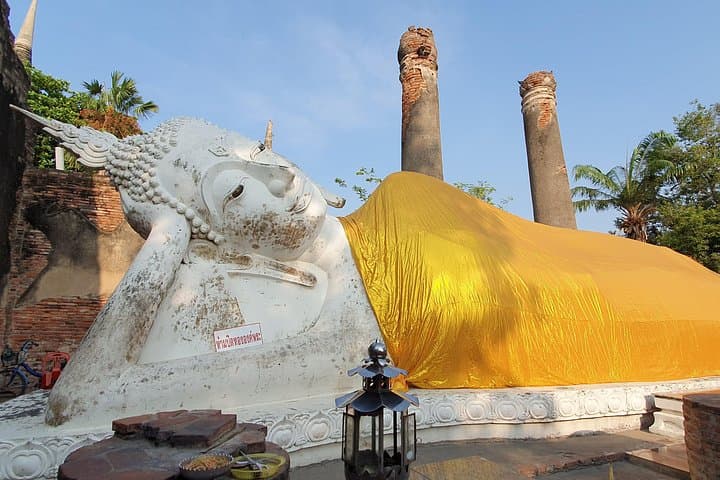
Ayutthaya was Thailand’s capital from the 14th to 18th centuries; its temples show Khmer and Sri Lankan influences and the scars of the Burmese siege of 1767. Khao Yai, part of the Dong Phayayen–Khao Yai UNESCO complex, sits on the Sankamphaeng Range and protects mixed deciduous and evergreen forest, waterfalls, and wildlife corridors.
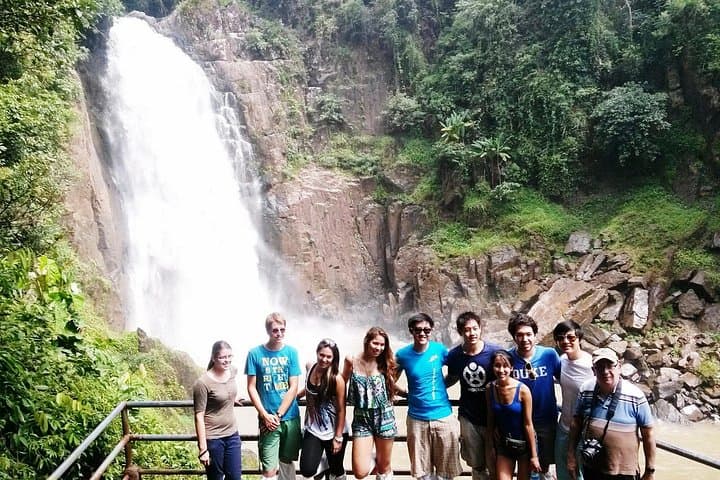
Expect short, respectful temple walks (flat stone and compacted paths) and a 1 km trail from the road to Haew Narok viewpoint with uneven footing and some steps down to lookouts. KM30 viewpoint on Thanarat Road gives wide ridgeline views; the Visitor Center provides park context. Cultural norms matter: cover shoulders and knees at temples and remove shoes where required.
Practical edge: it’s a long day (about 10 hours) with multiple short walks—good walking shoes, sun protection, and water make the day comfortable. Timing matters: start early to avoid Bangkok traffic and plan photo stops during soft morning or late-afternoon light. Stay on marked trails in the park; wildlife is present but shy—viewing from distances keeps both you and animals safe.
easy.
10–11 hours.
Suitable for most fitness levels; requires walking short distances on uneven surfaces and standing during site visits.
Pickup is from select Bangkok hotels; exact pickup time is arranged with the local operator after booking—be ready in your lobby 10 minutes early.
Entrance fees for listed temples and Khao Yai NP are included; lunch at a local restaurant is provided though soft drinks may be extra.
Children are welcome (children under 2 ride free) but the tour is not wheelchair accessible and includes short walks and steps at sites.
Wildlife sightings (elephants, gibbons, hornbills) are possible, especially from viewpoints and early/late in the day, but sightings are not guaranteed.
Ayutthaya was the Siamese capital from the 14th to the 18th century and was sacked in 1767, leaving the temple ruins seen today; Khao Yai is part of a larger forest complex designated as a UNESCO site for its biodiversity.
Khao Yai faces pressures from tourism and human–wildlife conflict; staying on trails, paying park fees, and following guide instructions help reduce impacts.
Planet Blue Co., lLtd. operates guided outdoor trips and adventures with an emphasis on safety, stewardship, and memorable experiences.
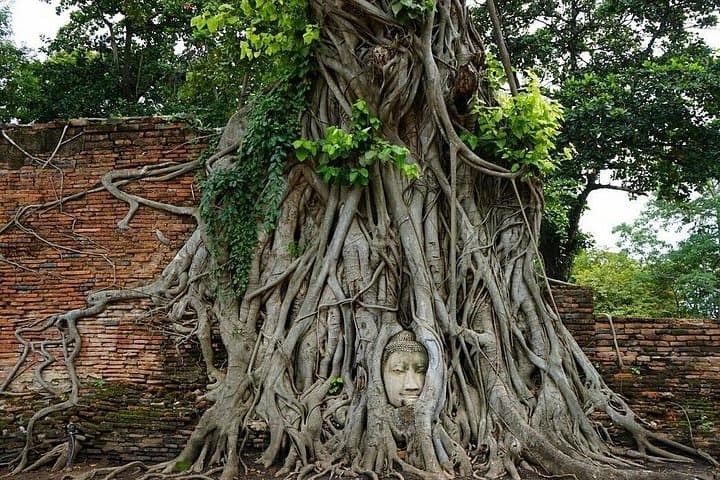
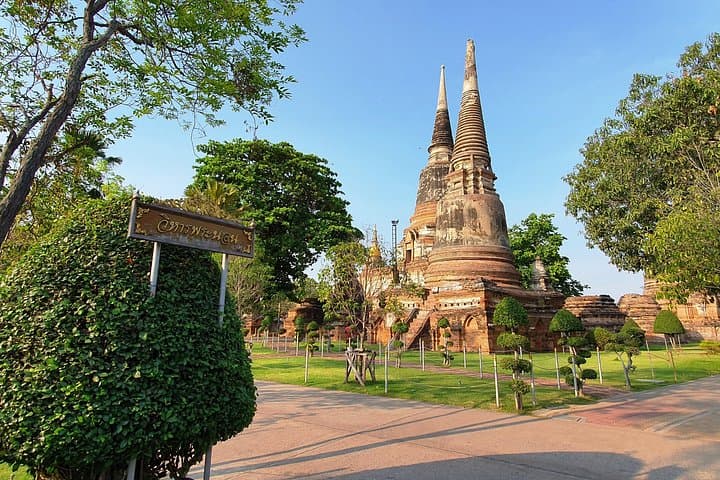
Morning light on the Chao Phraya plains hits crumbling brick and mossed chedis as the minivan pulls away from Bangkok. By mid-morning you’re walking stone courtyards where monks light incense and a fig tree has slowly claimed a Buddha’s face — Ayutthaya’s ruins keep history close and tactile. The tour moves from that lowland archaeology to the rising green of Khao Yai National Park, where the road climbs into evergreen forest and the air cools.
Morning light on the Chao Phraya plains hits crumbling brick and mossed chedis as the minivan pulls away from Bangkok. By mid-morning you’re walking stone courtyards where monks light incense and a fig tree has slowly claimed a Buddha’s face — Ayutthaya’s ruins keep history close and tactile. The tour moves from that lowland archaeology to the rising green of Khao Yai National Park, where the road climbs into evergreen forest and the air cools.
Ayutthaya was Thailand’s capital from the 14th to 18th centuries; its temples show Khmer and Sri Lankan influences and the scars of the Burmese siege of 1767. Khao Yai, part of the Dong Phayayen–Khao Yai UNESCO complex, sits on the Sankamphaeng Range and protects mixed deciduous and evergreen forest, waterfalls, and wildlife corridors.
Expect short, respectful temple walks (flat stone and compacted paths) and a 1 km trail from the road to Haew Narok viewpoint with uneven footing and some steps down to lookouts. KM30 viewpoint on Thanarat Road gives wide ridgeline views; the Visitor Center provides park context. Cultural norms matter: cover shoulders and knees at temples and remove shoes where required.
Practical edge: it’s a long day (about 10 hours) with multiple short walks—good walking shoes, sun protection, and water make the day comfortable. Timing matters: start early to avoid Bangkok traffic and plan photo stops during soft morning or late-afternoon light. Stay on marked trails in the park; wildlife is present but shy—viewing from distances keeps both you and animals safe.