THE ADVENTURE COLLECTIVE® · Independent discovery and booking for outdoor travel

See Ayutthaya’s iconic temples and glide the Chao Phraya on a short, well-paced tour from the local bus station. Ideal for first-time visitors who want history, river views, and a taste of Thai culture in 3–4 hours.
See Ayutthaya’s iconic temples and glide the Chao Phraya on a short, well-paced tour from the local bus station. Ideal for first-time visitors who want history, river views, and a taste of Thai culture in 3–4 hours.
You step off the bus into a town where brick spires and Buddha silhouettes pierce a humid sky. Froggy Tuk Tuks weave through narrow streets as the scent of incense rises from temple courtyards; the Chao Phraya moves slow and deliberate, inviting you onto the water.
Verified experiences and guided adventures in the surrounding area.
Operated by Bangkok Travel Agency · Ayutthaya, Phra Nakhon Si Ayutthaya Province
You step off the bus into a town where brick spires and Buddha silhouettes pierce a humid sky. Froggy Tuk Tuks weave through narrow streets as the scent of incense rises from temple courtyards; the Chao Phraya moves slow and deliberate, inviting you onto the water.
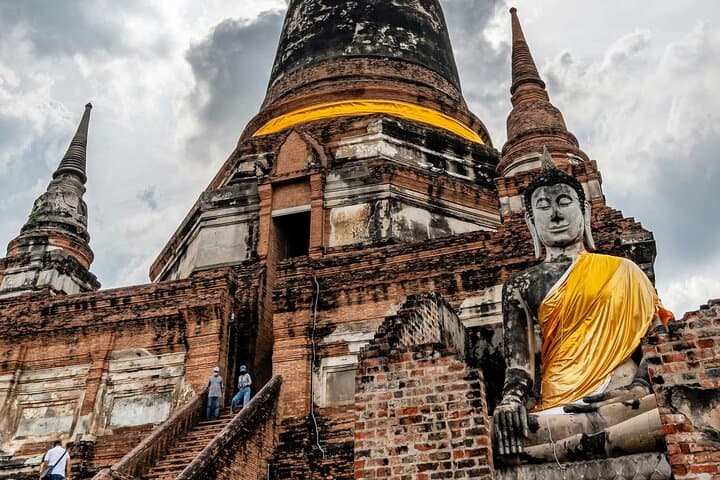
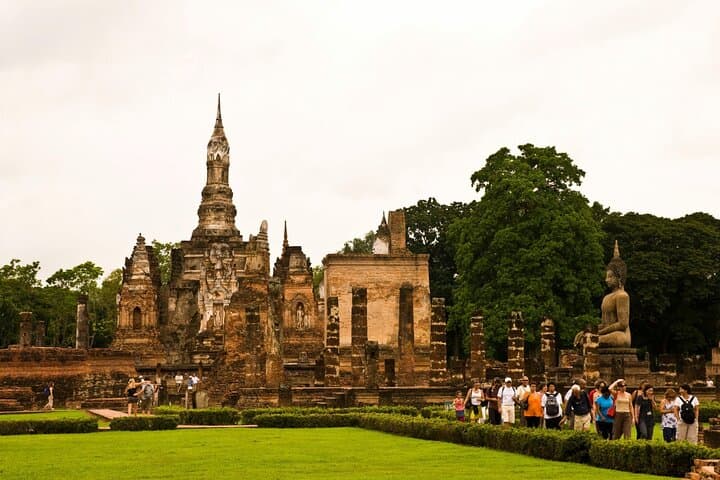
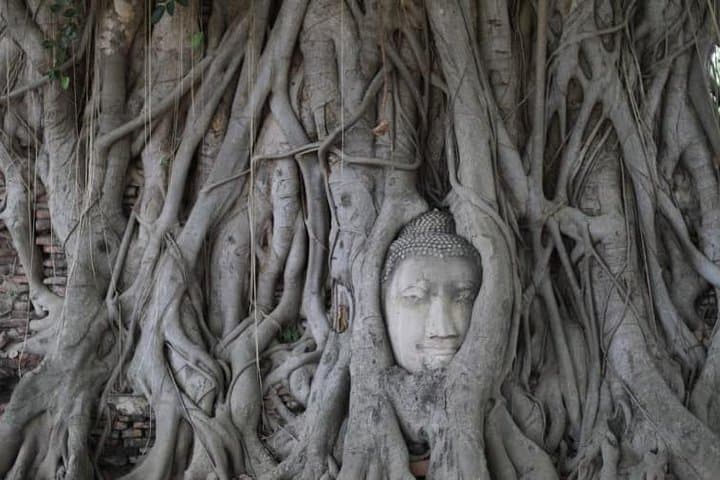
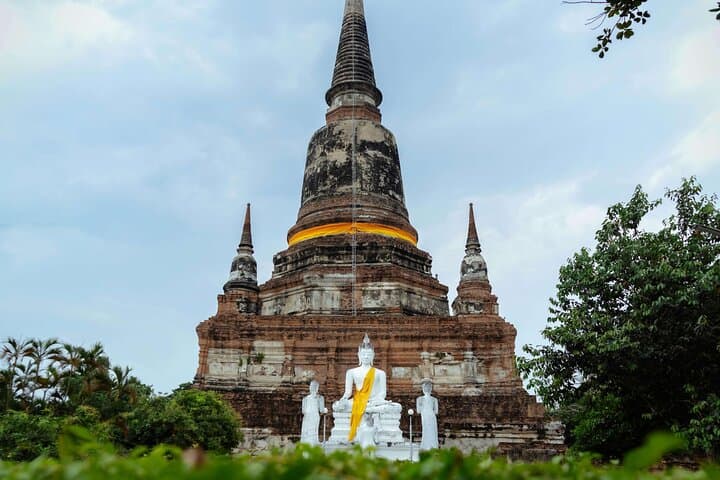
This half-day tour stitches together Ayutthaya’s best-known sites: Wat Mahathat, where a Buddha head rests in tree roots; Wat Yai Chai Mongkhon’s towering chedi; and a one-hour river cruise that frames Wat Chaiwatthanaram’s riverfront prang and the white façade of St. Joseph’s Church. The city was the capital of the Siamese kingdom from the 14th to the 18th century and bears clear scars from its 1767 sacking—collapsed stupas and scattered ruins that tell a direct, stubborn history.
Geologically the plain is riverine alluvium, which allowed Ayutthaya to flourish as a trade hub; culturally the mix of Thai Buddhism, Portuguese influence, and riverine livelihoods is visible at every pier.
Practical guidance: tours run three times daily (3–4 hours) from the local bus station; expect flat walking but uneven temple grounds and open sunlight. Dress modestly for temple entry—shoulders and knees covered—and bring water, sun protection, and small cash for donations or offerings. Morning slots are cooler; late afternoon cruises offer softer light for photography. The included English guide and short classical Thai dance on the heritage boat add context without slowing the tempo—this is a compact, accessible way to see Ayutthaya’s riverside highlights in a single, well-paced outing.
easy.
3–4 hours.
Light walking on mostly flat surfaces with some uneven temple grounds; suitable for most fitness levels.
Yes—admission to Wat Mahathat and Wat Yai Chai Mongkhon is included in the tour package.
The scenic heritage cruise lasts about one hour and passes multiple riverside temples and historic sites.
The tour departs from the Ayutthaya Win Bus Station meeting point; check your booking for the specific morning, afternoon, or evening departure time.
Yes—infant seats are available and the walking is light, but keep children close near piers and uneven temple steps.
Ayutthaya was Siam’s capital from the 14th century until its destruction in 1767 by Burmese forces; the ruins preserve both royal ambition and abrupt decline.
Ayutthaya Historical Park is protected but vulnerable to erosion and river pollution—avoid littering, respect restricted areas, and stay on marked paths to help preserve the ruins.
Bangkok Travel Agency operates guided outdoor trips and adventures with an emphasis on safety, stewardship, and memorable experiences.
You step off the bus into a town where brick spires and Buddha silhouettes pierce a humid sky. Froggy Tuk Tuks weave through narrow streets as the scent of incense rises from temple courtyards; the Chao Phraya moves slow and deliberate, inviting you onto the water.
You step off the bus into a town where brick spires and Buddha silhouettes pierce a humid sky. Froggy Tuk Tuks weave through narrow streets as the scent of incense rises from temple courtyards; the Chao Phraya moves slow and deliberate, inviting you onto the water.
This half-day tour stitches together Ayutthaya’s best-known sites: Wat Mahathat, where a Buddha head rests in tree roots; Wat Yai Chai Mongkhon’s towering chedi; and a one-hour river cruise that frames Wat Chaiwatthanaram’s riverfront prang and the white façade of St. Joseph’s Church. The city was the capital of the Siamese kingdom from the 14th to the 18th century and bears clear scars from its 1767 sacking—collapsed stupas and scattered ruins that tell a direct, stubborn history.
Geologically the plain is riverine alluvium, which allowed Ayutthaya to flourish as a trade hub; culturally the mix of Thai Buddhism, Portuguese influence, and riverine livelihoods is visible at every pier.
Practical guidance: tours run three times daily (3–4 hours) from the local bus station; expect flat walking but uneven temple grounds and open sunlight. Dress modestly for temple entry—shoulders and knees covered—and bring water, sun protection, and small cash for donations or offerings. Morning slots are cooler; late afternoon cruises offer softer light for photography. The included English guide and short classical Thai dance on the heritage boat add context without slowing the tempo—this is a compact, accessible way to see Ayutthaya’s riverside highlights in a single, well-paced outing.