THE ADVENTURE COLLECTIVE® · Independent discovery and booking for outdoor travel

Spend a day outside Bangkok exploring Ayutthaya’s UNESCO-listed ruins—temples, reclining Buddhas and rice-field views—on a guided tour that blends history, culture and practical planning tips for a comfortable outing.
Spend a day outside Bangkok exploring Ayutthaya’s UNESCO-listed ruins—temples, reclining Buddhas and rice-field views—on a guided tour that blends history, culture and practical planning tips for a comfortable outing.
You step off the minivan into heat that smells faintly of jasmine and grilled street food; rice paddies fan out beyond a low riverbank and the red-brick silhouettes of chedis pierce the skyline like weathered teeth. The grounds are flat—easy walking between sites—but every ruined wall carries a century of dynastic ambitions and wartime ash.
Verified experiences and guided adventures in the surrounding area.
Operated by MeMa Tour Ayutthaya Day Trip · Ayutthaya, Phra Nakhon Si Ayutthaya
You step off the minivan into heat that smells faintly of jasmine and grilled street food; rice paddies fan out beyond a low riverbank and the red-brick silhouettes of chedis pierce the skyline like weathered teeth. The grounds are flat—easy walking between sites—but every ruined wall carries a century of dynastic ambitions and wartime ash.
Founded in the mid-14th century, Ayutthaya became one of Southeast Asia’s most prosperous capitals before its fall in 1767. The park’s brick chedis and Khmer-influenced prangs reveal layers of Siamese and regional influence, while the Chao Phraya and its tributaries shaped the surrounding alluvial plain that fed the city and now frames the ruins with rice fields.
Monks still chant at open-air shrines and vendors sell noodle bowls where royal processions once passed; Wat Mahathat’s famous Buddha head cradled by tree roots and the towering Chedi at Wat Phu Khao Thong are vivid reminders of continuity amid decay. Expect uneven brick paths, short stair climbs (under 50m total elevation change) and frequent sun exposure.
Practical guidance: start early from Bangkok to beat mid-day heat, carry 2–3 liters of water, bring cash for temple donations and market lunch, and wear shoulders-and-knees-covering clothing for respectful entry. Comfortable, grippy shoes handle loose brick and temple platforms; a wide-brim hat, sunscreen and insect repellent make the day more comfortable. The tour is largely flat and accessible for most fitness levels, but pace yourself—the full day runs about 7–9 hours with multiple short walks between sites.
easy.
7-9 hours.
Suitable for most travelers who can manage several short walks and stair climbs; minimal endurance required.
The full day runs about 7–9 hours from Bangkok and typically includes transport, a guide, gate pass and stops at major temples plus a market lunch break.
This tour notes a gate pass inclusion; expect some individual sites may still request small donations onsite—carry cash.
The tour is rated easy with short walks and stair climbs; infants must sit on laps and those with mobility limits should consult the operator about vehicle access and walking distances.
Wear clothing that covers shoulders and knees; remove shoes at certain indoor shrines and avoid loud, revealing attire to respect religious customs.
Ayutthaya was founded in the 14th century and served as Siam’s capital until its destruction in 1767 by Burmese forces, leaving the ruins visible today.
The site is managed to balance tourism with preservation—stick to marked paths, avoid climbing fragile ruins and support local vendors to help the community conserve heritage.
MeMa Tour Ayutthaya Day Trip operates guided outdoor trips and adventures with an emphasis on safety, stewardship, and memorable experiences.

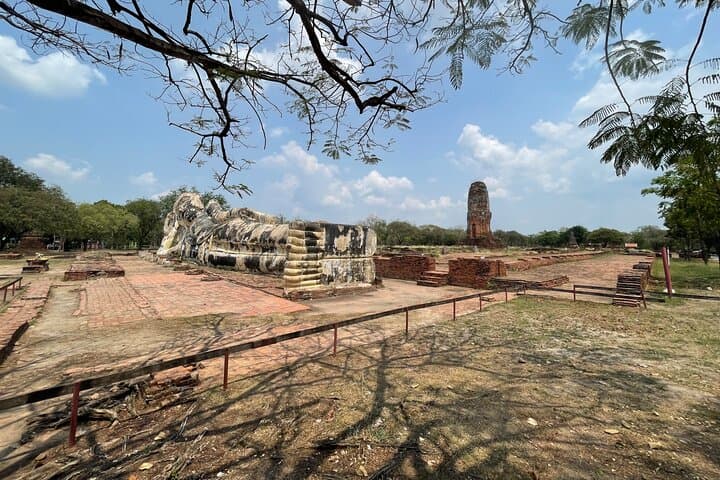


You step off the minivan into heat that smells faintly of jasmine and grilled street food; rice paddies fan out beyond a low riverbank and the red-brick silhouettes of chedis pierce the skyline like weathered teeth. The grounds are flat—easy walking between sites—but every ruined wall carries a century of dynastic ambitions and wartime ash.
You step off the minivan into heat that smells faintly of jasmine and grilled street food; rice paddies fan out beyond a low riverbank and the red-brick silhouettes of chedis pierce the skyline like weathered teeth. The grounds are flat—easy walking between sites—but every ruined wall carries a century of dynastic ambitions and wartime ash.
Founded in the mid-14th century, Ayutthaya became one of Southeast Asia’s most prosperous capitals before its fall in 1767. The park’s brick chedis and Khmer-influenced prangs reveal layers of Siamese and regional influence, while the Chao Phraya and its tributaries shaped the surrounding alluvial plain that fed the city and now frames the ruins with rice fields.
Monks still chant at open-air shrines and vendors sell noodle bowls where royal processions once passed; Wat Mahathat’s famous Buddha head cradled by tree roots and the towering Chedi at Wat Phu Khao Thong are vivid reminders of continuity amid decay. Expect uneven brick paths, short stair climbs (under 50m total elevation change) and frequent sun exposure.
Practical guidance: start early from Bangkok to beat mid-day heat, carry 2–3 liters of water, bring cash for temple donations and market lunch, and wear shoulders-and-knees-covering clothing for respectful entry. Comfortable, grippy shoes handle loose brick and temple platforms; a wide-brim hat, sunscreen and insect repellent make the day more comfortable. The tour is largely flat and accessible for most fitness levels, but pace yourself—the full day runs about 7–9 hours with multiple short walks between sites.