THE ADVENTURE COLLECTIVE® · Independent discovery and booking for outdoor travel

Put on a life jacket, take the paddle and let the Ayung River push you through jungle canyons and carved stone walls. This 10 km Ubud rafting trip mixes playful rapids (Class II–III), local culture, and a hearty lunch back at the river center.
Put on a life jacket, take the paddle and let the Ayung River push you through jungle canyons and carved stone walls. This 10 km Ubud rafting trip mixes playful rapids (Class II–III), local culture, and a hearty lunch back at the river center.
The raft shudders as the current takes it, water hissing at the rubber sides like a warning and an invitation. Palm fronds slap at the canyon walls and the Ayung River narrows into a corridor of green; for the next two hours the river will dare you forward—through Class II–III rapids, past carved stone reliefs, and beneath a canopy where sunlight pins motes to the spray.
Verified experiences and guided adventures in the surrounding area.
Operated by Nakbali Tour · Ubud, Bali
The raft shudders as the current takes it, water hissing at the rubber sides like a warning and an invitation. Palm fronds slap at the canyon walls and the Ayung River narrows into a corridor of green; for the next two hours the river will dare you forward—through Class II–III rapids, past carved stone reliefs, and beneath a canopy where sunlight pins motes to the spray.
This is not a postcard of Bali's beaches. It’s a close-up of the island’s interior—an abrupt shift from rice terraces to river gorge. Geologically the Ayung cuts through volcanic soils and riverbed boulders, shaping shallow rapids that are ideal for introductory white-water. Along the banks, local masons have chiselled Balinese motifs into stone; those carvings and nearby shrines attest to the river’s place in daily life and ritual. Villages upstream historically relied on the Ayung for irrigation, travel and ceremony, long before commercial rafting arrived here.
On the water you’ll notice the way the jungle behaves—branches reach to tangle your periphery, monitor lizards pause on sunlit rocks, and the occasional kingfisher flicks a bright streak across a pool. Guides from the rafting company double as interpreters: they point to flora used in traditional medicine, explain the story behind a carved wall, and time the run so you hit the cleaner, splash-heavy rapids for maximum fun.
The operator runs the full experience as a half-day: expect about 10 kilometers of river and roughly two hours of paddling cushioned into a 3–3.5 hour visit that includes safety briefing, transfers, a buffet lunch, and shower facilities with towels and lockers. Equipment and guides are included, and they even provide water-resistant bags for valuables.
Practicalities matter. Wear a secure water shoe or old sport sandal with a strap, bring a change of clothes and sunscreen, and stow phones in the waterproof bag provided—or leave them behind and enjoy the run hands-on. Morning departures tend to have calmer water and better light for photos; during the rainy season (November–March) currents increase and the ride becomes livelier.
For families and first-timers the Ayung is forgiving but active—paddling basics and a willingness to get wet are enough. If you have cardiovascular concerns or are pregnant, operators recommend skipping this trip. Book with pickup options—Kuta and Nusa Dua pickups start considerably earlier—and confirm age limits when you reserve.
When you climb back to the launch point, the shower and the buffet feel earned: steam, scrubbed river smell, and the easy, bright conversation of people who just rode the current together. It’s a short window into Bali’s inland life—wild, social, and undeniably fun.
moderate.
2–3.5 hours.
Suitable for most people with basic mobility; requires short bursts of upper-body effort and the ability to follow guide commands.
The river run covers about 10 kilometers and takes approximately 2 hours; the total experience including briefing, transfers and lunch lasts about 3–3.5 hours.
Yes—professional guides supply all safety equipment including life jackets, helmets and paddles as part of the tour price.
Age policies vary by operator but children are commonly accepted from around 7 years old when accompanied by adults; check the booking. Fitness needs are modest—basic mobility and the ability to follow guide instructions are required.
Pickup is available from many Ubud and nearby hotels; Kuta pickups are typically scheduled about 1 hour before start time and Nusa Dua about 2 hours before—confirm exact times when you book.
Yes—showers, towels, lockers and a buffet lunch plus coffee/tea are included in the package.
Rafting continues unless river levels are dangerously high; operators monitor conditions but check cancellation and refund rules—the supplier requires 24+ hour notice for a full refund.
The Ayung has long supported local villages for irrigation and ritual; many carved walls and small shrines along the banks reflect the area's cultural ties to the river.
Tour operators are increasingly focused on reducing single-use plastics and running river clean-ups—avoid littering and support operators that practice responsible waste management.
Nakbali Tour operates guided outdoor trips and adventures with an emphasis on safety, stewardship, and memorable experiences.
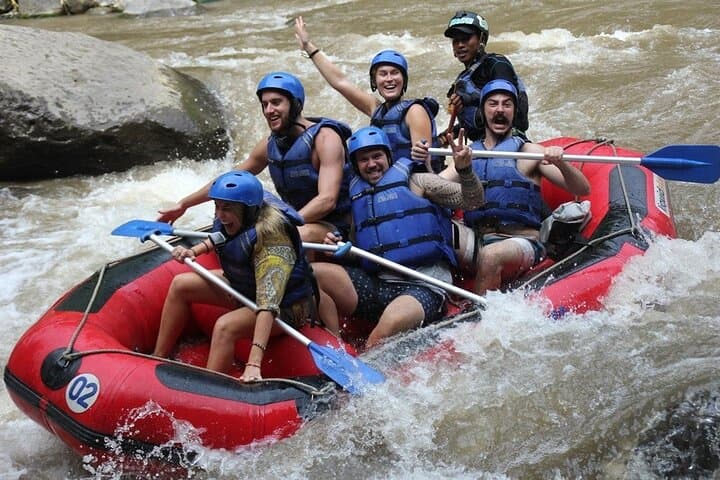
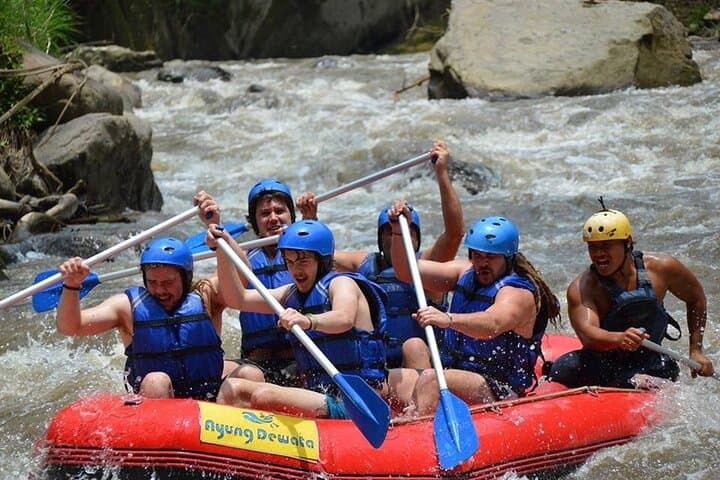
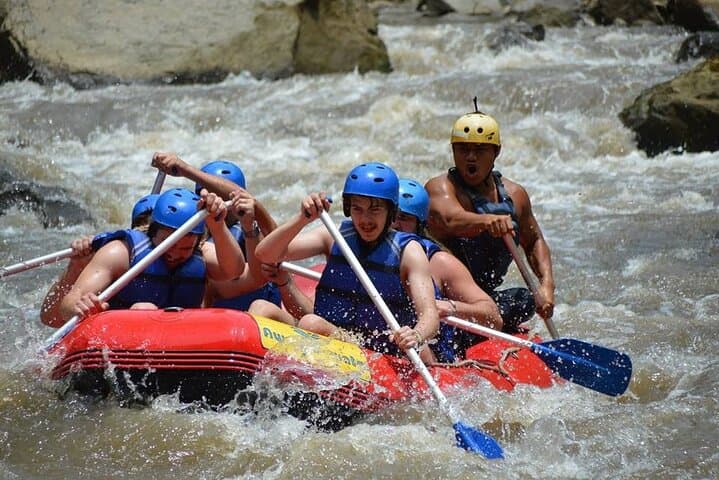
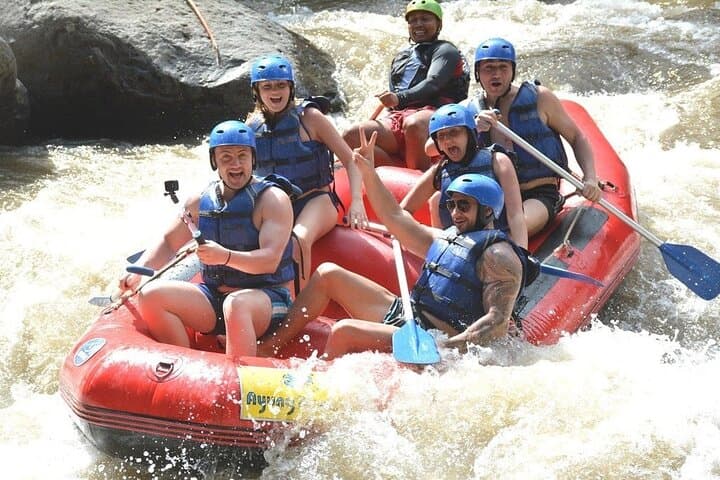
The raft shudders as the current takes it, water hissing at the rubber sides like a warning and an invitation. Palm fronds slap at the canyon walls and the Ayung River narrows into a corridor of green; for the next two hours the river will dare you forward—through Class II–III rapids, past carved stone reliefs, and beneath a canopy where sunlight pins motes to the spray.
The raft shudders as the current takes it, water hissing at the rubber sides like a warning and an invitation. Palm fronds slap at the canyon walls and the Ayung River narrows into a corridor of green; for the next two hours the river will dare you forward—through Class II–III rapids, past carved stone reliefs, and beneath a canopy where sunlight pins motes to the spray.
This is not a postcard of Bali's beaches. It’s a close-up of the island’s interior—an abrupt shift from rice terraces to river gorge. Geologically the Ayung cuts through volcanic soils and riverbed boulders, shaping shallow rapids that are ideal for introductory white-water. Along the banks, local masons have chiselled Balinese motifs into stone; those carvings and nearby shrines attest to the river’s place in daily life and ritual. Villages upstream historically relied on the Ayung for irrigation, travel and ceremony, long before commercial rafting arrived here.
On the water you’ll notice the way the jungle behaves—branches reach to tangle your periphery, monitor lizards pause on sunlit rocks, and the occasional kingfisher flicks a bright streak across a pool. Guides from the rafting company double as interpreters: they point to flora used in traditional medicine, explain the story behind a carved wall, and time the run so you hit the cleaner, splash-heavy rapids for maximum fun.
The operator runs the full experience as a half-day: expect about 10 kilometers of river and roughly two hours of paddling cushioned into a 3–3.5 hour visit that includes safety briefing, transfers, a buffet lunch, and shower facilities with towels and lockers. Equipment and guides are included, and they even provide water-resistant bags for valuables.
Practicalities matter. Wear a secure water shoe or old sport sandal with a strap, bring a change of clothes and sunscreen, and stow phones in the waterproof bag provided—or leave them behind and enjoy the run hands-on. Morning departures tend to have calmer water and better light for photos; during the rainy season (November–March) currents increase and the ride becomes livelier.
For families and first-timers the Ayung is forgiving but active—paddling basics and a willingness to get wet are enough. If you have cardiovascular concerns or are pregnant, operators recommend skipping this trip. Book with pickup options—Kuta and Nusa Dua pickups start considerably earlier—and confirm age limits when you reserve.
When you climb back to the launch point, the shower and the buffet feel earned: steam, scrubbed river smell, and the easy, bright conversation of people who just rode the current together. It’s a short window into Bali’s inland life—wild, social, and undeniably fun.