THE ADVENTURE COLLECTIVE® · Independent discovery and booking for outdoor travel

A two-hour stretch of class II–III rapids threads through Bali’s rainforest and rice terraces on the Ayung River. This Ubud rafting trip pairs easy whitewater with local culture, safety-certified guides and a post-raft buffet — ideal for beginners and families.
A two-hour stretch of class II–III rapids threads through Bali’s rainforest and rice terraces on the Ayung River. This Ubud rafting trip pairs easy whitewater with local culture, safety-certified guides and a post-raft buffet — ideal for beginners and families.
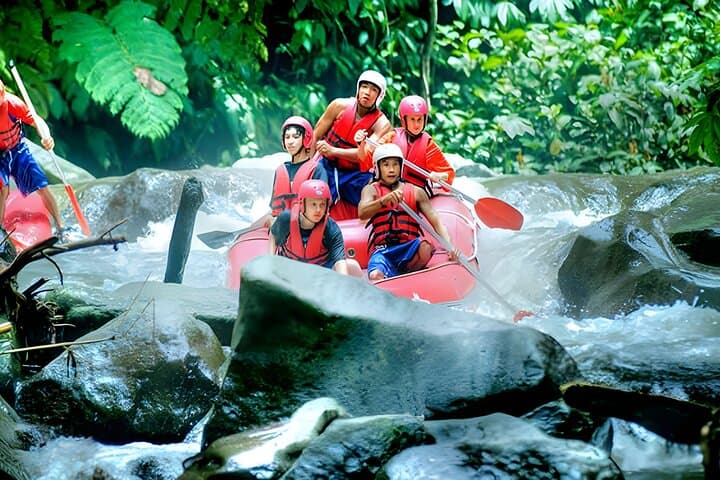
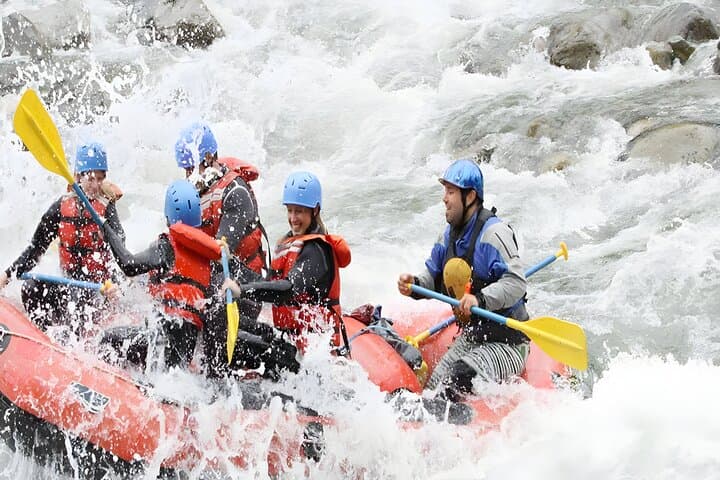
A fluorescent orange raft shudders as it catches the next pocket of Ayung River current. Paddle blades bite, rubber boots spray, and the rainforest pushes close — ferns and vines leaning over the river as if to watch. For about two intense hours the Ayung dares visitors forward: class II–III rapids bookended by long, glassy pools where the guide slows the boat and points out rice terraces cut into steep slopes and the occasional flash of blue from a Javan kingfisher.
Verified experiences and guided adventures in the surrounding area.
Operated by Bali Day Tour · Ubud, Bali
A fluorescent orange raft shudders as it catches the next pocket of Ayung River current. Paddle blades bite, rubber boots spray, and the rainforest pushes close — ferns and vines leaning over the river as if to watch. For about two intense hours the Ayung dares visitors forward: class II–III rapids bookended by long, glassy pools where the guide slows the boat and points out rice terraces cut into steep slopes and the occasional flash of blue from a Javan kingfisher.
The Ayung is Bali’s longest river and one of the island’s most accessible whitewater runs. Carved through young volcanic rock from Bali’s central highlands, the channel exposes rounded boulders and steep banks that speed flow during the wet season. Historically the river has been both a transport route and water source for the communities and subak (irrigation) systems that shaped the Ubud area — the same rice fields that edge the rafting route are part of a water-management tradition that dates back centuries.
Culture here is tactile: temple shrines pepper the banks, and local guides will often offer short notes about the Balinese offerings placed near water, and the rituals that honor rivers. Wildlife is present but discreet; riverbank birds, small monitor lizards and the occasional macaque observe from the trees while the current commands attention.
Practically, the trip is designed for beginners and families. The full offering runs about 5–6 hours from common pick-up points (including transfers and lunch), with roughly two hours on the water across a 10-kilometer route. Rafts encounter a series of friendly rapids that are fun rather than technical; guides are experienced and safety equipment meets international standards. After the float, participants return to base for showers, locker use and a buffet lunch.
Timing matters: mornings are cooler and quieter, while afternoons can bring stronger sun and higher river levels after tropical rains. Wear quick-drying layers, bring reef-appropriate water shoes, and secure any camera gear in a water-resistant bag — the guides provide these, but a small dry pouch for a phone is useful. Hydration and sunscreen are essential; even under canopy, humidity and exertion add up.
For travelers based in Ubud, the Ayung makes an easy half-day that still leaves time to explore local art markets or a late-afternoon walk along Campuhan Ridge. For the confident first-timer it’s an ideal introduction to Bali’s riverscape — active, scenic, and rooted in local life.
moderate.
3–6 hours (including transfers and lunch).
Suitable for people in average physical condition; requires basic paddling and the ability to follow guide commands for balance.
The on-water portion is approximately 10 kilometers and usually takes around two hours, depending on flow conditions.
Yes — rapids are class II–III suitable for beginners; the operator accepts children from age 5 with supervising adults and life jackets provided.
Typical inclusions are professional guide, safety equipment, towels, lockers, buffet lunch, water-resistant bag and hotel pickup/drop-off where selected.
Yes if stored in a water-resistant pouch or the supplied water-resistant bag; handheld cameras without protection are at risk.
Operators monitor river conditions; heavy rain or unsafe flows can prompt cancellation with refunds if within the supplier’s policy window.
Yes — most rafting bases provide showers, changing rooms and lockers for guests after the trip.
The Ayung River has long supported local rice terraces and irrigation (subak); many of the terrace systems seen from the river reflect centuries-old water-management practices.
Operators emphasize minimal-impact practices: stay on established access points, use biodegradable sunscreen when possible, and local programs often contribute to riverbank clean-ups.
Bali Day Tour operates guided outdoor trips and adventures with an emphasis on safety, stewardship, and memorable experiences.


A fluorescent orange raft shudders as it catches the next pocket of Ayung River current. Paddle blades bite, rubber boots spray, and the rainforest pushes close — ferns and vines leaning over the river as if to watch. For about two intense hours the Ayung dares visitors forward: class II–III rapids bookended by long, glassy pools where the guide slows the boat and points out rice terraces cut into steep slopes and the occasional flash of blue from a Javan kingfisher.
A fluorescent orange raft shudders as it catches the next pocket of Ayung River current. Paddle blades bite, rubber boots spray, and the rainforest pushes close — ferns and vines leaning over the river as if to watch. For about two intense hours the Ayung dares visitors forward: class II–III rapids bookended by long, glassy pools where the guide slows the boat and points out rice terraces cut into steep slopes and the occasional flash of blue from a Javan kingfisher.
The Ayung is Bali’s longest river and one of the island’s most accessible whitewater runs. Carved through young volcanic rock from Bali’s central highlands, the channel exposes rounded boulders and steep banks that speed flow during the wet season. Historically the river has been both a transport route and water source for the communities and subak (irrigation) systems that shaped the Ubud area — the same rice fields that edge the rafting route are part of a water-management tradition that dates back centuries.
Culture here is tactile: temple shrines pepper the banks, and local guides will often offer short notes about the Balinese offerings placed near water, and the rituals that honor rivers. Wildlife is present but discreet; riverbank birds, small monitor lizards and the occasional macaque observe from the trees while the current commands attention.
Practically, the trip is designed for beginners and families. The full offering runs about 5–6 hours from common pick-up points (including transfers and lunch), with roughly two hours on the water across a 10-kilometer route. Rafts encounter a series of friendly rapids that are fun rather than technical; guides are experienced and safety equipment meets international standards. After the float, participants return to base for showers, locker use and a buffet lunch.
Timing matters: mornings are cooler and quieter, while afternoons can bring stronger sun and higher river levels after tropical rains. Wear quick-drying layers, bring reef-appropriate water shoes, and secure any camera gear in a water-resistant bag — the guides provide these, but a small dry pouch for a phone is useful. Hydration and sunscreen are essential; even under canopy, humidity and exertion add up.
For travelers based in Ubud, the Ayung makes an easy half-day that still leaves time to explore local art markets or a late-afternoon walk along Campuhan Ridge. For the confident first-timer it’s an ideal introduction to Bali’s riverscape — active, scenic, and rooted in local life.