THE ADVENTURE COLLECTIVE® · Independent discovery and booking for outdoor travel

Spend two days camping in yurts on the shores of Aydar Lake, where a Soviet-era irrigation accident created a vital desert wetland. Expect campfire music, camel rides, reed-lined walks and a visit to Nurata’s fortress on the return route.
Spend two days camping in yurts on the shores of Aydar Lake, where a Soviet-era irrigation accident created a vital desert wetland. Expect campfire music, camel rides, reed-lined walks and a visit to Nurata’s fortress on the return route.
Dawn on the Kyzylkum comes cold and clear; the lake’s flat surface catches a thin light that seems to push the desert into motion. You arrive from Samarkand along a long ribbon of road, then step into a pocket of yurts that feel at once ancient and entirely present—felt walls holding stories of pasture, salt and wind.
Verified experiences and guided adventures in the surrounding area.
Operated by UzLocalGuide · Nurata, Navoiy Region
Dawn on the Kyzylkum comes cold and clear; the lake’s flat surface catches a thin light that seems to push the desert into motion. You arrive from Samarkand along a long ribbon of road, then step into a pocket of yurts that feel at once ancient and entirely present—felt walls holding stories of pasture, salt and wind.
Aydar Lake is a product of recent history: created by mid-20th century irrigation shifts when overflow pooled into lowlands, it reopened lifelines across the desert and shaped a new wetland. Geologically the area is broad basin and sand, with hard-packed plains giving way to reedbeds and saline flats around the shore. Cultural notes arrive at campfire speed—nomadic song, cai (tea), and camel handlers who read the land the way others read maps.
Expect two days of slow desert rhythm: evening campfire music and traditional meals in a yurt, a sunrise walk along reed-lined bays, optional short camel rides across wind-scalloped dunes, and a drive out to Nurata’s ancient fortress ruins on day two. Wildlife is subtle—migratory waterfowl concentrate on the lake margins while raptors circle the thermals.
Practical guidance: bring sun layers and a strong water system, because shade is sparse and temperatures swing. Footwear should handle sand and rocky tracks; a light daypack and headlamp make camp life easier. Plan travel time—roads are long—so factor in pickup, a quiet late afternoon, and a flexible schedule for return to Samarkand or onward to Bukhara. Leave no trace: the lake’s reedbeds and salt flats recover slowly, so stick to established paths and respect local grazing zones.
moderate.
2 days (approx. 48 hours).
Moderate fitness; able to walk 3–5 km over uneven sandy or rocky ground and manage basic camping routines.
The camp is a several-hour drive from Samarkand depending on road conditions; expect long rural stretches and a transfer provided by the tour.
Yurts typically have basic beds or mattresses and camp stoves for warmth; bedding and meals are provided according to the tour inclusions.
Yes, short camel rides are usually offered on-site as an optional activity supervised by handlers.
The tour notes moderate fitness is needed; some areas may be uneven or sandy—check accessibility options and inform operators of mobility needs before booking.
Aydar Lake formed in the 20th century after irrigation runoff filled a basin, transforming desert plains into important seasonal wetlands that support local pastoral communities.
The lake’s reedbeds and saline flats are fragile; follow leave-no-trace practices, avoid trampling nesting areas and minimize water use at camp.
UzLocalGuide operates guided outdoor trips and adventures with an emphasis on safety, stewardship, and memorable experiences.


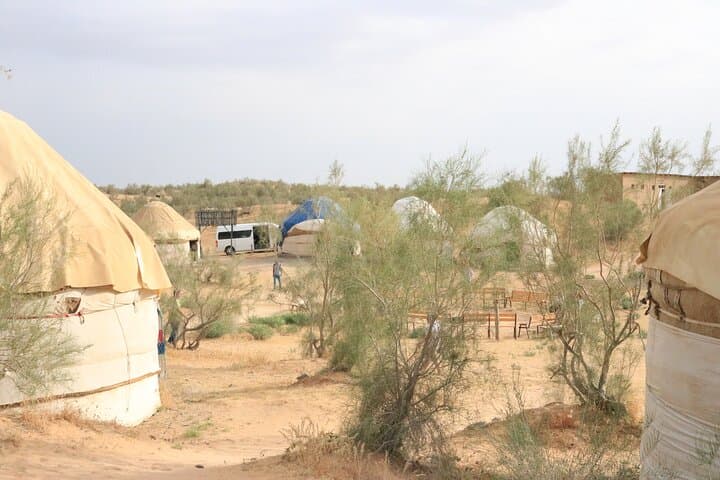
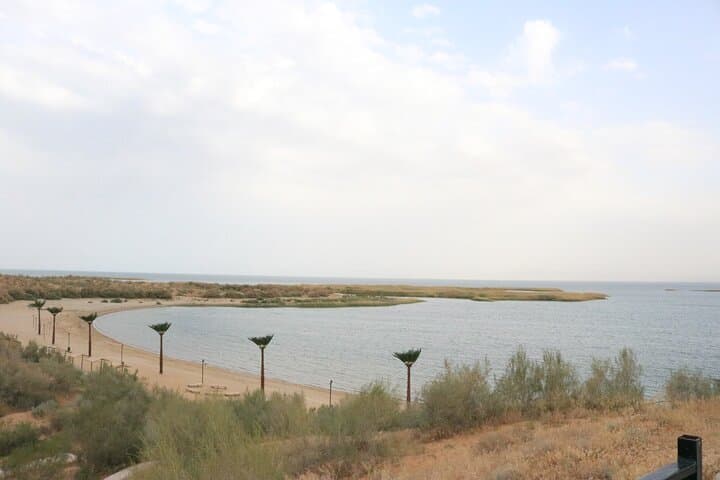
Dawn on the Kyzylkum comes cold and clear; the lake’s flat surface catches a thin light that seems to push the desert into motion. You arrive from Samarkand along a long ribbon of road, then step into a pocket of yurts that feel at once ancient and entirely present—felt walls holding stories of pasture, salt and wind.
Dawn on the Kyzylkum comes cold and clear; the lake’s flat surface catches a thin light that seems to push the desert into motion. You arrive from Samarkand along a long ribbon of road, then step into a pocket of yurts that feel at once ancient and entirely present—felt walls holding stories of pasture, salt and wind.
Aydar Lake is a product of recent history: created by mid-20th century irrigation shifts when overflow pooled into lowlands, it reopened lifelines across the desert and shaped a new wetland. Geologically the area is broad basin and sand, with hard-packed plains giving way to reedbeds and saline flats around the shore. Cultural notes arrive at campfire speed—nomadic song, cai (tea), and camel handlers who read the land the way others read maps.
Expect two days of slow desert rhythm: evening campfire music and traditional meals in a yurt, a sunrise walk along reed-lined bays, optional short camel rides across wind-scalloped dunes, and a drive out to Nurata’s ancient fortress ruins on day two. Wildlife is subtle—migratory waterfowl concentrate on the lake margins while raptors circle the thermals.
Practical guidance: bring sun layers and a strong water system, because shade is sparse and temperatures swing. Footwear should handle sand and rocky tracks; a light daypack and headlamp make camp life easier. Plan travel time—roads are long—so factor in pickup, a quiet late afternoon, and a flexible schedule for return to Samarkand or onward to Bukhara. Leave no trace: the lake’s reedbeds and salt flats recover slowly, so stick to established paths and respect local grazing zones.