THE ADVENTURE COLLECTIVE® · Independent discovery and booking for outdoor travel

Explore Axum’s UNESCO-listed obelisks, early Christian churches and storied relics on a private full-day tour. Expect archaeological highlights, short walks between sites, and a traditional coffee ceremony as cultural punctuation.
Explore Axum’s UNESCO-listed obelisks, early Christian churches and storied relics on a private full-day tour. Expect archaeological highlights, short walks between sites, and a traditional coffee ceremony as cultural punctuation.
You step out of the van into a hard, bright light and the stelae rise ahead—granite slabs like frozen columns of history, their carved faces still daring the desert wind. A guide with measured English and local stories moves between the stones, pointing out flaked inscriptions and the ragged seam where the Great Stele once stood.
Verified experiences and guided adventures in the surrounding area.
Operated by Sycamore Ethiopia Tours · Axum (Aksum), Tigray
You step out of the van into a hard, bright light and the stelae rise ahead—granite slabs like frozen columns of history, their carved faces still daring the desert wind. A guide with measured English and local stories moves between the stones, pointing out flaked inscriptions and the ragged seam where the Great Stele once stood.
Axum (Aksum) was the heart of the Aksumite Kingdom, a trading power that minted coins and raised obelisks from late antiquity onwards. The stone monoliths here are volcanic granite, quarried and erected with engineering that still puzzles archaeologists; the tallest stele once reached about 33 meters and weighed roughly 520 tons. Scattered nearby are early Christian churches—St. Mary’s traces back to the 4th century—and the Dongur palace site linked by local tradition to the Queen of Sheba and the Solomonic line that, legend says, brought the Ark of the Covenant to this city.
The tour weaves archaeology and living culture: a short walk to the Ezana inscription (about 1 km north), a visit to 6th-century royal tombs (roughly 2 km from town), and time for a coffee ceremony at the museum courtyard. Terrain is mostly flat but uneven—stone pavements and loose gravel—so wear solid shoes and expect several short walks between sites.
Practicalities: this private tour runs about 8–9 hours with transport, entrance fees, guiding and water included. Bring sun protection, cash for small donations, and a respectful attitude inside churches. Moderate fitness is required for walking and standing; the guide will pace visits to suit the group. Cancel at least 24 hours ahead for a full refund.
moderate.
8–9 hours.
Moderate—comfortable walking, standing for guided explanations, and negotiating short uneven sections.
The private tour is about 8–9 hours and includes transport, a guide, entrance fees, and bottled water; coffee ceremony at the museum is typically included.
No—local tradition places the Ark in a guarded church in Axum and it is not available for public viewing; guides will explain the history and related sites instead.
A moderate level—expect several short walks over uneven ground and standing during site explanations; not suitable for those with significant mobility issues.
Yes, infants must sit on an adult’s lap as noted by ticketing; inform the operator at booking about ages and any special needs.
Axum was the capital of a powerful trading empire between the 1st and 7th centuries CE and became an early center of Christianity in the region; many monuments date from that golden age.
The Stelae Park is a protected UNESCO site; visitors should avoid touching carved surfaces, stay on paths, and support local museums and guides to help preservation efforts.
Sycamore Ethiopia Tours operates guided outdoor trips and adventures with an emphasis on safety, stewardship, and memorable experiences.
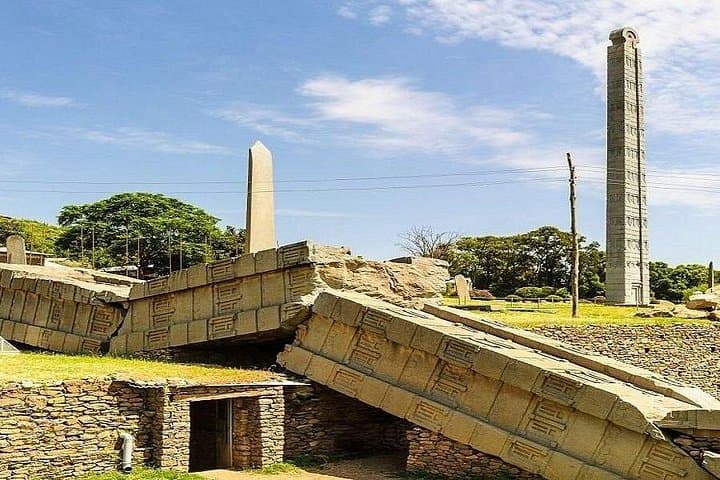
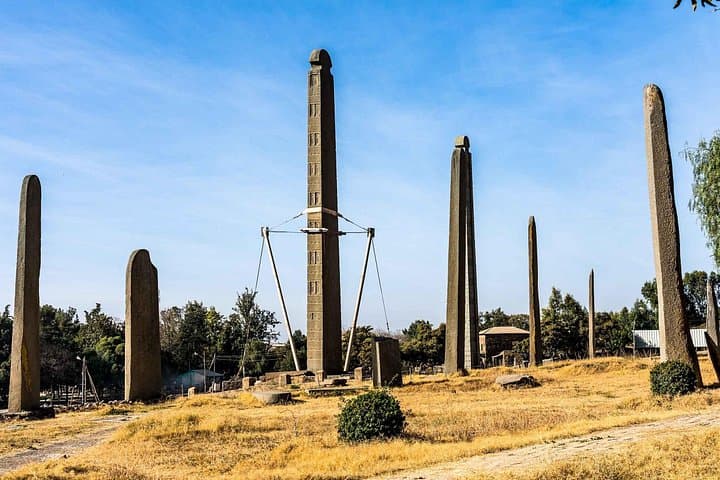
You step out of the van into a hard, bright light and the stelae rise ahead—granite slabs like frozen columns of history, their carved faces still daring the desert wind. A guide with measured English and local stories moves between the stones, pointing out flaked inscriptions and the ragged seam where the Great Stele once stood.
You step out of the van into a hard, bright light and the stelae rise ahead—granite slabs like frozen columns of history, their carved faces still daring the desert wind. A guide with measured English and local stories moves between the stones, pointing out flaked inscriptions and the ragged seam where the Great Stele once stood.
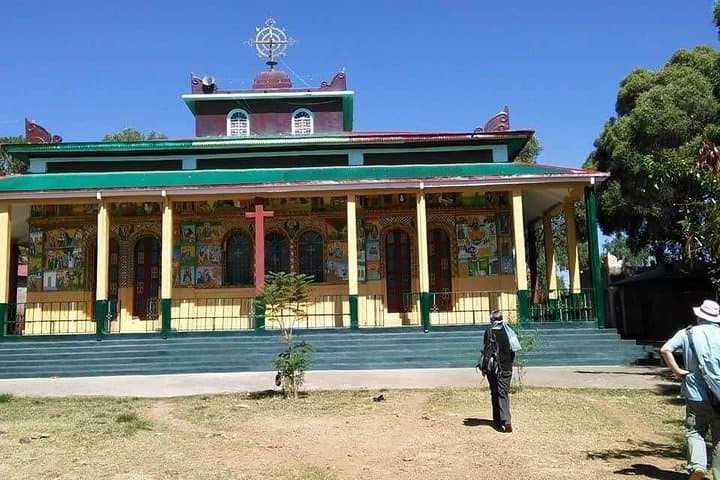
Axum (Aksum) was the heart of the Aksumite Kingdom, a trading power that minted coins and raised obelisks from late antiquity onwards. The stone monoliths here are volcanic granite, quarried and erected with engineering that still puzzles archaeologists; the tallest stele once reached about 33 meters and weighed roughly 520 tons. Scattered nearby are early Christian churches—St. Mary’s traces back to the 4th century—and the Dongur palace site linked by local tradition to the Queen of Sheba and the Solomonic line that, legend says, brought the Ark of the Covenant to this city.
The tour weaves archaeology and living culture: a short walk to the Ezana inscription (about 1 km north), a visit to 6th-century royal tombs (roughly 2 km from town), and time for a coffee ceremony at the museum courtyard. Terrain is mostly flat but uneven—stone pavements and loose gravel—so wear solid shoes and expect several short walks between sites.
Practicalities: this private tour runs about 8–9 hours with transport, entrance fees, guiding and water included. Bring sun protection, cash for small donations, and a respectful attitude inside churches. Moderate fitness is required for walking and standing; the guide will pace visits to suit the group. Cancel at least 24 hours ahead for a full refund.