THE ADVENTURE COLLECTIVE® · Independent discovery and booking for outdoor travel

Step into Syracuse’s axe-throwing lane for a coached 60-minute session that teaches stance, release and games. Perfect for groups and beginners, this spirited activity blends lumberjack roots with urban-friendly competition—no experience required.
Step into Syracuse’s axe-throwing lane for a coached 60-minute session that teaches stance, release and games. Perfect for groups and beginners, this spirited activity blends lumberjack roots with urban-friendly competition—no experience required.
Step into a room that smells faintly of sawdust and coffee, where plywood targets stand shoulder-to-shoulder like quiet rivals. The lane hums with low conversation and the clack of axes meeting wood; a coach greets your group, runs through a brisk safety talk, and hands you your first axe.
Verified experiences and guided adventures in the surrounding area.
Operated by Bad Axe Throwing · Syracuse, New York
Step into a room that smells faintly of sawdust and coffee, where plywood targets stand shoulder-to-shoulder like quiet rivals. The lane hums with low conversation and the clack of axes meeting wood; a coach greets your group, runs through a brisk safety talk, and hands you your first axe.
Axe throwing arrived in urban centers by way of a backyard pastime and lumbercamp practice—an activity forged where forests met industry. In Central New York that history carries echoes of loggers, salt works and the Erie Canal’s transport economy; here, a raw bit of timber becomes sport rather than trade. The venue in Syracuse leans into that lineage, pairing practical instruction with a friendly, competitive atmosphere.
Expect a structured 60-minute session: a safety briefing, basic stance and release drills, then games that turn practice into scorekeeping and light rivalry. Coaches teach technique and trick shots; lanes are wheelchair accessible and venues typically require a signed liability waiver. Children must be accompanied by an adult, and staff will guide groups of mixed experience levels through progression.
Practical tips: wear closed-toe shoes and comfortable sleeves, arrive 10–15 minutes early to fill out paperwork, and plan for a single intense hour rather than a long workout. If you want photos, bring a pocket camera—phones are fine but spectators should keep a safe distance. Axe throwing is low-cardio but requires coordination and attention; follow the coach’s instructions and the experience is as social as it is skill-building.
easy.
1 hour.
Suitable for most fitness levels; requires basic coordination and light upper-body control
No—coaches provide full safety briefings and step-by-step instruction designed for beginners.
Yes, but participants 17 and younger must have a parent or guardian sign the liability waiver and supervise as required.
Most venues accommodate groups and can run competitive games; check maximum lane capacities and reserve in advance for parties.
Cancel at least 24 hours before the scheduled time for a full refund; policies may vary by operator so confirm at booking.
Axe throwing evolved from lumbercamp skills and backyard competitions; Syracuse’s industrial past and nearby forests make the sport a modern echo of regional labor traditions.
Venues minimize waste by managing equipment and encouraging responsible behavior—support local businesses and follow venue rules to reduce impact.
Bad Axe Throwing operates guided outdoor trips and adventures with an emphasis on safety, stewardship, and memorable experiences.

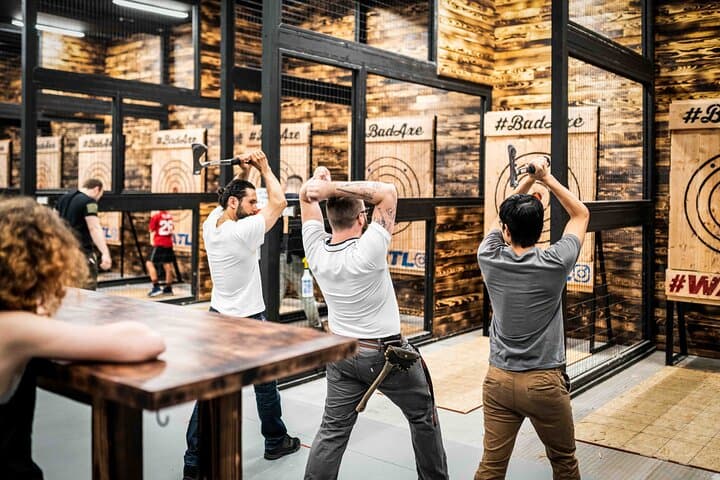
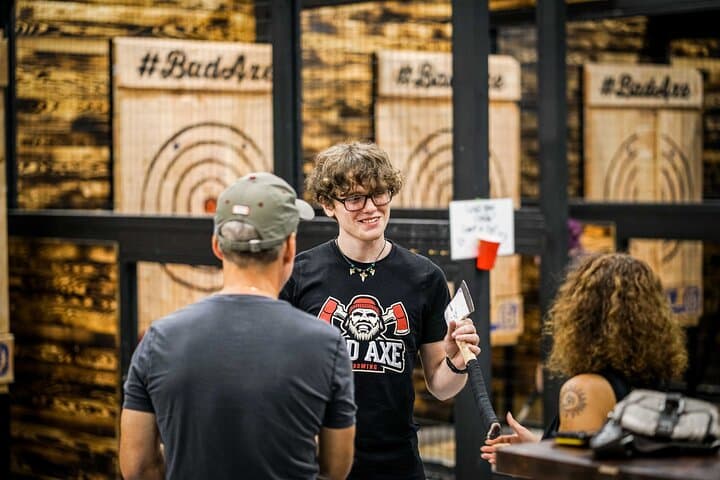
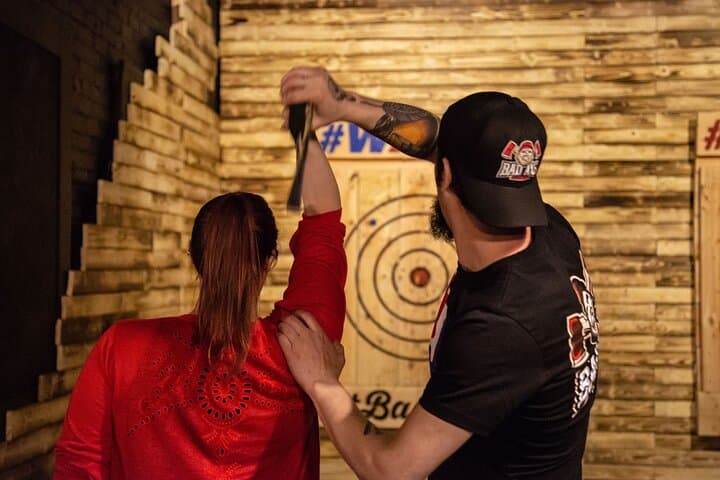
Step into a room that smells faintly of sawdust and coffee, where plywood targets stand shoulder-to-shoulder like quiet rivals. The lane hums with low conversation and the clack of axes meeting wood; a coach greets your group, runs through a brisk safety talk, and hands you your first axe.
Step into a room that smells faintly of sawdust and coffee, where plywood targets stand shoulder-to-shoulder like quiet rivals. The lane hums with low conversation and the clack of axes meeting wood; a coach greets your group, runs through a brisk safety talk, and hands you your first axe.
Axe throwing arrived in urban centers by way of a backyard pastime and lumbercamp practice—an activity forged where forests met industry. In Central New York that history carries echoes of loggers, salt works and the Erie Canal’s transport economy; here, a raw bit of timber becomes sport rather than trade. The venue in Syracuse leans into that lineage, pairing practical instruction with a friendly, competitive atmosphere.
Expect a structured 60-minute session: a safety briefing, basic stance and release drills, then games that turn practice into scorekeeping and light rivalry. Coaches teach technique and trick shots; lanes are wheelchair accessible and venues typically require a signed liability waiver. Children must be accompanied by an adult, and staff will guide groups of mixed experience levels through progression.
Practical tips: wear closed-toe shoes and comfortable sleeves, arrive 10–15 minutes early to fill out paperwork, and plan for a single intense hour rather than a long workout. If you want photos, bring a pocket camera—phones are fine but spectators should keep a safe distance. Axe throwing is low-cardio but requires coordination and attention; follow the coach’s instructions and the experience is as social as it is skill-building.