THE ADVENTURE COLLECTIVE® · Independent discovery and booking for outdoor travel

Step into a throw house in Madrid for a 2-hour AXEpert session where coaching, friendly competition, and target practice collide. Learn techniques, try different axes, and enjoy a sociable, safety-focused experience ideal for groups.
Step into a throw house in Madrid for a 2-hour AXEpert session where coaching, friendly competition, and target practice collide. Learn techniques, try different axes, and enjoy a sociable, safety-focused experience ideal for groups.
The throw house hums with conversation and the soft thud of hatchets meeting wood—the target taking each strike like a willing rival. In central Madrid an industrial room becomes an arena: lanes marked out, an AXEpert beside you, and a small crowd rotating through attempts, applause punctuating the air.
Verified experiences and guided adventures in the surrounding area.
Operated by Urban Safari · Madrid, Community of Madrid
The throw house hums with conversation and the soft thud of hatchets meeting wood—the target taking each strike like a willing rival. In central Madrid an industrial room becomes an arena: lanes marked out, an AXEpert beside you, and a small crowd rotating through attempts, applause punctuating the air.
Axe throwing in urban settings borrows from lumberjack sports and medieval target practice, repurposed for social play. Madrid itself sits high on the Meseta Central; its urban geology—granite bedrock and the slow curve of the Manzanares valley—meets a culture that prizes shared evenings, whether at a bar or an indoor throwing lane. The activity fits neatly into Madrid’s late-night rhythm: quick to learn, social by design, and often paired with a drink or two.
Expect a 2-hour session with coaching: grip, stance, and a few throwing techniques, followed by games or target practice. Staff monitor lanes, rotate axes, and emphasize safety—closed-toe shoes and clear lanes are non-negotiable. The experience is low-impact physically but requires coordination and focus; it’s equal parts skill practice and group entertainment.
Practical notes: book ahead for evening slots, arrive in sturdy shoes, and plan light meals beforehand if you’ll be drinking. For groups, request a private lane to keep noise and pace consistent. Respect safety briefings, avoid overdrinking while handling axes, and use the time to trade tips—small adjustments to wrist snap or foot placement often turn a near-miss into a bullseye.
Axe throwing in Madrid is direct, social, and surprisingly technical: a short, memorable way to measure aim and share competition in a city built for communal nights.
easy.
2 hours.
Suitable for most people; requires basic coordination and standing for short periods
Most venues accept guests from about 7 years old with adult supervision; check the operator’s policy when booking.
Bar service is often available on-site, but drinking while handling axes is discouraged and staff will enforce safety rules.
Many urban axe-throwing venues are wheelchair accessible—confirm specifics like lane access when booking.
No—an AXEpert provides coaching for beginners and can scale drills for more experienced throwers.
Axe throwing draws on lumberjack competitions and historic target practice; modern throw houses are a recent urban adaptation popularized in North America and Europe.
Venues typically use softwood targets that are replaced and recycled; follow staff guidance to minimize damage and prioritize equipment safety.
Urban Safari operates guided outdoor trips and adventures with an emphasis on safety, stewardship, and memorable experiences.

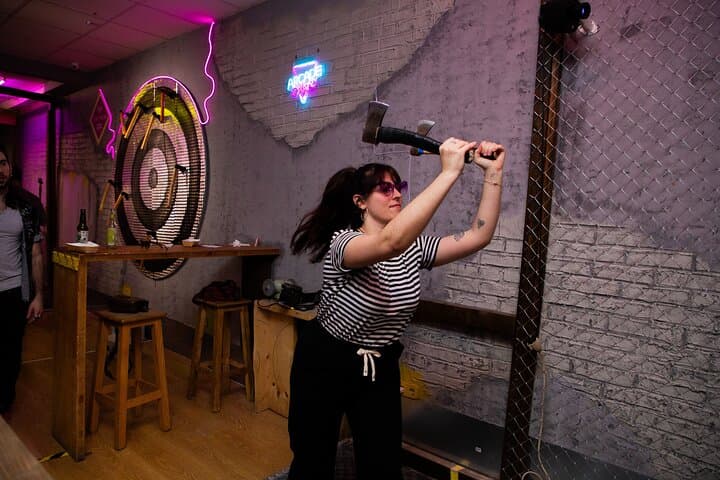
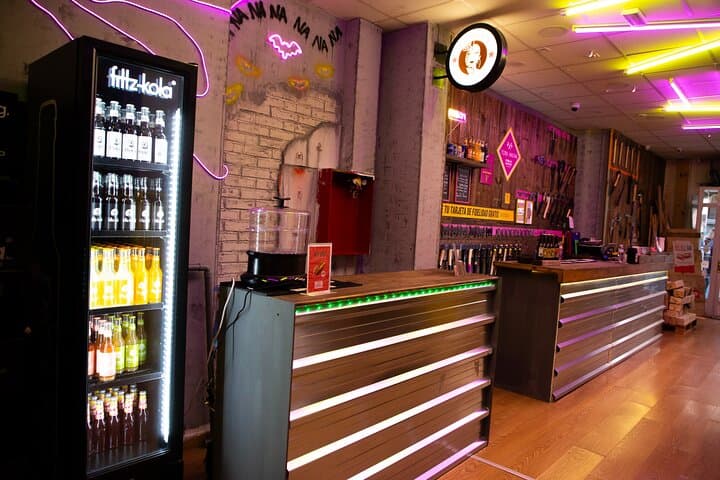

The throw house hums with conversation and the soft thud of hatchets meeting wood—the target taking each strike like a willing rival. In central Madrid an industrial room becomes an arena: lanes marked out, an AXEpert beside you, and a small crowd rotating through attempts, applause punctuating the air.
The throw house hums with conversation and the soft thud of hatchets meeting wood—the target taking each strike like a willing rival. In central Madrid an industrial room becomes an arena: lanes marked out, an AXEpert beside you, and a small crowd rotating through attempts, applause punctuating the air.
Axe throwing in urban settings borrows from lumberjack sports and medieval target practice, repurposed for social play. Madrid itself sits high on the Meseta Central; its urban geology—granite bedrock and the slow curve of the Manzanares valley—meets a culture that prizes shared evenings, whether at a bar or an indoor throwing lane. The activity fits neatly into Madrid’s late-night rhythm: quick to learn, social by design, and often paired with a drink or two.
Expect a 2-hour session with coaching: grip, stance, and a few throwing techniques, followed by games or target practice. Staff monitor lanes, rotate axes, and emphasize safety—closed-toe shoes and clear lanes are non-negotiable. The experience is low-impact physically but requires coordination and focus; it’s equal parts skill practice and group entertainment.
Practical notes: book ahead for evening slots, arrive in sturdy shoes, and plan light meals beforehand if you’ll be drinking. For groups, request a private lane to keep noise and pace consistent. Respect safety briefings, avoid overdrinking while handling axes, and use the time to trade tips—small adjustments to wrist snap or foot placement often turn a near-miss into a bullseye.
Axe throwing in Madrid is direct, social, and surprisingly technical: a short, memorable way to measure aim and share competition in a city built for communal nights.