THE ADVENTURE COLLECTIVE® · Independent discovery and booking for outdoor travel

Experience Unmunsa’s thousand-year history and autumn color on a full-day tour from Busan. Visit a living bhikkhuni temple, walk stone courtyards beneath ginkgo and maple, and learn the site’s cultural and geological context.
Experience Unmunsa’s thousand-year history and autumn color on a full-day tour from Busan. Visit a living bhikkhuni temple, walk stone courtyards beneath ginkgo and maple, and learn the site’s cultural and geological context.
A chill wind carries gold and flame through a lane of ginkgo and maple as the coach eases up the mountain road toward Unmunsa. The temple sits against a bowl of forested slopes; stone steps lead visitors into courtyards where temple bells and the hush of practice mark the hours. In autumn the leaves frame courtyards and pavilions, turning a simple visit into a study in color and quiet.
Verified experiences and guided adventures in the surrounding area.
Operated by Dorawayo experience activity · Cheongdo, North Gyeongsang Province
A chill wind carries gold and flame through a lane of ginkgo and maple as the coach eases up the mountain road toward Unmunsa. The temple sits against a bowl of forested slopes; stone steps lead visitors into courtyards where temple bells and the hush of practice mark the hours. In autumn the leaves frame courtyards and pavilions, turning a simple visit into a study in color and quiet.
Unmunsa dates back more than a thousand years to the Silla era and has long functioned as a training temple for bhikkhuni (Buddhist nuns). The site’s wooden halls, stone pagodas and repository of cultural treasures reflect layered restorations across dynasties. Geologically the temple perches on low volcanic foothills common to southeastern Korea; soil is well-drained and trails can be stony after rain. The local culture combines Confucian-era village rhythms with contemporary devotion; visitors should expect a measured, respectful atmosphere and opportunities to observe monastic life from a courteous distance.
Practically, this is a full-day outing from Busan (about 2–2.5 hours each way by road depending on traffic). Wear grippy shoes for stepped, uneven paths and bring layers for temperature swings in the mountains. Carry water, a light rain shell, and a modest outfit that covers shoulders and knees for temple entry. Morning light favors photography of the eastern courtyards; late afternoon brings richer color but shorter visiting hours. The tour is best in clear weather—autumn peak color runs from mid-October to early November—so plan transit time and allow a calm, unrushed visit.
moderate.
7–8 hours (total, guided tour).
Moderate fitness—able to walk on steps and uneven ground for several hours and manage short uphill sections.
Expect roughly 2–2.5 hours each way by air-conditioned coach depending on traffic; the full tour is about 7–8 hours total.
Photography is generally allowed in public courtyards, but refrain from photographing monks or nuns during private rituals and always ask before close-up shots.
The site includes stepped paths and uneven surfaces; visitors with serious mobility limitations may find access difficult—check with the operator beforehand.
Modest clothing that covers shoulders and knees is recommended; remove hats and turn off phone sounds inside prayer halls.
Unmunsa traces origins to the Silla period and has been an active bhikkhuni training center for centuries, preserving wooden architecture and stone artifacts from multiple eras.
Visitors should stick to marked paths and avoid picking foliage; local temple communities manage trails and rely on respectful visitation to protect understory and cultural assets.
Dorawayo experience activity operates guided outdoor trips and adventures with an emphasis on safety, stewardship, and memorable experiences.
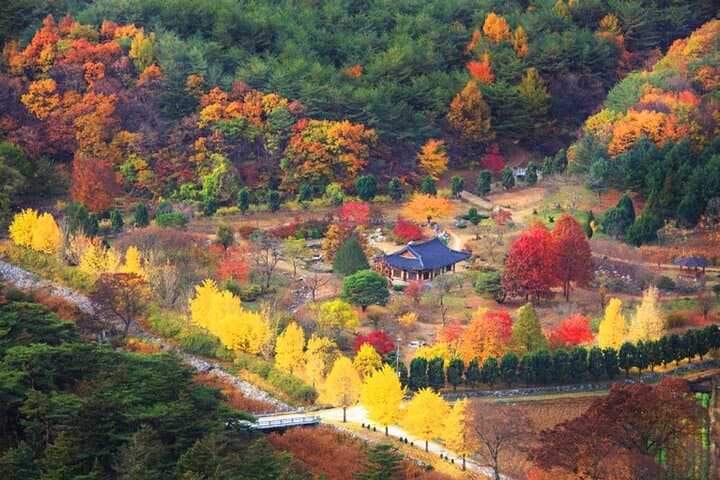
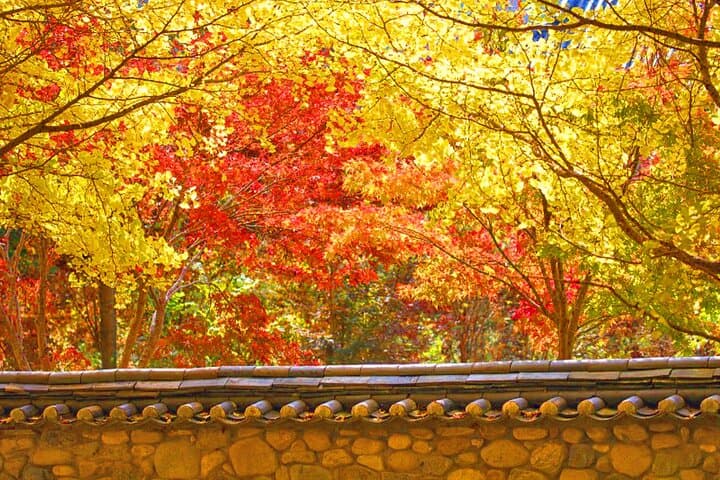
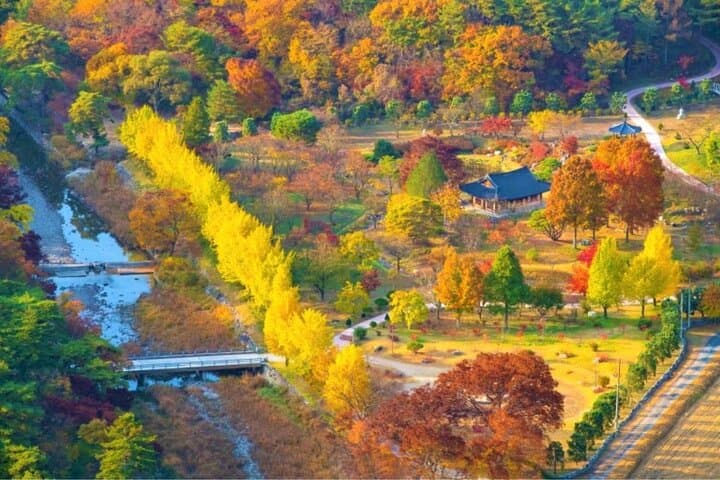
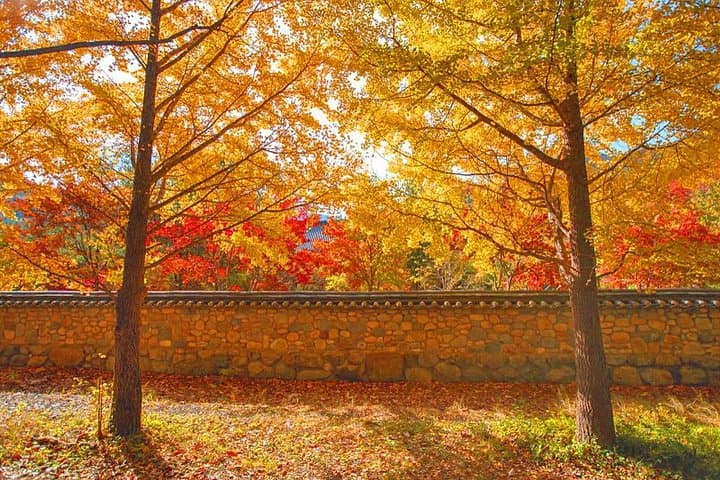
A chill wind carries gold and flame through a lane of ginkgo and maple as the coach eases up the mountain road toward Unmunsa. The temple sits against a bowl of forested slopes; stone steps lead visitors into courtyards where temple bells and the hush of practice mark the hours. In autumn the leaves frame courtyards and pavilions, turning a simple visit into a study in color and quiet.
A chill wind carries gold and flame through a lane of ginkgo and maple as the coach eases up the mountain road toward Unmunsa. The temple sits against a bowl of forested slopes; stone steps lead visitors into courtyards where temple bells and the hush of practice mark the hours. In autumn the leaves frame courtyards and pavilions, turning a simple visit into a study in color and quiet.
Unmunsa dates back more than a thousand years to the Silla era and has long functioned as a training temple for bhikkhuni (Buddhist nuns). The site’s wooden halls, stone pagodas and repository of cultural treasures reflect layered restorations across dynasties. Geologically the temple perches on low volcanic foothills common to southeastern Korea; soil is well-drained and trails can be stony after rain. The local culture combines Confucian-era village rhythms with contemporary devotion; visitors should expect a measured, respectful atmosphere and opportunities to observe monastic life from a courteous distance.
Practically, this is a full-day outing from Busan (about 2–2.5 hours each way by road depending on traffic). Wear grippy shoes for stepped, uneven paths and bring layers for temperature swings in the mountains. Carry water, a light rain shell, and a modest outfit that covers shoulders and knees for temple entry. Morning light favors photography of the eastern courtyards; late afternoon brings richer color but shorter visiting hours. The tour is best in clear weather—autumn peak color runs from mid-October to early November—so plan transit time and allow a calm, unrushed visit.