THE ADVENTURE COLLECTIVE® · Independent discovery and booking for outdoor travel

Trek two days through Sapa’s terraced valleys with a native Hmong guide, sleep in a family homestay, and walk past bamboo forests and waterfalls while learning traditional farming and crafts. This customizable route mixes cultural insight with moderate mountain terrain.
Trek two days through Sapa’s terraced valleys with a native Hmong guide, sleep in a family homestay, and walk past bamboo forests and waterfalls while learning traditional farming and crafts. This customizable route mixes cultural insight with moderate mountain terrain.
Dawn drifts down the stepped faces of Sapa’s rice terraces as your guide—born and raised in Ta Van—leads you off the paved road and into a narrowing trail.
Verified experiences and guided adventures in the surrounding area.
Operated by Indigo Trekking Tour Sapa · Sapa, Lao Cai
Dawn drifts down the stepped faces of Sapa’s rice terraces as your guide—born and raised in Ta Van—leads you off the paved road and into a narrowing trail.
The path drops and climbs through bamboo groves and wet stone steps, waterfalls calling from the gullies and streams daring you to come closer. You cross small villages where indigo-dyed clothing and hand-stitched Hmong embroidery mark family identity; children wave, and water buffalo graze in the terraces below.
Sapa sits on the shoulders of the Hoang Lien Son range, a rugged belt whose highest peak, Fansipan, pushes above 3,000 meters. Geologically this is an uplifted, weathered massif where steep valleys carve terraces and microclimates—conditions that shaped hill-tribe agriculture and the region’s layered history from tribal routes to French hill-station influences.
On this customizable 2-day, 1-night trek expect 12–18 km of walking over two days with cumulative elevation changes commonly up to 400–600 m on steeper sections. Trails range from packed dirt and carved steps to muddy switchbacks in the wet season. Nights are spent in a family homestay with a private suite and hot shower—an intimate way to learn Hmong food, farming rhythms and local storytelling.
For a practical outing, start early to avoid midday rain, wear ankle-supporting boots, and pack quick-dry layers and a rain shell; water points are limited on trail. Respect private land, ask before photographing people, and carry cash for small village purchases. This trek blends terrain, culture and local hospitality into a compact, authentic Sapa experience.
moderate.
15–18 hours of hiking over 2 days.
Moderate fitness: comfortable with multi-hour hikes, uneven terrain and short steep sections
The route is rated moderate—expect 6–8 hours walking across two full days with some steep sections; prior hiking experience helps but novices with reasonable fitness can join.
Yes; the host advertises a private stand-alone suite with its own bathroom and hot shower for the overnight stay.
Meals (breakfast, lunch, dinner) and bottled water are included according to the itinerary; bring extra snacks for long trail segments.
September–November and March–May offer the best balance of weather and views; June–August is lush but wetter.
Sapa became a hill-station during French colonial rule and is home to ethnic groups such as the Hmong who have farmed these terraces for generations.
Trail erosion and waste are growing concerns—stick to paths, carry out trash, and support homestays that use sustainable water and cooking practices.
Indigo Trekking Tour Sapa operates guided outdoor trips and adventures with an emphasis on safety, stewardship, and memorable experiences.


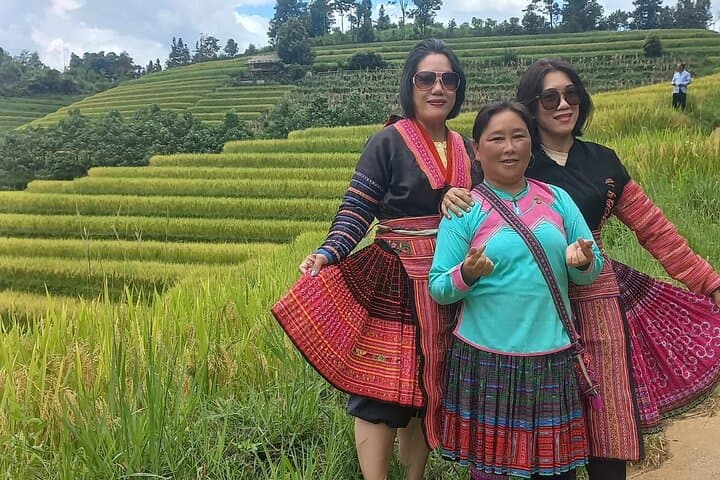

Dawn drifts down the stepped faces of Sapa’s rice terraces as your guide—born and raised in Ta Van—leads you off the paved road and into a narrowing trail.
Dawn drifts down the stepped faces of Sapa’s rice terraces as your guide—born and raised in Ta Van—leads you off the paved road and into a narrowing trail.
The path drops and climbs through bamboo groves and wet stone steps, waterfalls calling from the gullies and streams daring you to come closer. You cross small villages where indigo-dyed clothing and hand-stitched Hmong embroidery mark family identity; children wave, and water buffalo graze in the terraces below.
Sapa sits on the shoulders of the Hoang Lien Son range, a rugged belt whose highest peak, Fansipan, pushes above 3,000 meters. Geologically this is an uplifted, weathered massif where steep valleys carve terraces and microclimates—conditions that shaped hill-tribe agriculture and the region’s layered history from tribal routes to French hill-station influences.
On this customizable 2-day, 1-night trek expect 12–18 km of walking over two days with cumulative elevation changes commonly up to 400–600 m on steeper sections. Trails range from packed dirt and carved steps to muddy switchbacks in the wet season. Nights are spent in a family homestay with a private suite and hot shower—an intimate way to learn Hmong food, farming rhythms and local storytelling.
For a practical outing, start early to avoid midday rain, wear ankle-supporting boots, and pack quick-dry layers and a rain shell; water points are limited on trail. Respect private land, ask before photographing people, and carry cash for small village purchases. This trek blends terrain, culture and local hospitality into a compact, authentic Sapa experience.