THE ADVENTURE COLLECTIVE® · Independent discovery and booking for outdoor travel

Don a real samurai costume and learn basic sword kata under an internationally performing coach. This 90-minute Tokyo workshop blends history, hands-on instruction, and photo-ready moments for beginners and families.
Don a real samurai costume and learn basic sword kata under an internationally performing coach. This 90-minute Tokyo workshop blends history, hands-on instruction, and photo-ready moments for beginners and families.
The room smells faintly of lacquer and cotton as you step out of Tokyo’s midday bustle and into a space arranged like a modern dojo: mats on the floor, a rack of swords and costumes against the wall, and instructors who move with the economy of practiced motion. After a short bow, the coach—seasoned by international stage performances—frames the lesson in Bushido: mind, skill, body.
Verified experiences and guided adventures in the surrounding area.
Operated by beautiful day tours · Tokyo, Tokyo
The room smells faintly of lacquer and cotton as you step out of Tokyo’s midday bustle and into a space arranged like a modern dojo: mats on the floor, a rack of swords and costumes against the wall, and instructors who move with the economy of practiced motion. After a short bow, the coach—seasoned by international stage performances—frames the lesson in Bushido: mind, skill, body.
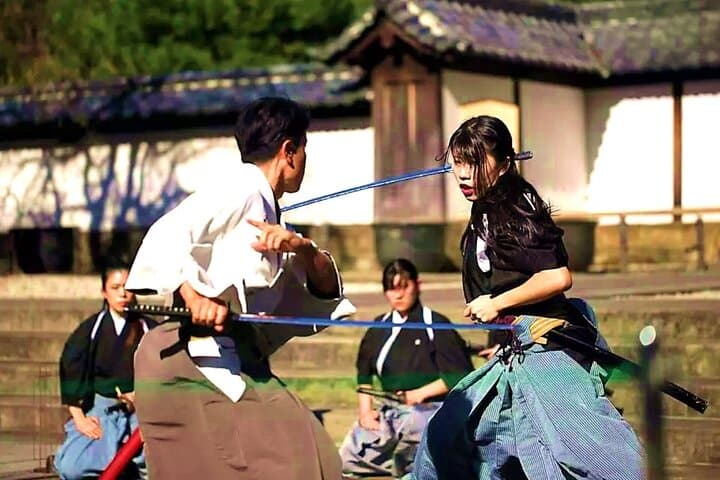
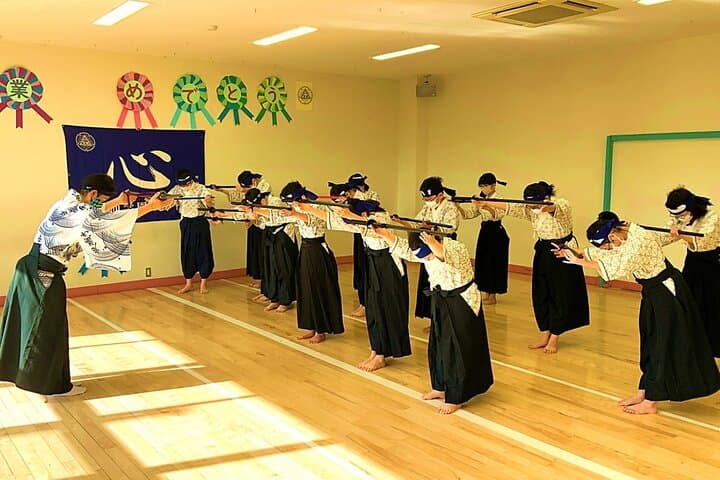
Beginning with a brief history of samurai and ninja, the session traces the practical lineage of Japanese swordcraft from feudal battlefields to contemporary performance. The instructors demonstrate tate (sword fighting) and then outfit participants in stage-appropriate samurai or ninja costumes, with sizes varying by availability. Practice focuses on beginner kata with imitation or wooden swords, giving you the feel and rhythm of each cut and block without live blades.
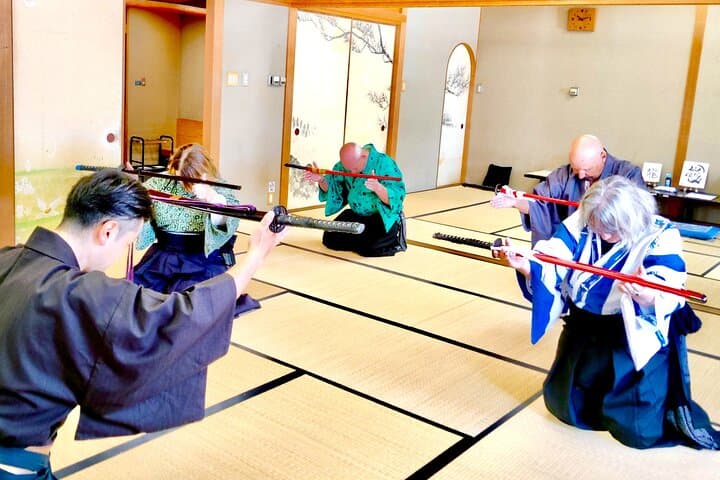
This is a cultural performance-turned-workshop: expect photo opportunities holding a katana replica, a short calligraphy segment illustrating samurai discipline, and a group commemorative photo. The space is urban Tokyo—geology and natural landscape play a background role—so cultural context and performance history dominate the experience.
Practical guidance: arrive slightly early for costume selection, wear breathable, close-toed shoes, and disclose any mobility or health concerns in advance. Sessions are suitable for ages six and up and accommodate most fitness levels. The pace is controlled; instructors break movements into repeatable steps so newcomers walk away with improved posture, basic kata, and a clear sense of samurai etiquette and practice.
easy.
1–1.5 hours.
Light physical activity: basic coordination and balance required; suitable for most ages (6+) and fitness levels
Yes—sessions are designed for people with no prior sword experience; instructors break down kata into simple steps and work in small groups.
No—practice uses imitation or wooden swords for safety; instructors may show real antiques or performance blades but live cutting is not part of the class.
The minimum age is 6; children should be supervised and able to follow safety instructions.
Yes—costume rental and a group commemorative photo are included; additional posed photos during the workshop are typically allowed.
The workshop draws on tate and kata traditions; instructors frame movements within Bushido concepts that governed samurai conduct from the medieval period through the Edo era.
The program emphasizes careful handling and reuse of costumes and props; participants are asked to respect cultural artifacts and the studio’s preservation practices.
beautiful day tours operates guided outdoor trips and adventures with an emphasis on safety, stewardship, and memorable experiences.
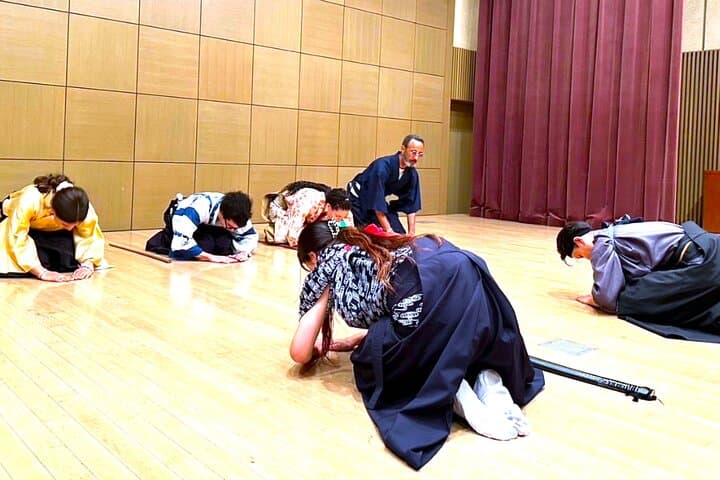
The room smells faintly of lacquer and cotton as you step out of Tokyo’s midday bustle and into a space arranged like a modern dojo: mats on the floor, a rack of swords and costumes against the wall, and instructors who move with the economy of practiced motion. After a short bow, the coach—seasoned by international stage performances—frames the lesson in Bushido: mind, skill, body.
The room smells faintly of lacquer and cotton as you step out of Tokyo’s midday bustle and into a space arranged like a modern dojo: mats on the floor, a rack of swords and costumes against the wall, and instructors who move with the economy of practiced motion. After a short bow, the coach—seasoned by international stage performances—frames the lesson in Bushido: mind, skill, body.
Beginning with a brief history of samurai and ninja, the session traces the practical lineage of Japanese swordcraft from feudal battlefields to contemporary performance. The instructors demonstrate tate (sword fighting) and then outfit participants in stage-appropriate samurai or ninja costumes, with sizes varying by availability. Practice focuses on beginner kata with imitation or wooden swords, giving you the feel and rhythm of each cut and block without live blades.
This is a cultural performance-turned-workshop: expect photo opportunities holding a katana replica, a short calligraphy segment illustrating samurai discipline, and a group commemorative photo. The space is urban Tokyo—geology and natural landscape play a background role—so cultural context and performance history dominate the experience.
Practical guidance: arrive slightly early for costume selection, wear breathable, close-toed shoes, and disclose any mobility or health concerns in advance. Sessions are suitable for ages six and up and accommodate most fitness levels. The pace is controlled; instructors break movements into repeatable steps so newcomers walk away with improved posture, basic kata, and a clear sense of samurai etiquette and practice.