THE ADVENTURE COLLECTIVE® · Independent discovery and booking for outdoor travel

Walk where modern pilgrimage meets rural Herzegovina: this private day tour from Mostar brings you to Medjugorje’s devotional sites, with optional stops in Pocitelj or Mostar. Expect short steep climbs, limestone terraces, and a strong local Catholic culture—bring water, sun protection, and modest dress.
Walk where modern pilgrimage meets rural Herzegovina: this private day tour from Mostar brings you to Medjugorje’s devotional sites, with optional stops in Pocitelj or Mostar. Expect short steep climbs, limestone terraces, and a strong local Catholic culture—bring water, sun protection, and modest dress.
You step from an air‑conditioned minivan into a sunlit square; the bell at St. James Church rings and a steady stream of pilgrims threads between stone facades. The low, karst hills cradle Medjugorje—a compact parish spread between two rises where voices pray, incense lingers, and vineyards slope toward the horizon.
Verified experiences and guided adventures in the surrounding area.
Operated by NowBosnia · Međugorje, Herzegovina-Neretva Canton
You step from an air‑conditioned minivan into a sunlit square; the bell at St. James Church rings and a steady stream of pilgrims threads between stone facades. The low, karst hills cradle Medjugorje—a compact parish spread between two rises where voices pray, incense lingers, and vineyards slope toward the horizon.
This region of Herzegovina carries layered history: a parish founded in 1892, a Slavic name meaning “between the mounts,” and a modern pilgrimage story that began in 1981. Geologically, the landscape is limestone karst—rocky soils, olive and grape terraces, and clear, fast drainage that shaped local farming of tobacco and wine. The local culture is Croat Catholic: ritual, communal meals, and simple homestead hospitality remain central.
On a private half‑ to full‑day tour from Mostar you’ll reach the church, visit devotional sites, and—time permitting—drop into Pocitelj’s Ottoman lanes or Mostar’s Old Bridge for context. Expect short walks on paved streets, a steeper 30–60 minute ascent to the Križevac cross or Apparition Hill if you choose, and plenty of standing or seated time in devotional spaces.
Practical: bring water, sun protection, and modest clothing for church entry; plan mornings or late afternoons to avoid the busiest hours and the harshest sun. The tour provides private transport and can be adapted to your pace, but remember the hills are uneven—good footwear and respectful behavior make the day both easier and more rewarding.
easy.
4–8 hours.
Lightly active; able to walk on paved and uneven surfaces for up to a few hours with short steep sections.
No: visitors of all backgrounds are welcome; the tour explains religious context while respecting devotion and local customs.
The provided vehicle and main church area are wheelchair accessible, but hill climbs like Križevac and Apparition Hill are steep and not wheelchair‑friendly.
The standard inclusions list private transport and air‑conditioned vehicle; meals and optional site admissions are typically not included—confirm with the operator.
Walking varies by itinerary—expect short walks through town and up to a 30–60 minute optional hill climb; the operator can tailor the day to minimal walking if requested.
Medjugorje was first recorded in 1599 and the current parish was established in 1892; reported Marian apparitions in 1981 transformed it into a major pilgrimage site.
The karst ecosystem is sensitive—stay on paths, carry out waste, and support local businesses to reduce pressure on fragile terraces and water supplies.
NowBosnia operates guided outdoor trips and adventures with an emphasis on safety, stewardship, and memorable experiences.
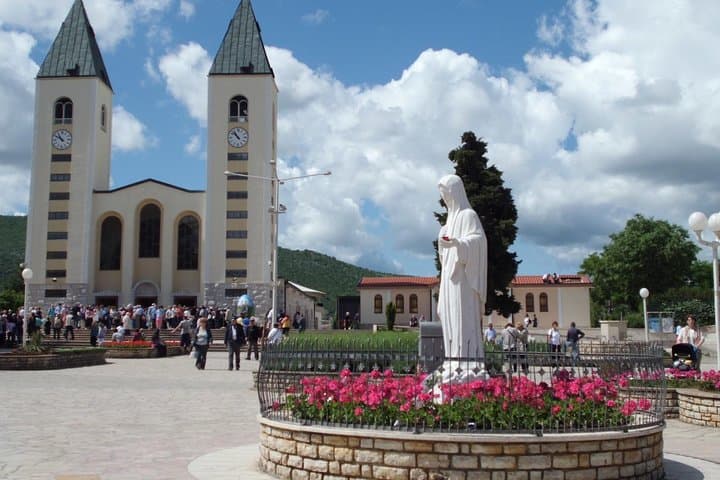
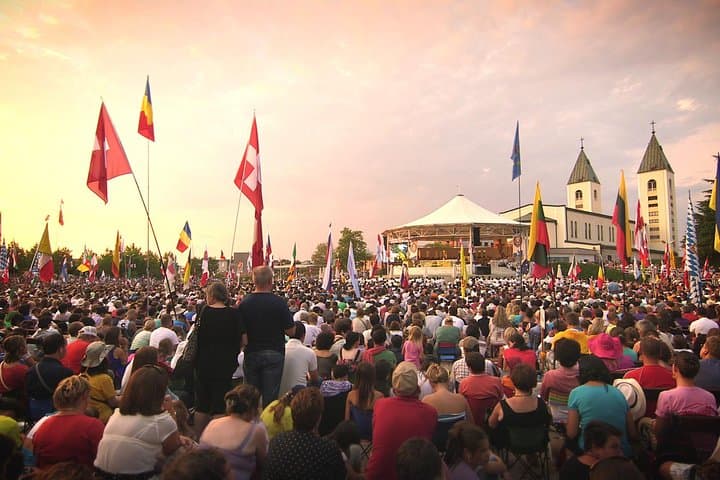
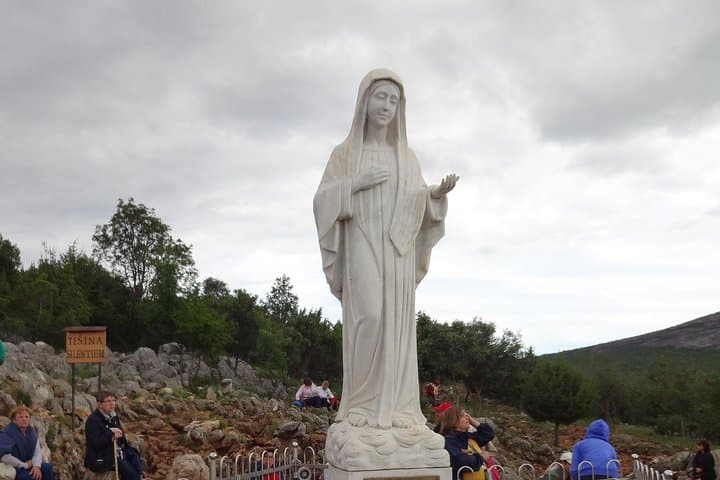
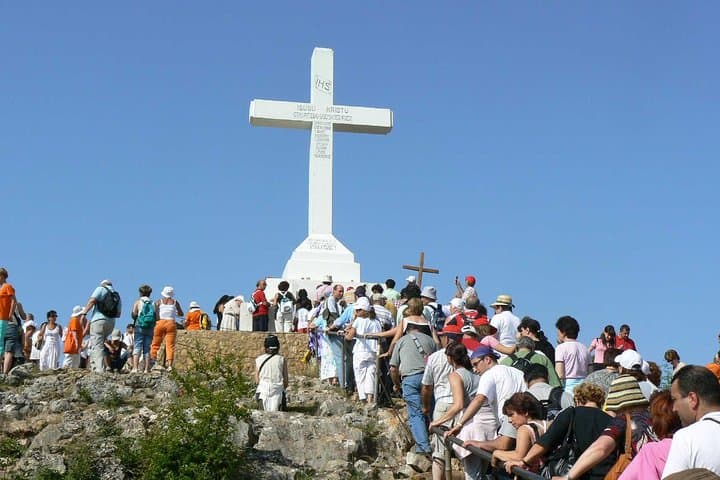
You step from an air‑conditioned minivan into a sunlit square; the bell at St. James Church rings and a steady stream of pilgrims threads between stone facades. The low, karst hills cradle Medjugorje—a compact parish spread between two rises where voices pray, incense lingers, and vineyards slope toward the horizon.
You step from an air‑conditioned minivan into a sunlit square; the bell at St. James Church rings and a steady stream of pilgrims threads between stone facades. The low, karst hills cradle Medjugorje—a compact parish spread between two rises where voices pray, incense lingers, and vineyards slope toward the horizon.
This region of Herzegovina carries layered history: a parish founded in 1892, a Slavic name meaning “between the mounts,” and a modern pilgrimage story that began in 1981. Geologically, the landscape is limestone karst—rocky soils, olive and grape terraces, and clear, fast drainage that shaped local farming of tobacco and wine. The local culture is Croat Catholic: ritual, communal meals, and simple homestead hospitality remain central.
On a private half‑ to full‑day tour from Mostar you’ll reach the church, visit devotional sites, and—time permitting—drop into Pocitelj’s Ottoman lanes or Mostar’s Old Bridge for context. Expect short walks on paved streets, a steeper 30–60 minute ascent to the Križevac cross or Apparition Hill if you choose, and plenty of standing or seated time in devotional spaces.
Practical: bring water, sun protection, and modest clothing for church entry; plan mornings or late afternoons to avoid the busiest hours and the harshest sun. The tour provides private transport and can be adapted to your pace, but remember the hills are uneven—good footwear and respectful behavior make the day both easier and more rewarding.