THE ADVENTURE COLLECTIVE® · Independent discovery and booking for outdoor travel

A short, high-value day trek from Pokhara to Australian Camp delivers sweeping views of the Annapurna range with minimal logistical fuss. Ideal for travelers seeking panoramic Himalayan vistas without high-altitude camping.
A short, high-value day trek from Pokhara to Australian Camp delivers sweeping views of the Annapurna range with minimal logistical fuss. Ideal for travelers seeking panoramic Himalayan vistas without high-altitude camping.
A morning drive from Pokhara winds up narrow switchbacks to Kande; the jeep drops you where the trail narrows and the forest leans in. From the first steps the path pushes through rhododendron and oak, and the ridge opens into Australian Camp — a small tea-house clearing with a front-row seat to Annapurna South, Hiunchuli, Machhapuchhre (Fish Tail) and Lamjung Himal.
Verified experiences and guided adventures in the surrounding area.
Operated by Eyes On Nepal · Pokhara, Gandaki Province
A morning drive from Pokhara winds up narrow switchbacks to Kande; the jeep drops you where the trail narrows and the forest leans in. From the first steps the path pushes through rhododendron and oak, and the ridge opens into Australian Camp — a small tea-house clearing with a front-row seat to Annapurna South, Hiunchuli, Machhapuchhre (Fish Tail) and Lamjung Himal.
The route sits on the southern foothills of the Annapurna massif, carved by monsoon-fed streams and terraced agriculture. Local Gurung and Magar villages dot the approach; their stone walls and farm tracks reflect centuries of hill farming. Geologically the Annapurna range is young uplifted rock, so expect steep flanks, layered moraine outcrops and stable ridgelines at this elevation.
Practically, the one-day itinerary is straightforward: roughly 6 km round-trip on an uphill then descending trail, with about 350–500 m of elevation gain depending on your start point in Kande. Terrain alternates packed dirt, stone steps and short switchbacks; the trail is well-used and marked. Timing matters — mid-morning light brings clear mountain silhouettes and lunch at the camp, while late afternoons can bring fast-moving cloud from the valley.
Bring sturdy shoes, a lightweight rain layer, and water; acclimatization isn’t a concern at this elevation but steady, easy pacing rewards better views. Expect friendly tea-house service at Australian Camp and the option to extend toward Dhampus or Mardi Himal for multi-day treks. Leave no trace: the fragile hill ecology responds quickly to erosion and litter. This is an accessible, high-value day trek for travelers wanting near-range Himalayan panoramas without high-altitude commitment.
easy.
6–8 hours.
Suitable for most people with regular walking fitness; expect steady uphill sections but no technical climbing.
It’s classified as easy — the trail is well-marked with steady uphill sections but no technical scrambling; basic fitness is sufficient.
Australian Camp sits in the hill zone below high Himalayan elevations (around 1,400–1,800 m), so altitude sickness is uncommon for day-trippers.
A guide is included with the listed tour and useful for local insight, but the well-trodden trail can be navigated independently by experienced walkers.
Clear views are most reliable in autumn (Sept–Nov) and spring (Mar–May); monsoon months bring heavier cloud and slippery trails.
The trail links centuries-old hill farming communities and has been a popular viewpoint for foreign trekkers since the mid-20th century, serving as a gateway to Mardi Himal and Ghandruk routes.
Stay on established trails, avoid single-use plastics, and use local tea-houses to support village economies; erosion and litter are primary local impacts.
Eyes On Nepal operates guided outdoor trips and adventures with an emphasis on safety, stewardship, and memorable experiences.
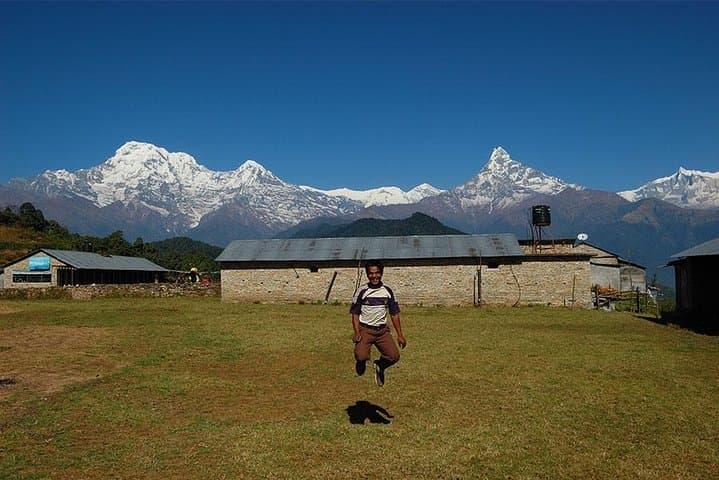
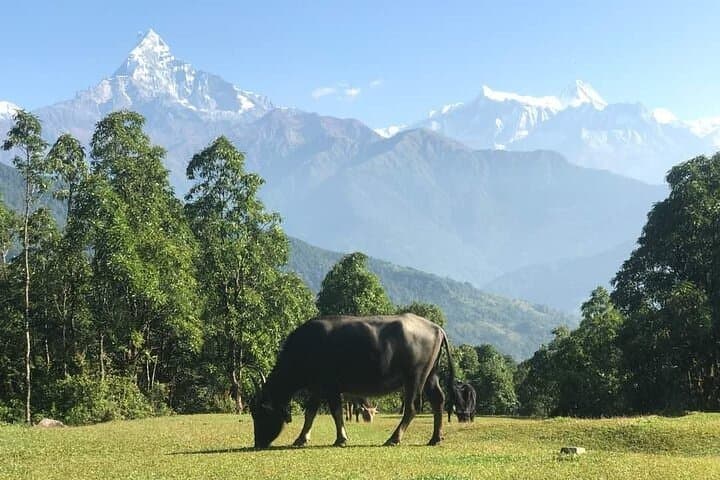
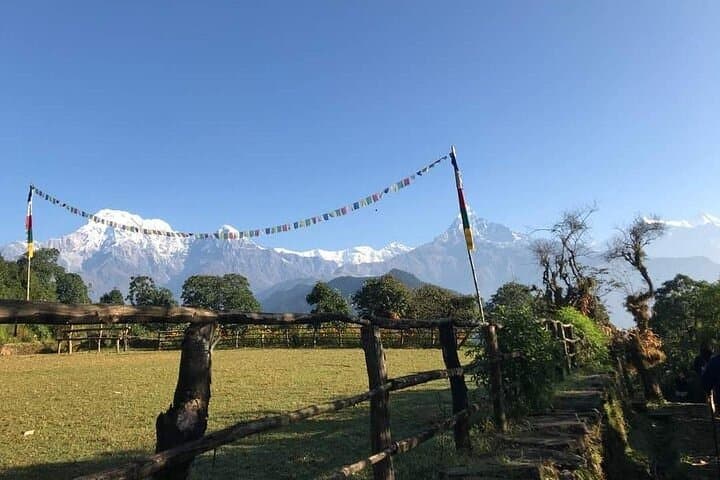
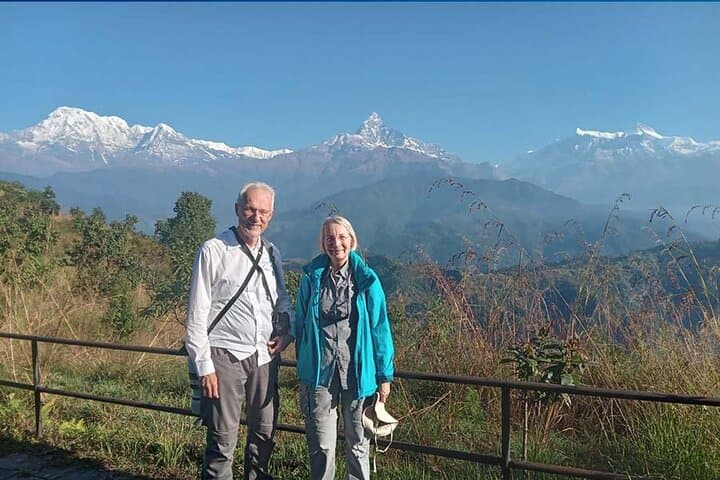
A morning drive from Pokhara winds up narrow switchbacks to Kande; the jeep drops you where the trail narrows and the forest leans in. From the first steps the path pushes through rhododendron and oak, and the ridge opens into Australian Camp — a small tea-house clearing with a front-row seat to Annapurna South, Hiunchuli, Machhapuchhre (Fish Tail) and Lamjung Himal.
A morning drive from Pokhara winds up narrow switchbacks to Kande; the jeep drops you where the trail narrows and the forest leans in. From the first steps the path pushes through rhododendron and oak, and the ridge opens into Australian Camp — a small tea-house clearing with a front-row seat to Annapurna South, Hiunchuli, Machhapuchhre (Fish Tail) and Lamjung Himal.
The route sits on the southern foothills of the Annapurna massif, carved by monsoon-fed streams and terraced agriculture. Local Gurung and Magar villages dot the approach; their stone walls and farm tracks reflect centuries of hill farming. Geologically the Annapurna range is young uplifted rock, so expect steep flanks, layered moraine outcrops and stable ridgelines at this elevation.
Practically, the one-day itinerary is straightforward: roughly 6 km round-trip on an uphill then descending trail, with about 350–500 m of elevation gain depending on your start point in Kande. Terrain alternates packed dirt, stone steps and short switchbacks; the trail is well-used and marked. Timing matters — mid-morning light brings clear mountain silhouettes and lunch at the camp, while late afternoons can bring fast-moving cloud from the valley.
Bring sturdy shoes, a lightweight rain layer, and water; acclimatization isn’t a concern at this elevation but steady, easy pacing rewards better views. Expect friendly tea-house service at Australian Camp and the option to extend toward Dhampus or Mardi Himal for multi-day treks. Leave no trace: the fragile hill ecology responds quickly to erosion and litter. This is an accessible, high-value day trek for travelers wanting near-range Himalayan panoramas without high-altitude commitment.