THE ADVENTURE COLLECTIVE® · Independent discovery and booking for outdoor travel

This four-day private trek from Cusco threads glacial peaks, green lagoons and high Andean communities to reach Palomani Pass and the famed Rainbow Mountain. Expect long days, thin air and fully supported camping with local guides and muleteers.
This four-day private trek from Cusco threads glacial peaks, green lagoons and high Andean communities to reach Palomani Pass and the famed Rainbow Mountain. Expect long days, thin air and fully supported camping with local guides and muleteers.
At dawn a thin cord of light slips across the puna as you and your group clamber from tents pitched beneath jagged, snow-knit ridgelines. The air is thin; every step brings you closer to Ausangate's flanks and the rainbow-streaked slopes of Vinicunca. Over four days this private trek moves from thermal springs and green lagoons up to 5,210 m at Palomani Pass, through high Andean communities where llamas graze and muleteers keep quiet rhythms.
Verified experiences and guided adventures in the surrounding area.
Operated by Machu Picchu Hike Tours · Cusco, Cusco
At dawn a thin cord of light slips across the puna as you and your group clamber from tents pitched beneath jagged, snow-knit ridgelines. The air is thin; every step brings you closer to Ausangate's flanks and the rainbow-streaked slopes of Vinicunca. Over four days this private trek moves from thermal springs and green lagoons up to 5,210 m at Palomani Pass, through high Andean communities where llamas graze and muleteers keep quiet rhythms.
Geology here is plain in its theater: glaciated summits carved by ice, glacial lakes that reflect serrated peaks, and the iron- and copper-toned strata that create the layered pigments of Rainbow Mountain. The route uses segments of ancestral Inca trail and seasonal shepherd tracks; local communities maintain traditional weaving and herding practices that shape daily life.
Practical navigation is straightforward but physically demanding: expect daily distances of 6–12 km on rough, rocky and grassy terrain with elevation gains that can exceed 700–800 m in a day. Altitude sickness is the chief risk — guides carry oxygen and the itinerary includes acclimatization and coca-tea rituals. Camps are fully supported with dining tents, a professional cook and horses for gear, but nights are cold and windy.
Plan layers for sharp temperature swings, waterproof boots with good traction, and a slow, steady pace to preserve energy. Morning starts aim to beat crowds at Vinicunca; photography windows are narrow. With preparation, the trek is an unforgettable high‑altitude experience that balances cultural encounters with mountain scenery.
challenging.
4 days.
Good aerobic fitness and prior multi-day hiking experience recommended; comfortable walking 6–12 km per day with elevation gain.
Recommended but not mandatory; you should be fit and able to hike several hours at a time. The guide helps manage pace and acclimatization.
It’s a real risk above 4,500 m; the itinerary includes acclimatization, guides carry oxygen, and you'll be instructed on symptoms and prevention.
Yes — dining tents, a professional cook, sleeping mats and shared two-person tents are included in the tour inclusions.
Dry season (May–September) offers the most reliable weather and clearer views; early mornings are best to avoid crowds.
The route uses segments of Inca-era trails and passes through communities that retain traditional alpaca and llama herding and textile weaving practices.
High visitor numbers strain fragile high‑altitude grasslands; stay on marked trails, pack out waste, and support local guides who follow park regulations.
Machu Picchu Hike Tours operates guided outdoor trips and adventures with an emphasis on safety, stewardship, and memorable experiences.

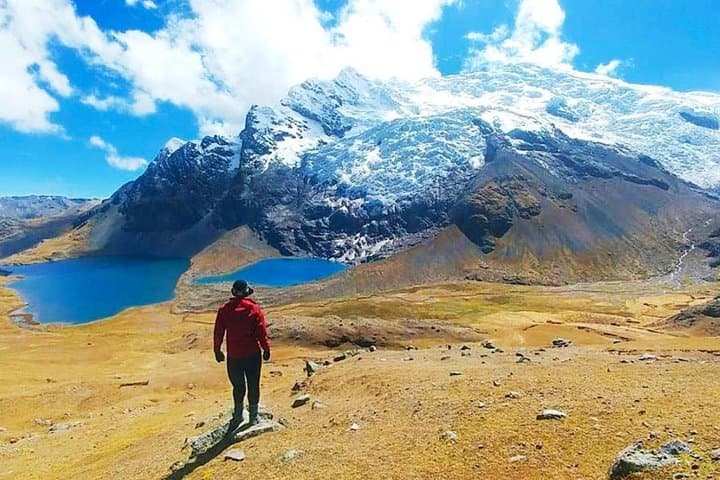


At dawn a thin cord of light slips across the puna as you and your group clamber from tents pitched beneath jagged, snow-knit ridgelines. The air is thin; every step brings you closer to Ausangate's flanks and the rainbow-streaked slopes of Vinicunca. Over four days this private trek moves from thermal springs and green lagoons up to 5,210 m at Palomani Pass, through high Andean communities where llamas graze and muleteers keep quiet rhythms.
At dawn a thin cord of light slips across the puna as you and your group clamber from tents pitched beneath jagged, snow-knit ridgelines. The air is thin; every step brings you closer to Ausangate's flanks and the rainbow-streaked slopes of Vinicunca. Over four days this private trek moves from thermal springs and green lagoons up to 5,210 m at Palomani Pass, through high Andean communities where llamas graze and muleteers keep quiet rhythms.
Geology here is plain in its theater: glaciated summits carved by ice, glacial lakes that reflect serrated peaks, and the iron- and copper-toned strata that create the layered pigments of Rainbow Mountain. The route uses segments of ancestral Inca trail and seasonal shepherd tracks; local communities maintain traditional weaving and herding practices that shape daily life.
Practical navigation is straightforward but physically demanding: expect daily distances of 6–12 km on rough, rocky and grassy terrain with elevation gains that can exceed 700–800 m in a day. Altitude sickness is the chief risk — guides carry oxygen and the itinerary includes acclimatization and coca-tea rituals. Camps are fully supported with dining tents, a professional cook and horses for gear, but nights are cold and windy.
Plan layers for sharp temperature swings, waterproof boots with good traction, and a slow, steady pace to preserve energy. Morning starts aim to beat crowds at Vinicunca; photography windows are narrow. With preparation, the trek is an unforgettable high‑altitude experience that balances cultural encounters with mountain scenery.